

Are your once-vibrant rose bushes now struggling with unsightly spots, discolored foliage, or even premature death? If so, you’re likely facing one of the many common rose diseases. But don’t despair – with the right knowledge and proactive care, you can identify, treat, and prevent these ailments to keep your roses thriving.
This comprehensive guide will walk you through the identification and management of the most prevalent rose diseases. We’ll cover the dreaded black spot and powdery mildew to the devastating rose rosette virus. By understanding the symptoms, causes, and proven treatment methods for each condition, you’ll be equipped to safeguard your rose garden and enjoy its stunning blooms for years to come.
Key Takeaways
- Fungal diseases are the most prevalent rose ailments, including black spot, powdery mildew, and rust.
- Viral diseases like rose rosette and rose mosaic can also severely impact rose health.
- Proper disease identification is crucial for effective treatment and prevention.
- Cultural practices like pruning and cultivar selection play a key role in managing rose diseases.
- Timely application of fungicides and other control measures can help protect your rose plants.
Introduction to Rose Diseases
Roses are loved for their beauty, but they can get sick. It’s important to know the different diseases, their signs, and how to treat them. This helps keep your roses healthy and beautiful.
Overview of Common Rose Diseases
Roses face many diseases, like fungal, bacterial, and viral ones. Each disease has its own signs and treatments. Here are some common ones:
- Powdery mildew, caused by the fungal pathogen Podosphaera pannosa
- Black spot, a fungal disease that causes distinctive circular spots on leaves
- Downy mildew, a cool-weather disease caused by the fungal-like organism Peronospora sparsa
- Cercospora leaf spot, a hot-weather fungal disease
- Anthracnose, a cool-season fungal disease
- Rust, which causes orange-colored spots on rose stems and leaves
- Botrytis blight, a fungal disease that affects flowers and buds
- Stem canker and dieback, caused by various fungal pathogens
- Viral diseases, such as rose rosette and rose mosaic
Importance of Proper Identification and Treatment
It’s key to know which type of rose disease you have. The right treatment can make a big difference. Good practices like keeping things clean and not wetting leaves help a lot.
Using fungicides and other treatments as directed can also help. This keeps your roses healthy and looking great.
Powdery Mildew
Are you a rose enthusiast dealing with powdery mildew on your plants? This common fungal disease causes white patches on leaves, stems, and buds. But, with the right approach, you can manage and prevent powdery mildew on roses.
Powdery mildew is caused by the fungus Podosphaera pannosa var. rosae. It thrives in mild, humid conditions, especially in shady areas. The disease appears as a grayish-white powdery substance on young leaves, shoots, and buds. Infected leaves may become distorted, and some may drop. Flower buds may fail to open, and those that do may produce poor-quality blooms.
To manage powdery mildew on roses, several strategies can be employed:
- Select rose varieties that are resistant to powdery mildew, such as ‘Altissimo,’ ‘Carefree Spring,’ ‘Jeanne Lajoie,’ and ‘Sally Holmes.
- Maintain good sanitation by regularly removing infected leaves and canes to prevent the spread of the disease.
- Promote air circulation around your rose plants by pruning and spacing them appropriately.
- Consider using fungicide sprays containing propiconazole, thiophanate-methyl, myclobutanil, sulfur, or neem oil if the rose powdery mildew becomes severe.
The Royal Horticultural Society (RHS) recommends avoiding fungicides due to environmental concerns. Instead, they suggest exploring natural remedies, such as a mixture of milk and water. This can be an effective treatment for powdery mildew on roses.
| Preventative Measures | Curative Treatments |
|---|---|
|
|
By understanding the causes of powdery mildew on roses and implementing these strategies, you can keep your rose garden thriving. Stay vigilant, and you’ll be well on your way to successfully treating powdery mildew on roses.

Black Spot
Black spot is a serious disease in roses caused by Diplocarpon rosae. It shows up as circular, black spots on leaves up to 1/2 inch in size. These spots are surrounded by a yellow area. Infected leaves often fall off, and plants may lose all leaves by mid-summer.
The disease also affects the wood of new canes, causing purple-red blotches.
Identifying Black Spot Symptoms
Leaves with black spot disease have dark spots up to 1/2 inch in diameter. These spots have “feathery” edges. Some roses show smaller spots with clearer edges when infected.
Infected leaves turn yellow and fall off. Small purplish spots appear on the current year’s growth of rose canes.
Cultural Controls for Black Spot
To manage black spot, follow these steps:
- Choose resistant rose varieties like Bride’s Dream, Canadian, White Star, Cary Grant, and Dainty Bess.
- Remove infected leaves and canes to keep the area clean.
- Water plants at the base to avoid wetting leaves.
- Use fungicides like chlorothalonil, mancozeb, myclobutanil, or propiconazole for severe cases.
By using these methods, you can control black spot disease on your roses.
| Rose Cultivars Most Resistant to Black Spot | Rose Cultivars Least Resistant to Black Spot |
|---|---|
|
|
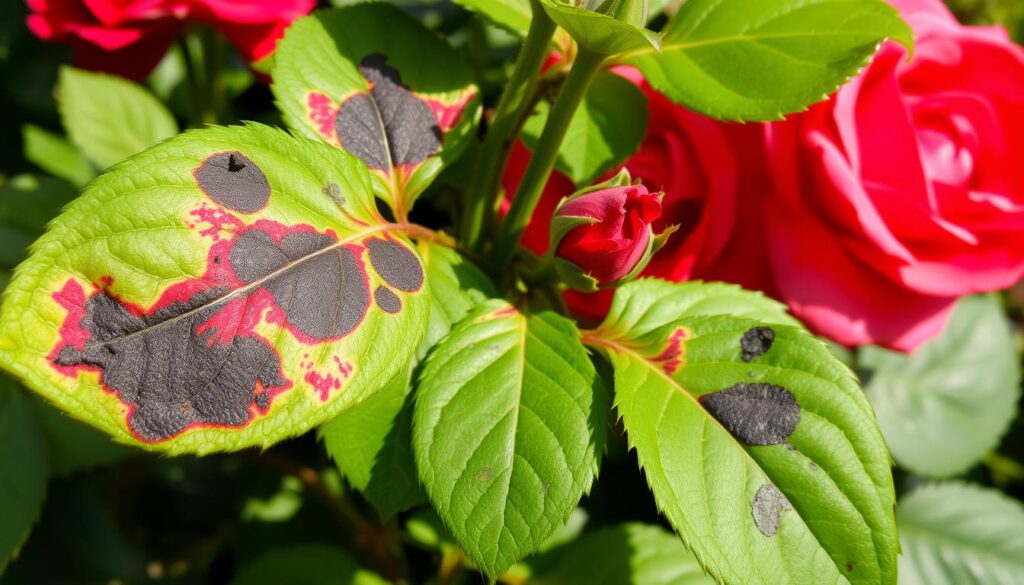
“If black spot is left untreated, it may lead to irreversible damage, indicating the importance of early treatment to save the plant.”
Downy Mildew
Downy mildew is a tough rose disease to handle. It’s caused by Peronospora sparsa, a fungus-like organism. This disease can quickly destroy rose plants, even before you see any damage.
It thrives in cool weather (40°F to 74°F) and high humidity (over 85%). In the U.S., downy mildew has become a big problem for rose growers. It causes a lot of damage every year. In fact, it can cost up to half of the total rose crop.
Symptoms include brown, red, or purple spots on leaves. These spots may follow the veins. The underside of leaves shows fluffy white growth that turns grey-brown as it spreads. Fighting downy mildew on roses or downy mildew of roses is hard once it starts. But, there are ways to manage it:
- Sanitation: Get rid of sick plants to stop the disease from spreading.
- Fungicides: Use protectant fungicides to keep plants safe.
- Air circulation: Better air flow in greenhouses and nurseries can also help.
Even though downy mildew is tough, careful management can reduce its impact. Rose growers can keep their plants healthy by staying alert and using the right strategies.
| Key Downy Mildew Facts | Statistic |
|---|---|
| Retail value of potted and cut roses in the U.S. | Exceeds $42 million (2015 USDA Floriculture Crops Summary) |
| Rose downy mildew first described in England | 1862 |
| Rose downy mildew reported in Midwestern U.S. | 1880 |
| Downy mildew current global distribution | North America, Asia, Africa, Europe, Oceania, and South America |

“Rose downy mildew has become a serious problem for U.S. growers in the last 20 years, causing significant losses annually.”
Cercospora Leaf Spot
Cercospora leaf spot is a common fungal disease in roses, as bad as black spot. It’s caused by Cercospora rosicola. This disease shows up as purple, maroon, brown, or black spots on the top of leaves. It’s different from black spot because its spots have even edges.
This disease grows best in hot, humid weather. It can cause a lot of leaf loss. To fight it, you can use fungicides and choose resistant rose types.
Distinguishing Cercospora Leaf Spot from Other Diseases
It’s important to tell Cercospora leaf spot apart from other rose diseases like black spot and anthracnose. Each disease has its own cause and best weather. Knowing the difference helps you treat it right.
- Cercospora leaf spot is caused by the fungus Cercospora rosicola, while black spot is caused by the fungus Diplocarpon rosae.
- Cercospora leaf spot thrives in hot, humid conditions, whereas black spot favors cool, wet weather.
- Anthracnose, another rose disease, can also present similar symptoms, but it is caused by a different fungus, Colletotrichum gloeosporioides.
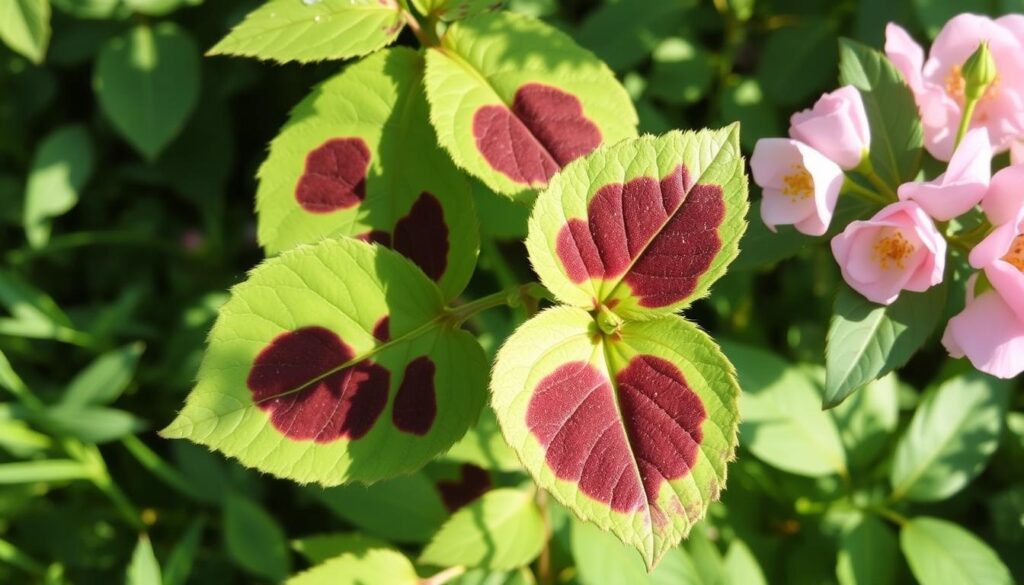
“Distinguishing Cercospora leaf spot from other diseases is crucial, as the causal organisms and optimal environmental conditions differ.”
Anthracnose
Anthracnose is a common fungal disease in the northern U.S. and the Deep South. It affects roses that keep their leaves into winter. The disease is caused by Sphaceloma rosarum. It shows up as red, maroon, or purple spots on leaves that turn brown or gray and may fall off.
This disease thrives in cool weather, unlike Cercospora leaf spot. To fight it, keep your garden clean by removing infected parts and debris. Also, using fungicides can protect new leaves and stop the disease from spreading.
Anthracnose is different from black spot disease. Black spot has round, brown to black spots. To tell them apart, look for the red, maroon, or purple edges around the spots of anthracnose.
To control rose anthracnose, keep leaves dry. Use drip irrigation instead of overhead watering. Remove infected parts and apply fungicides to keep your roses healthy.

“Anthracnose is a group of fungal diseases fueled by excess water on leaves, stems, and fruit, thriving in rainy seasons or high humidity conditions.”
| Rose Disease | Causative Agent | Symptoms | Management |
|---|---|---|---|
| Anthracnose | Sphaceloma rosarum | Leaf spots with red, maroon, or purple borders; lesion centers turn brown or gray | Maintain good sanitation, apply fungicides, keep foliage dry |
| Black Spot | Diplocarpon rosae | Round, brown to black spots on leaves | Remove infected canes and leaves, apply fungicides |
| Botrytis Blight | Botrytis cinerea | Small, water-soaked lesions on petals | Ensure good air circulation, use fungicides |
rose diseases
Rose bushes can get sick from fungal, bacterial, and viral diseases. Knowing the different types of rose diseases is key to treating and managing them.
Bacterial Diseases
Crown gall is a common bacterial disease in rose plants. It’s caused by Agrobacterium tumefaciens and makes big, ugly growths on stems and crowns. Sadly, there’s no cure, so you must remove and destroy sick plants to stop the disease from spreading.
Viral Diseases
Viral diseases like rose rosette disease and rose mosaic virus can harm roses too. Rose rosette disease causes weird growth, stunts the plant, and can kill it. Rose mosaic virus mainly hurts the plant’s looks but isn’t as dangerous.
It’s important to know which disease your roses have. This is because different diseases need different treatments. Getting help from a local horticulturist or extension service can guide you on how to keep your roses healthy.
| Common Rose Diseases | Symptoms | Treatment |
|---|---|---|
| Crown Gall | Large, bumpy growths on stems and crown | Remove and destroy affected plants; no cure available |
| Rose Rosette Disease | Distorted growth, stunting, eventual death | No effective treatment, remove and destroy affected plants |
| Rose Mosaic Virus | Affects plant aesthetics, not a major health risk | No cure, manage by planting resistant varieties |
Quickly identifying and treating rose diseases is crucial for their health. By knowing the common diseases, you can prevent and manage them. This way, your rose garden can stay beautiful for many years.

Rust
Rose rust is a common fungal disease found in many rose varieties in North America and Europe. It’s caused by fungi in the genus Phragmidium. This disease makes stems and leaves show orange spots, with an orange dust on the plant and ground.
Severely hit rose plants may see their leaves turn yellow or brown and fall off early. It’s important to spot and treat this disease quickly.
Identifying Rose Rust Symptoms
The first signs of rose rust are yellow spots on the top of leaves. These spots turn into orange or rust-colored pustules on the underside of leaves. As the disease gets worse, leaves may turn yellow or brown and fall off.
Controlling Rose Rust
- Promote Good Air Circulation: Make sure your rose plants have enough space and prune them often. This improves air flow and reduces moisture.
- Avoid Overhead Watering: Water at the base of the plants instead of overhead. This helps prevent moist conditions that rust likes.
- Remove and Destroy Infected Material: Quickly get rid of any affected leaves, stems, or plants to stop the disease from spreading.
- Apply Fungicides: Use fungicides like chlorothalonil, mancozeb, or sulfur to prevent rust. Apply them when you first see the disease.
By using these methods, you can fight rose rust and keep your rose garden healthy. Early detection and quick action are key to having disease-free roses.
| Rose Variety | Rust Resistance |
|---|---|
| Rugosa Roses | Nearly Immune |
| Boscobel | Resistant |
| Carefree Delight | Resistant |
| Hybrid Roses | More Prone |
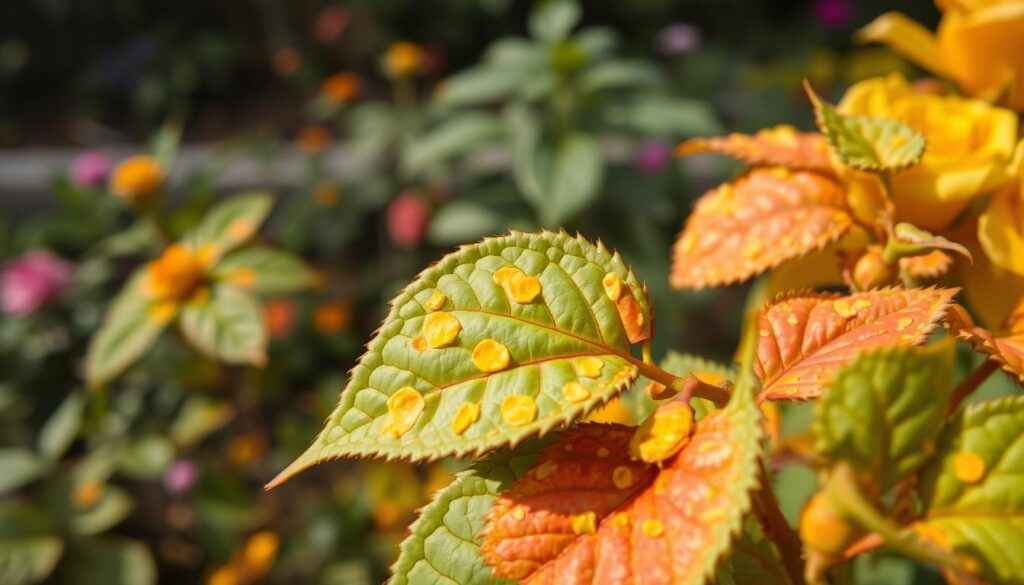
“Well-cared-for plants are less susceptible to disease, so proper watering at the base of shrubs, avoiding wet conditions, and appropriate fertilization help prevent rust infections.”
Botrytis Blight
Botrytis blight is a common disease in rose gardens. It’s caused by the gray mold fungus Botrytis cinerea. This fungus loves cool, moist conditions between 62-72°F. It’s a big problem in spring and fall.
Symptoms and Treatment of Botrytis Blight
Rose petals with botrytis blight show small, light spots with reddish halos. These spots can grow into big blotches. Buds may not open and droop, making the plant look bad.
To fight botrytis blight on roses, keep your garden clean. Remove old flowers and leaves quickly. Also, make sure plants have good air flow and don’t get their leaves wet when watering.
If botrytis blight is a big problem, use fungicides. Products like thiophanate methyl, chlorothalonil, or neem oil work well. Daconil Fungicide is a good choice, protecting against over 65 fungal diseases, including botrytis blight.
Remember, the fungus can stay in debris all winter. So, keep your garden clean all year. Managing botrytis blight on roses helps your garden stay healthy and beautiful.

Stem Canker and Dieback
Rose stem canker and dieback are serious diseases that can harm your rose garden. These problems come from fungi that get into the plant through wounds. Wounds can be from winter damage, bad pruning, or cutting flowers. It’s important to treat stem canker to keep your roses healthy.
Cankers show up as dead or colored spots on the canes. They can turn from light tan to dark purplish-brown. These spots can grow and kill the whole plant. Since there’s no special fungicide for stem canker, using cultural methods is key.
- Avoid causing any unnecessary injury to your rose plants during maintenance and pruning activities.
- Ensure you are using the proper pruning techniques, making clean cuts that heal quickly.
- Promptly remove and dispose of any infected canes to prevent the spread of the disease.
Rose cane dieback is another problem caused by fungi. It makes branches wilt or die, with brown to reddish-brown wood under the bark showing the infection.
| Symptom | Cause | Treatment |
|---|---|---|
| Stem canker | Various fungal species that enter through wounds | Avoid injury, use proper pruning, remove infected canes |
| Cane dieback | Botryosphaeria fungi, often due to environmental stress | Maintain plant health, avoid excessive mulch, monitor for pests |
Knowing the symptoms, causes, and treatments for rose stem canker and rose cane dieback helps protect your roses. This way, you can have a healthy, disease-free garden.

“Proper pruning techniques and maintaining overall plant health are key in preventing and managing stem canker and dieback in roses.”
Viral Diseases of Roses
Roses can get sick from viruses, and sadly, there’s no cure. Two common viral diseases are rose rosette disease and rose mosaic.
Rose Rosette Disease
Rose rosette disease (RRD) was found in the 1940s in the Rocky Mountains. It’s caused by a virus spread by the tiny Phyllocoptes fructiphilus mite. This disease has spread across much of the U.S., especially on Rosa multiflora (multiflora rose).
In states like Oklahoma, Missouri, Arkansas, and Texas, infected roses show signs like deformed leaves and lots of thorns. They die within two years.
There’s no cure for RRD once it hits a plant. It’s best to quickly remove and destroy sick roses to stop it from spreading. To fight it, prune affected shoots, throw away sick leaves, use horticultural oils, and keep plants healthy.
Rose Mosaic
Rose mosaic is another viral disease. It makes leaves and flowers look discolored, stops growth, and cuts down on flowers. It’s found worldwide and affects all kinds of roses.
Plants with this disease should be taken out and destroyed. There’s no way to treat this serious viral problem.
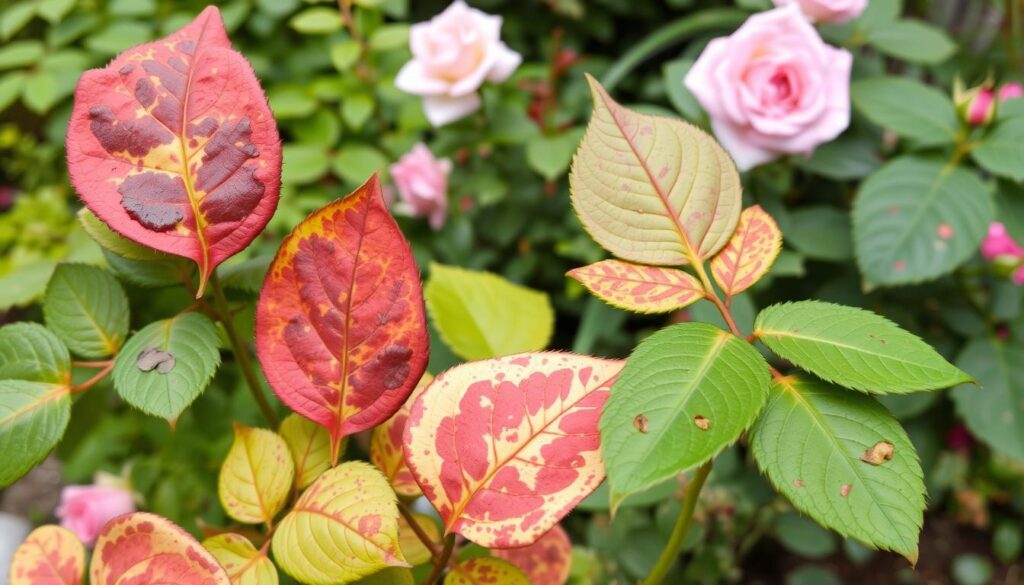
Keeping a close eye and acting fast is key to fighting viral diseases in roses. Knowing the signs and how they spread helps rose lovers protect their plants. This way, they can reduce the spread of these deadly viruses.
For broader disease diagnosis, compare rose diseases with our common garden diseases guide and fungal diseases guide. For the full topic, visit the Disease Management hub.
Conclusion
Roses can get sick, but you can keep them healthy with the right steps. Start by picking roses that are less likely to get sick. Also, keep your garden clean and make sure air can move around.
If you need to use sprays to fight disease, use them carefully. This way, you can enjoy your roses for a long time.
Knowing what diseases your roses have is key. This includes black spot, powdery mildew, and viral diseases like Rose Rosette Disease. Use the right treatments to keep your roses looking great.
Good garden care is important. Keep your garden clean and control pests. If you see any disease, deal with it right away.
With the right steps, you can have a beautiful rose garden. Use these tips to keep your roses healthy and your garden looking great.
Source: For evidence-based guidance, see University of Maryland Extension’s rose disease guidance.
FAQ
What are the most common rose diseases?
Common rose diseases include powdery mildew and black spot. Downy mildew and Cercospora leaf spot are also common. Other diseases are anthracnose, rose rust, and Botrytis blight. Stem canker and dieback, along with viral diseases like rose rosette and rose mosaic, are also prevalent.
How can I identify the specific disease affecting my rose plants?
Identifying the disease is key. Look for symptoms like leaf spots and discoloration. Also, check for defoliation and growth issues. This will help you figure out what disease your roses have.
What are some effective cultural control methods for managing rose diseases?
To manage diseases, choose disease-resistant rose varieties. Keep your garden clean by removing infected parts. Also, ensure good air flow and avoid watering overhead.
When should I use fungicide sprays to treat rose diseases?
Use fungicide sprays for severe cases. Look for products like propiconazole and thiophanate-methyl. Follow the instructions on the label carefully.
How can I manage viral diseases like rose rosette and rose mosaic?
There’s no cure for viral diseases. Remove infected plants quickly. This stops the disease from spreading to other healthy plants.