
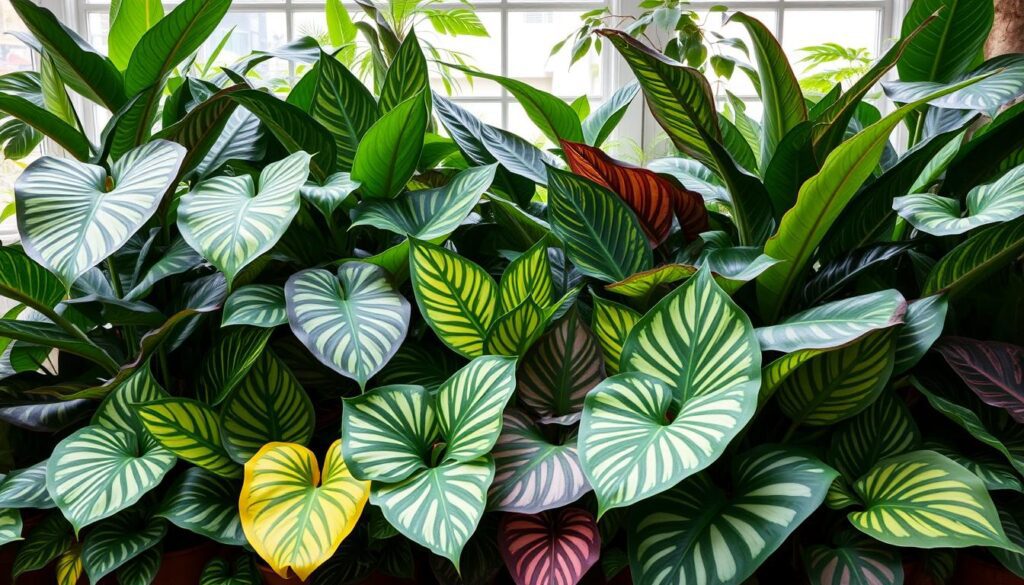
Do you dream of turning your home into a lush, tropical paradise? Look no further than Alocasia plants. These plants boast striking leaves, vibrant colors, and varied growth habits. They can add a unique touch to your indoor space.
But, which Alocasia varieties will fit best in your home and match your style? Let’s explore the options together.
Key Takeaways
- Alocasia plants come in a wide range of colors, including silver, purple, red, and various shades of green.
- There are about 100 species of Alocasia in the world, many with multiple cultivars, offering a large variety of leaf shapes, colors, sizes, and variegation types.
- Alocasia plants can be grown both indoors and outdoors, with increasing popularity as indoor plants.
- Alocasia plants are popular houseplants due to their low maintenance nature and beautiful leaves.
- Alocasia varieties offer a diverse range of options to suit different growing conditions and personal preferences.
Understanding the Alocasia Plant Family
The Alocasia plant family is a group of tropical houseplants known for their beautiful leaves. They are often called “elephant ear plants.” If the foliage begins to discolor, see our guide to elephant ear leaves turning yellow for likely causes and fixes. These plants come from the warm, humid rainforests of Southeast Asia and Eastern Australia.
Origins and Natural Habitat
Alocasia plants are from the tropical and subtropical areas of Asia and Australia. They love the dappled shade of the rainforest understory. They need warm temperatures, high humidity, and rich soil to grow well.
Basic Characteristics of Alocasia Plants
Alocasia plants have striking, heart-shaped or arrow-shaped leaves. These leaves can be 12 to 36 inches long. They are held up on stems, giving them an upright look that’s popular in homes and offices.
Growth Patterns and Life Cycle
Alocasia plants grow fast, sometimes reaching over 10 feet tall outdoors. Indoors, they stay smaller, making them great for any room. They can take 600 days to a year to mature, depending on the species and growing conditions.
| Alocasia Species | Leaf Size | Mature Height | Origin |
|---|---|---|---|
| Alocasia ‘Odora’ | 12-24 inches | 3-6 feet | Southeast Asia |
| Alocasia ‘Polly’ | 8-12 inches | 1-3 feet | Malaysia |
| Alocasia ‘Frydek’ | 12-18 inches | 2-4 feet | Southeast Asia |
| Alocasia ‘Dragon Scale’ | 12-24 inches | 3-6 feet | Southeast Asia |
Knowing about the Alocasia plant family helps us care for them better. They need the right conditions to thrive indoors.
Essential Care Requirements for Alocasia Plants
Alocasia plants are known for their exotic and striking foliage. They need bright, indirect light and consistent watering. A chunky, nutrient-rich potting mix is also key for their growth. Regular fertilization and a warm, humid climate help keep them healthy and vibrant. For more information, check out this guide on alocasia plant care.
Watering is crucial for alocasia plants. They prefer their soil to dry out slightly before watering again. Never let them dry out completely to avoid root rot. Water when the top inch of soil feels dry to the touch.
Alocasia plants love warm, humid environments. They thrive in temperatures between 60-80°F (15-27°C). Protect them from cold drafts. High humidity, either through a pebble tray or humidifier, is also beneficial.
Fertilize your alocasia plants from spring to late summer. Use a balanced, water-soluble fertilizer diluted to half-strength. Apply it once or twice a month. For a longer-lasting option, use a slow-release granular fertilizer every six to eight weeks.
“Alocasia plants contribute to better air quality through photosynthesis, absorbing carbon dioxide and releasing oxygen.”
Repotting is essential for alocasia plants. They grow quickly and need larger pots. Repot in the spring or summer, moving them to a slightly bigger pot with fresh potting mix.
With proper care, your alocasia plants will thrive for years. They can add exotic flair to any indoor space. Remember, they do well in low-light conditions too.
Popular Alocasia Varieties for Indoor Growing
Alocasia plants are a stunning addition to any indoor space. They come in various sizes and shapes, perfect for any room. Whether you want a big statement or a small accent, Alocasia has something for everyone.
Small-Growing Varieties
Compact Alocasias like the Alocasia Black Velvet and Alocasia Polly grow only 1-2 feet tall. They’re great for small spaces and can sit on your table. Their unique leaf patterns and dark colors add depth to your decor.
Medium-Sized Varieties
The Alocasia Zebrina is a mid-sized option, growing 2-3 feet tall indoors. It has striking zebra-like patterns on its stems and broad, arrow-shaped leaves.
Large Statement Pieces
For a bigger impact, try the Alocasia Amazonica. It can grow up to 4 feet tall. Its large, deeply veined leaves make it a standout piece in any room.
Every Alocasia variety brings something special to your space. They come in different shapes, colors, and patterns. Adding these plants can bring a touch of tropical beauty to your home.
Rare and Exotic Alocasia Cultivars
In the world of Alocasia plants, there’s a treasure trove of rare and exotic cultivars. These plants have striking leaf patterns, vibrant colors, and unique variegation. They stand out from common Alocasia species.
The Alocasia Odora Batik is a stunning cultivar with leaf markings like traditional Indonesian batik. The Alocasia Bambino Pink Variegated has delicate pink hues and a captivating variegated look.
These rare Alocasia cultivars are not just visually striking. They’re also highly sought after by enthusiasts. To keep their unique traits, many are grown through tissue culture. This ensures their exclusivity and genetic integrity.
The prices of these alocasia cultivars vary from $125.00 to $975.00. This reflects their scarcity and the demand from plant enthusiasts. Some varieties are even sold out, making them even more exclusive.
| Alocasia Cultivar | Variegation | Price | Availability |
|---|---|---|---|
| Alocasia ‘Sanderiana’ Aurea Variegated | Aurea (Yellow) Variegated | $475.00 | In Stock |
| Alocasia macrorrhiza ‘Stingray’ | Albo Variegated, Pink Sport Variegation | $325.00 – $675.00 | Some Sold Out |
| Alocasia Polly ‘Pink Ghost’ | Pink Variegation, Albo Variegation | $150.00 – $225.00 | Sold Out |
| Alocasia ‘Tigrina Superba’ | Variegated | $475.00 | In Stock |
These exotic alocasia varieties are true gems in the plant world. They capture the hearts and minds of enthusiasts. They bring unique beauty and rarity to any collection.
Dark-Leaved Alocasia Varieties
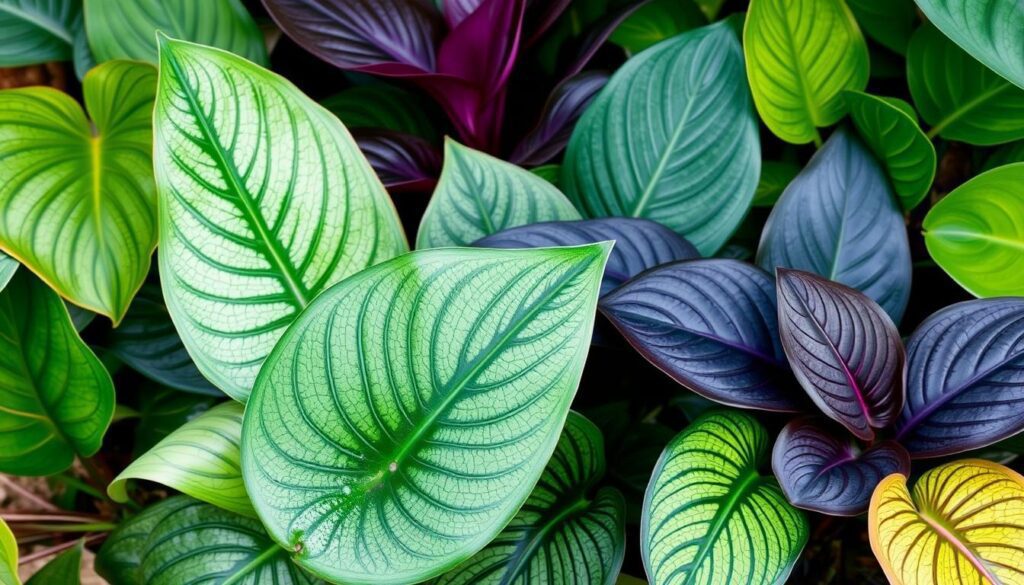
Alocasia, or elephant ears, are loved for their big, bold leaves. They add a tropical feel to any room or garden. The dark-leaved varieties stand out, offering a striking contrast to lighter plants. Let’s look at three dark-leaved Alocasia varieties that will bring exotic beauty to your space.
Black Magic (Alocasia infernalis)
Black Magic Alocasia has dark, almost black leaves with a unique vein pattern. It can grow up to 20-22 inches tall, making it a standout. It prefers partial to indirect sunlight and thrives in zones 9-12.
Black Velvet (Alocasia reginula)
Black Velvet Alocasia has dark green, velvety leaves with white veins. It reaches 10-15 inches tall, ideal for small spaces. It loves bright, indirect light and needs moderate watering to avoid root rot.
Green Velvet (Alocasia Frydek)
Green Velvet Alocasia has large, bright green leaves with pale veins. It grows 2-3 feet tall, making a bold statement. It prefers partial to indirect sunlight and needs consistent moisture for best growth.
Choosing Black Magic, Black Velvet, or Green Velvet adds exotic flair to your space. With the right care, these plants will thrive and become the highlight of your collection.
Metallic and Silvery Alocasia Species
Alocasia plants are part of a fascinating group with over 70 species. Each one has its own special leaves and growth patterns. The metallic and silvery varieties are truly captivating, bringing magic to any plant collection.
The Alocasia Corazon, or blue metallic plant, is a standout. Its glossy leaves are a bluish-green color. It can grow 2-15 feet tall, but usually stays around 3 feet in gardens. Its shimmering leaves make it a real showstopper.
The ‘Metalhead’ Alocasia is another beauty. Its leaves can reach 1-2 feet long with a mesmerizing metallic sheen. The Alocasia ‘Maharani’ has compact, silvery-grey leaves up to 6-10 inches long. It adds elegance to any space.
| Alocasia Variety | Leaf Size | Mature Height | Leaf Color |
|---|---|---|---|
| Alocasia Corazon | Up to 2-15 feet | Typically 3 feet | Glossy bluish-green |
| Alocasia ‘Metalhead’ | Up to 1-2 feet | Varies | Metallic sheen |
| Alocasia ‘Maharani’ | 6-10 inches | Varies | Silvery-grey |
These metallic and silvery Alocasia species bring a unique, shimmering effect to plant collections. They are also relatively easy to care for. This makes them a great choice for both beginners and experienced gardeners.
Dragon Scale and Other Textured Varieties
Looking to spice up your indoor plants? The Alocasia dragon scale varieties and other textured Alocasia species are perfect. They have big, thick leaves that look like scales, catching everyone’s eye.
Dragon Scale Alocasia Care Requirements
The Alocasia dragon scale can grow quite tall, up to 3-6 feet. It loves bright, indirect light and needs moist, well-draining soil. Keeping the air humid is key for these plants to thrive. Use a pebble tray or humidifier to keep the air right.
Similar Textured Alocasia Varieties
There’s more to love than just the Alocasia dragon scale. The Alocasia Rugosa has velvety leaves, and the Alocasia melo has dense, textured foliage. Both add depth and interest to any room.
Adding textured alocasia varieties can make your indoor plants stand out. Whether you choose the famous Alocasia dragon scale or other species, they’ll surely impress and inspire.
Giant Alocasia Varieties
Get ready to be amazed by the giant Alocasia varieties. These plants, like the Alocasia macrorrhizos, can grow up to 12-15 feet tall. Their heart-shaped leaves make any space look like a tropical oasis.
Giant Alocasia love warm, humid places, best in USDA Hardiness Zones 9-11. But they can also thrive indoors in bright, humid spots. With the right care, they show off their stunning foliage.
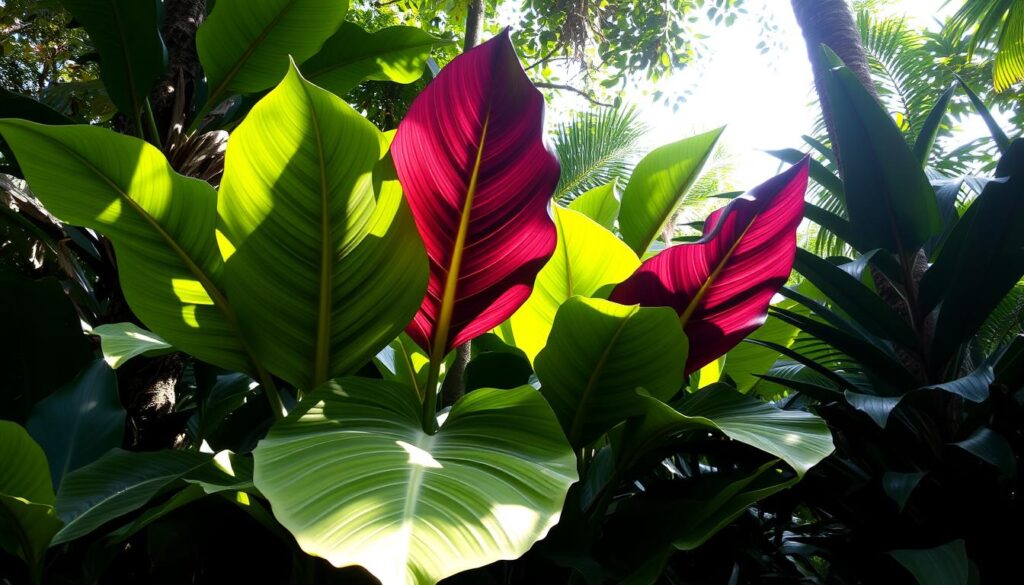
The Alocasia genus has many large varieties. Plants like Alocasia longiloba and Alocasia wentii grow big. They add a dramatic touch to any space.
These giant Alocasia are perfect for plant lovers. They bring exotic beauty and scale to your home. Let them take you to a tropical paradise.
Miniature Alocasia Varieties for Small Spaces
If you have limited space but want to add beauty to your home, miniature Alocasia varieties are ideal. These small plants have the same beauty as larger ones but fit perfectly in tight spaces.
Compact Growing Options
The Alocasia cucullata, or Hooded Dwarf, is a great choice. It grows to be 2-3 feet tall with leaves that cascade. The Alocasia ‘Tiny Dancers’ is also great for small spaces, with delicate leaves and a height of about 12 inches.
For even smaller plants, look at the Alocasia ‘Bambino’ or Alocasia ‘Frydek Mini.’ They rarely grow over 8 inches tall. They’re perfect for terrariums, small tables, or hanging baskets.
Space-Saving Care Tips
- Use vertical space with hanging baskets or wall-mounted planters for miniature Alocasias.
- Group small Alocasia varieties for a lush, compact look.
- Choose plants with similar light and humidity needs for easier care.
- Use self-watering or automatic systems to keep your plants hydrated.
Miniature Alocasia varieties are a must for anyone with limited space. They add beauty and greenery to any area, big or small. By adding these plants, you can turn even the smallest spaces into a lush oasis.
Variegated Alocasia Selections
Alocasia is a fascinating group of tropical plants. They come in many variegated varieties, adding exotic beauty to any space. These plants have unique leaf patterns and colors, making them stand out.
The Alocasia Odora Batik is a standout with its green, white, and pink leaves. The Alocasia Amazonica Polly Variegated is also eye-catching, with its green, white, and silver mosaic.
These variegated Alocasias need a bit more care to keep their colors vibrant. But the effort is worth it. They can make any room feel more tropical and elegant.
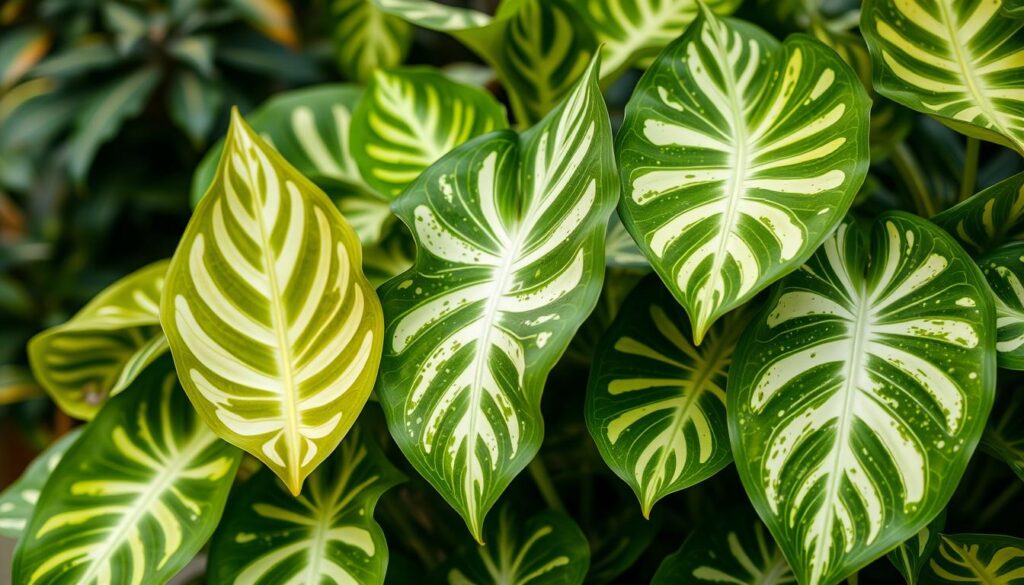
Exploring Alocasia, look out for these amazing variegated varieties. They are sure to make your plant collection more beautiful and interesting.
Best Alocasia Varieties for Beginners
If you’re new to growing Alocasia plants, there are several beginner-friendly varieties. These are low-maintenance and forgiving of occasional neglect. They adapt well to various indoor conditions, making them perfect for beginners.
The Alocasia Polly is a popular choice for beginners. It’s easy to maintain, thriving in medium to bright indirect light. It also tolerates a range of humidity levels. Plus, it requires moderate, consistent watering and is less prone to pests and diseases.
The Alocasia Zebrina is another great option for beginners. It has striking zebra-patterned stems that add a unique touch to any indoor space. Like the Polly, it shares similar care requirements, making it a good choice for new growers.
- Alocasia Polly: Considered one of the easiest Alocasia varieties to maintain, with adaptability to various light conditions and resistance to common pests and diseases.
- Alocasia Zebrina: Features eye-catching zebra-patterned stems and similar care needs to the Alocasia Polly, making it another beginner-friendly option.
When choosing beginner-friendly alocasia varieties, look for plants that are resilient and adaptable. They should require less intensive care. With the right growing conditions and patience, these easy-care alocasia varieties can thrive. They will add a touch of exotic beauty to your indoor collection.
Propagation Techniques for Different Alocasia Types
Alocasia plants are stunning and add beauty to any collection. They can be easily grown by different methods. You can divide rhizomes or root cuttings to expand your collection.
Division Methods
Dividing rhizomes is a simple way to grow Alocasia. When you repot, look at the roots and separate the rhizomes. Make sure each part has a leaf, growth point, and healthy roots. Do this in spring or summer for the best results.
- Gently remove the plant from its pot and inspect the root system.
- Identify the natural division points along the rhizome and use a clean, sharp knife to carefully divide the plant.
- Each division should have at least one leaf or growth point and a healthy set of roots.
- Repot the divisions in a well-draining potting mix, ensuring the soil is not compacted around the roots.
- Water the divided plants thoroughly and provide them with warm, humid conditions to encourage new growth.
Optimal Timing for Propagation
The best time to propagate Alocasia is in spring and summer. This is when the plant grows the most. Propagating at other times may slow growth or fail. Timing your efforts right can help your Alocasia thrive.
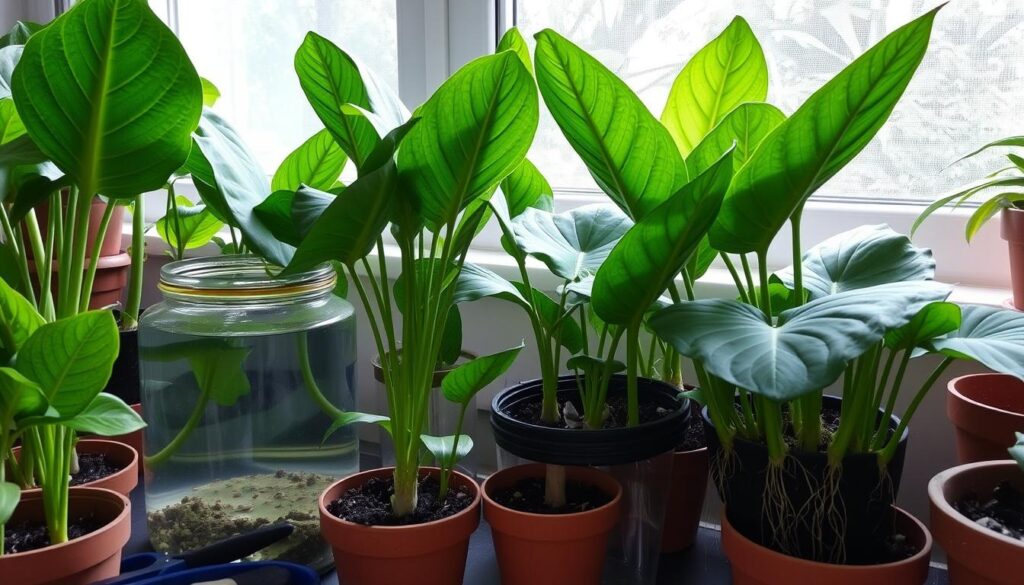
“Propagating Alocasia through division is considered the easiest method, and the success rate is typically higher compared to other propagation techniques.”
Common Problems and Solutions for Alocasia Varieties
Alocasia plants are truly captivating, but they come with unique care challenges. Understanding and acting quickly are crucial to keep them healthy and vibrant.
Yellowing leaves are a common issue, often due to too much water. These plants like their soil to dry a bit between waterings. Make sure not to keep their roots too wet. Adjust your watering to keep the soil just right.
Leaf damage can also happen from not enough water or too much fertilizer. Alocasia love to eat, so use a balanced fertilizer during the growing season. But don’t overdo it. The right amount of nutrients is key for lush leaves.
Pests like spider mites, mealybugs, scales, and aphids can harm Alocasia. Regular checks and quick action are vital to stop pests from spreading.
All Alocasia species are toxic to humans and pets if eaten. Be careful where you place these plants to avoid accidents or ingestion.
With the right care and attention, you can beat common Alocasia problems. Enjoy their stunning, unique foliage.
| Common Alocasia Problems | Potential Solutions |
|---|---|
| Yellowing leaves | Adjust watering routine to allow soil to dry out slightly between waterings |
| Leaf damage | Use a balanced liquid fertilizer during growing season, avoid over-fertilizing |
| Pest infestations | Regularly inspect plants and promptly address any signs of pests |
| Toxicity concerns | Carefully consider placement to prevent accidental ingestion by pets or children |
“Proper care and attention are essential for keeping Alocasia plants thriving and minimizing common problems.”
For more tropical indoor-plant choices, compare Alocasia with our Monstera varieties and tropical plants guide. For broader care topics, visit the houseplants hub.
Conclusion
The world of alocasia varieties is full of tropical houseplants to beautify your spaces. You can find everything from small plants to big statement pieces. There’s an alocasia for every plant lover, no matter your space or growing needs.
Learning about these exotic plants helps you add them to your collection. You’ll love their bold leaves and the way they change your space. Choose a small plant or a tall one, and it will make your area feel like a tropical paradise.
Keep exploring new alocasia varieties and think about your growing space and style. Each plant has its own needs. With the right care, your indoor plants will flourish, bringing the tropics to your home.
FAQ
What are the different varieties of Alocasia plants?
Alocasia plants come in many colors like silver, purple, red, and green. There are about 100 species, with many cultivars. This variety offers different leaf shapes, colors, sizes, and patterns.
Where do Alocasia plants originate from?
Alocasia plants are from Southeast Asia, Malaysia, and Australia. They have heart-shaped or arrow-shaped leaves. Their stems are gently arcing, and they grow upright.
What are the care requirements for Alocasia plants?
Alocasia plants need bright, indirect light and consistent watering. They prefer a chunky, rich potting mix. Regular fertilization during the growing season is key. They like warm, humid conditions.
Water when the soil dries slightly. Avoid overwatering to prevent root rot.
What are some popular small-growing Alocasia varieties?
Small-growing varieties include Alocasia Black Velvet and Alocasia Polly. They grow 1-2 feet tall.
What are some rare and exotic Alocasia cultivars?
Rare varieties include Alocasia Odora Batik variegated and Alocasia Bambino Pink Variegated. They have unique leaf patterns and colors, making them collector’s items.
What are some dark-leaved Alocasia varieties?
Dark-leaved varieties include Black Magic (Alocasia infernalis), Black Velvet (Alocasia reginula), and Green Velvet (Alocasia Frydek).
What are some metallic and silvery Alocasia species?
Metallic species include Alocasia Corazon, also known as the blue metallic plant. It has glossy bluish-green leaves.
What are the care requirements for Dragon Scale Alocasia?
Dragon Scale Alocasia has large, thick leaves that look like dragon scales. It grows 3-6 feet tall. It needs partial sunlight and high humidity.
What are some giant Alocasia varieties?
Giant varieties include Alocasia macrorrhizos, also known as Giant Taro. It grows 12-15 feet tall with large leaves.
What are some miniature Alocasia varieties for small spaces?
Miniature varieties include Alocasia cucullata (Hooded Dwarf). It grows 2-3 feet tall with cascading leaves.
How can Alocasia plants be propagated?
Alocasia plants can be propagated through rhizome division during repotting. The best time is during the growing season (spring and summer).
What are some common Alocasia problems and their solutions?
Common problems include yellowing leaves from overwatering, leaf damage from overfeeding or underwatering, and pests. To solve these, adjust watering, use the right fertilizer, and check for pests regularly.