

Philodendron Types: Ready to make your indoor space stunning with philodendrons? These tropical plants come in over 480 species. They offer a wide range of colors, sizes, and textures. Perfect for any gardener, whether you’re new or experienced.
Philodendrons are not just beautiful but also easy to care for. They love partial sun, warm, humid places, and well-drained soil. With the right care, your indoor space can become a lush oasis.
Key Takeaways
- Philodendrons come in over 480 species, ranging from climbing to upright varieties.
- These tropical plants offer a wide selection of colors, sizes, and textures to choose from.
- Philodendrons are relatively easy to care for, making them suitable for both new and experienced gardeners.
- They prefer partial sun exposure, warm and humid environments, and well-drained, loamy soil.
- Philodendrons are versatile and can thrive in various indoor settings, transforming your space with their lush foliage and vibrant hues.
Understanding the Philodendron Family
Philodendrons are a diverse and captivating genus of plants. They belong to the Araceae family. With over 480 known species, these “tree lovers” are native to the lush rainforests of South America.
Their name, “philodendron,” aptly describes their climbing or trailing nature. They often cling to the bark of trees in their natural habitat.
Origin and Natural Habitat
Originating from the tropical regions of Central and South America, philodendrons thrive in warm, humid conditions. They are found in the rainforest, where they climb, creep, and sprawl across the forest floor and up the trunks of trees.
Growth Habits and Categories
Philodendrons come in a variety of growth habits. They range from self-heading types that maintain a compact, upright form to trailing and climbing varieties that require structural support. These diverse growth patterns make philodendrons suitable for a wide range of indoor and outdoor settings.
They can be small tabletop specimens or large, statement-making displays.
Basic Care Requirements
Maintaining the health and vitality of philodendrons indoors requires the right balance of light, moisture, and temperature. They thrive in average household conditions. They prefer bright, indirect light and slightly moist, well-drained soil.
Caution is advised for pet owners, as philodendrons are known to be toxic to cats and dogs.
| Philodendron Characteristic | Description |
|---|---|
| Family | Araceae |
| Number of Species | Over 480 |
| Native Habitat | South American Rainforests |
| Growth Habits | Self-Heading, Creeping, Climbing |
| Care Requirements | Bright Indirect Light, Moist Well-Drained Soil, Average Household Temperature and Humidity |
| Toxicity | Toxic to Cats and Dogs |
Common Characteristics of Philodendron Plants
Philodendrons are loved for their unique features. They have heart-shaped or long leaves, sometimes with splits. Their colors range from deep green to striking variegated patterns, adding beauty.
Many philodendrons grow by climbing, using aerial roots to reach up. Others stay small and bushy. They are great at cleaning the air and doing well indoors.
Philodendrons are easy to grow, with vining types growing slowly. They don’t need much fertilizer but enjoy a light feeding in spring and summer.
The Brasil Philodendron has green leaves with golden-yellow variegation. The Golden Crocodile Philodendron can grow over 4 feet wide. These plants come in many shapes, sizes, and colors for any indoor space.
If you like the bright colors of the Jungle Boogie Philodendron or the tall Pink Princess Philodendron, you’ll find something special. The philodendron family offers a wide range of philodendron identification, philodendron leaf shapes, and philodendron growth patterns.
Essential Care Guidelines for Indoor Philodendrons
Philodendrons are popular indoor plants known for their lush, tropical foliage. They are easy to care for, making them perfect for both new and experienced plant parents. Let’s look at the key things to keep in mind when caring for philodendrons indoors.
Light Requirements
Philodendrons like bright, indirect light but can handle low light too. Place them in a spot with plenty of natural light, like a sunny window. But, avoid direct sunlight to prevent leaf scorch. If your home lacks good lighting, a grow light can help.
Watering Schedule
Getting the watering right is key for philodendrons. Water when the top inch of soil feels dry, usually every week or two. Don’t let the soil dry out completely to avoid wilting. But, don’t overwater to prevent root rot. Use a potting mix that drains well to avoid waterlogging.
Temperature and Humidity Needs
Philodendrons love warm, humid places with temperatures between 65-85°F (18-29°C). Try to keep these temperatures and humidity levels high. If your space is dry, a humidifier or grouping plants can help.
By following these care tips, your philodendron will stay healthy and vibrant. With the right light, water, and environment, it will thrive. Your philodendron will add a touch of the tropics to your home.
Philodendron Types: From Common to Rare Varieties
The philodendron family has many species, from the popular heartleaf philodendron to rare ones. These plants are loved by many gardeners. Knowing about different philodendrons helps you choose the right one for your home.
The Brasil Philodendron is known for its heart-shaped leaves with bright lime green stripes. The Lemon Lime Philodendron has neon yellow leaves with ruffled edges. It adds a lively touch to any room.
The Splendid Philodendron has large leaves with green, yellow, and creamy patterns. The Silver Stripe Philodendron has chartreuse leaves with gray-silver stripes. It’s perfect for hanging in a shaded area.
Rare philodendrons like the Pink Princess Philodendron and the White Knight Philodendron are highly sought after. They have unique colors and patterns. These plants are a must-have for any serious plant collector.
Whether you like common or rare plants, there’s a philodendron for everyone. Explore the many varieties and find the perfect one to enhance your home.

Heart-Shaped Beauties: Philodendron Hederaceum Varieties
The philodendron hederaceum, or heartleaf philodendron, is a favorite among indoor plants. It has heart-shaped leaves in various sizes, colors, and patterns. Let’s look at some popular philodendron hederaceum varieties for your home.
Brasil Philodendron
The Philodendron Brasil has lime green stripes on a deep green background. It’s great for hanging baskets or shelves, where it can cascade beautifully. With the right care, it can grow up to six feet tall.
Micans Philodendron
The Philodendron Micans, or Velvet Leaf Philodendron, stands out with its velvety, dark green leaves. The underside is reddish-purple. It can grow up to six feet long, adding dramatic foliage to your space.
Both Philodendron Brasil and Philodendron Micans are easy to care for. They do well in different light conditions and thrive with proper watering and humidity. These plants bring lush, tropical beauty to any room.
To grow these philodendron hederaceum varieties well, you need the right light, water, and humidity. With a bit of care, they can be the highlight of your indoor space.
Striking Variegated Philodendron Varieties
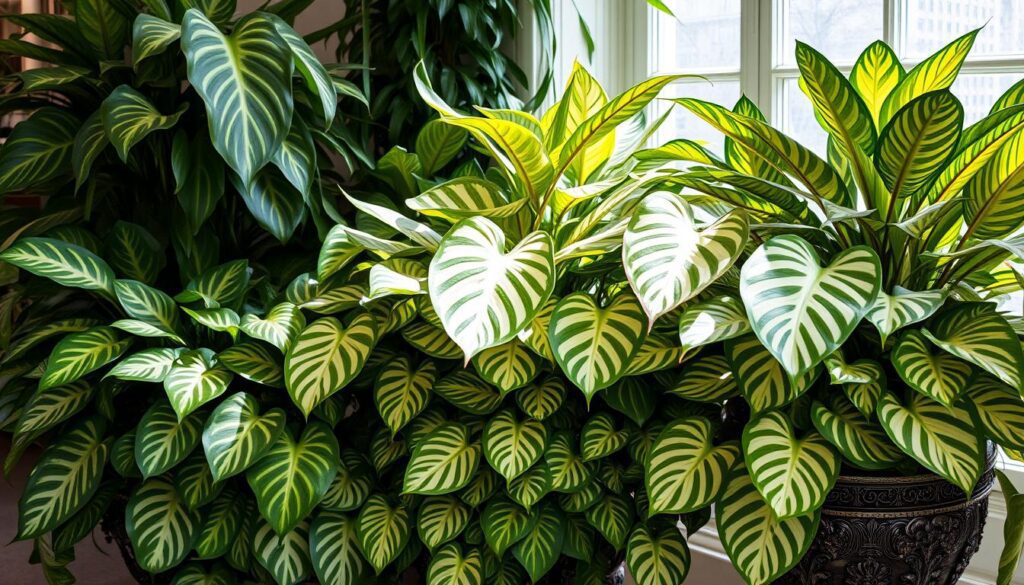
Make your indoor garden pop with variegated philodendrons. These plants have leaves with cool color combos like green, white, pink, or yellow. The Pink Princess and White Knight are just a few that will grab everyone’s attention.
The Philodendron Birkin is a favorite for its green leaves with creamy white stripes. The Philodendron Golden Dragon Variegated and Philodendron Red Congo Variegated also stand out with their bright colors. They can really make any room look better.
These plants need bright, indirect light to keep their colors looking great. They also need the right amount of water, humidity, and temperature. Pruning in winter helps keep their leaves looking good.
Variegated philodendrons are a must-have for anyone who loves indoor plants. They come in many varieties, like philodendron variegata and rare philodendron varieties. They’re perfect for adding beauty to your collection.
“Variegated philodendrons are the true showstoppers of the indoor plant world, captivating us with their mesmerizing color patterns and unique foliage.”
Climbing Philodendron Species for Indoor Spaces
Philodendrons come in many varieties, some of which love to climb. These climbing philodendrons are great for indoor gardens. They add height, texture, and interest. Two popular types are Philodendron erubescens and Philodendron Billietiae.
Support and Training Tips
To help climbing philodendrons grow, give them a strong trellis or moss pole. Use soft ties or clips to attach the vines to the support. This way, the plant will climb and can grow up to 20 feet tall indoors.
Growth Patterns
Climbing philodendrons grow fast and can cover a lot of space. With the right care, they do well indoors, creating lush foliage. You might need to prune them to keep them in shape.
For the best growth, give them bright, indirect light and keep the soil moist. They like warm temperatures between 65°F and 85°F and high humidity. Meeting these needs will make your indoor space look amazing with these plants.
Self-Heading Philodendron Varieties
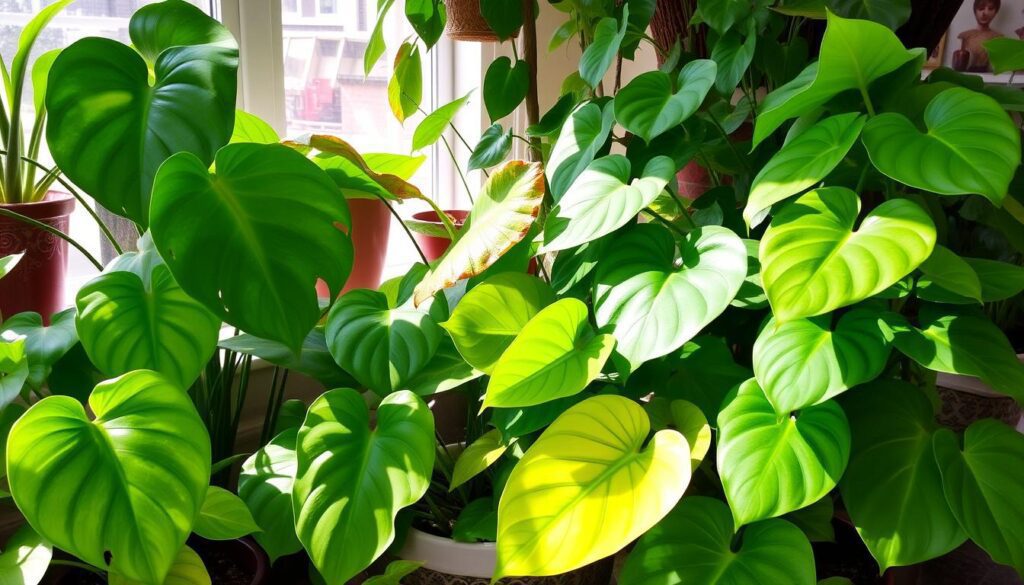
Self-heading philodendrons are compact and bushy. They are different from the classic vining philodendrons. These plants grow upright, making them perfect for tabletops or as floor plants.
Self-heading philodendrons have larger, more dramatic leaves. Plants like Philodendron ‘Prince of Orange’ and Philodendron Birkin have a beautiful, bushy shape. They add elegance to any room.
| Philodendron Variety | Growth Habit | Leaf Characteristics |
|---|---|---|
| Philodendron ‘Prince of Orange’ | Compact, self-heading | Large, dramatic leaves |
| Philodendron Birkin | Bushy, upright | Variegated, heart-shaped leaves |
| Philodendron Imperial Green | Compact, self-heading | Large, glossy green leaves |
| Philodendron Xanadu | Bushy, upright | Deeply lobed, tropical-looking leaves |
Looking for a dramatic touch in your philodendron collection? Or maybe you prefer something more compact? These self-heading varieties are a great choice for your indoor garden.
“Self-heading Philodendrons are classified as arborescent and tend to have an upright growth habit with a thick stem, resembling tree-like appearance.”
Rare and Collector’s Philodendron Species
Philodendrons are loved by many indoor gardeners and collectors. Common types, like the Heartleaf Philodendron, are great for beginners. But, there’s a world of philodendron varieties that excite serious fans.
The Philodendron Pink Princess is a top rare philodendron. It has dark green leaves with bright pink spots. This plant is rare and expensive, making it a prized collector’s item.
Pink Princess Philodendron
The Philodendron White Knight is another collector’s philodendron. It has white and green leaves that are hard to find. This plant is a favorite among plant lovers, showing the philodendron family’s variety.
White Knight Philodendron
The philodendron family has many unique philodendron varieties that are rare. The Philodendron Spiritus Sancti is one of the rarest, making it very valuable. The Philodendron Gloriosum and Philodendron Verrucosum are also highly sought after for their unique looks and rarity.
These rare philodendron species need special care. They need more humidity and consistent temperatures to grow well. Their rarity and special features make them a must-have for serious plant collectors.
Color-Changing Philodendron Varieties
Get ready to be amazed by the color-changing philodendrons. These color-changing philodendrons bring a lively, changing look to your indoor garden.
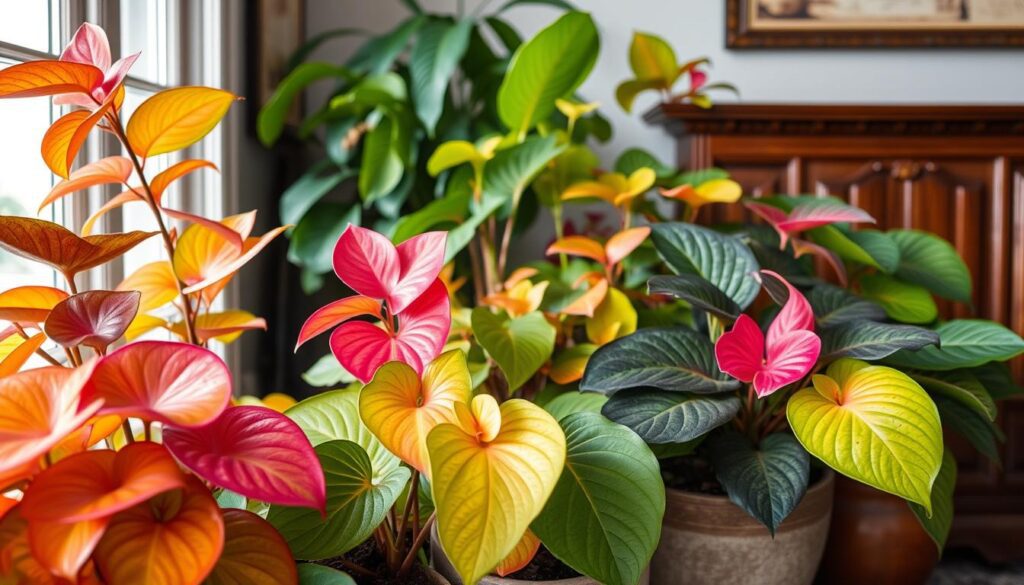
The Philodendron ‘Prince of Orange’ is a standout. Its leaves start orange and turn green as they grow. The Philodendron McColley’s Finale also changes color, going from bronze-red to bright green.
The Philodendron Black Cardinal is truly eye-catching. Its leaves begin burgundy and turn almost black with age. These philodendron foliage colors make any space more interesting.
Whether you’re new to plants or have been growing them for years, these unique philodendron types will amaze you. Add them to your indoor garden for a constantly changing, beautiful display.
Small Space Philodendron Options
If you have limited indoor space, there are many philodendron varieties that can do well. These small philodendrons are great for tables or windowsills. They bring the look of bigger plants but are easier to handle.
Look into the Philodendron ‘Little Hope’, Philodendron Birkin, or Philodendron Green Princess. These plants usually don’t grow taller than 3 feet. They’re ideal for small apartments, offices, or any tight spot.
- Philodendron ‘Little Hope’: A dwarf philodendron that grows to just 12-18 inches tall and wide.
- Philodendron Birkin: A compact hybrid with stunning variegated leaves, reaching 2-3 feet in height and width.
- Philodendron Green Princess: An upright, self-heading variety that stays small, around 2 feet tall and wide.
These small philodendrons love bright, indirect light and need little care. They’re perfect for adding greenery to small spaces like desks or shelves. Check out the compact philodendrons to find the right one for your indoor garden.
“Philodendrons are a versatile and hardy plant, making them a great choice for small-space living.”
Large Statement Philodendrons
Large philodendrons are perfect for making a bold statement in your indoor garden. They can grow tall and wide, looking like small trees. The Thaumatophyllum bipinnatifidum and the Philodendron Xanadu are two standout varieties.
The Thaumatophyllum bipinnatifidum, also known as the “Split-Leaf Philodendron,” has big, lobed leaves. These leaves can be up to 3 feet tall and spread 6 feet wide. It adds a tropical touch to any room. The Philodendron Xanadu is also impressive, growing up to 3 feet tall and wide. It gives a lush, full look.
These philodendrons are not just beautiful but also need special care. They need lots of space and bright, indirect light. Regular pruning and support help them grow well. With the right care, they can turn any room into a tropical oasis.
| Philodendron Variety | Maximum Height | Maximum Width | Unique Features |
|---|---|---|---|
| Thaumatophyllum bipinnatifidum | 3 feet | 6 feet | Large, deeply lobed leaves |
| Philodendron Xanadu | 3 feet | 3 feet | Compact, lush appearance |
“These large philodendrons are true statement plants that can transform any indoor space into a stunning tropical oasis.”
Propagation Methods for Different Philodendron Types
Philodendrons are loved for their beautiful leaves, making them great for indoor gardens. You can easily grow more of these plants to share or add to your collection. We’ll look at two main ways to do this: node cutting and air layering.
Node Cutting Technique
The node cutting method works well for most philodendrons, like Philodendron ‘Brasil’ and velvet leaf philodendron. Spring or summer is the best time for cuttings because they grow roots faster in warm weather. But, you can still propagate philodendrons all year, even if it takes longer in cooler months.
- Choose a healthy stem and cut a 6-inch piece just below a leaf node.
- Take off the lower leaves, leaving a few at the top.
- You can root the cutting in water or directly in moist potting soil.
- If using water, change it often to keep it fresh.
- Roots will show in 1-4 weeks, and new growth in 2-4 weeks.
- When roots are an inch long, move the cutting to a 3-4 inch pot with fresh soil.
Air Layering Method
The air layering method is better for self-heading philodendrons. It creates a rooting spot on the plant, allowing roots to grow while still attached.
- Find a healthy stem with nodes and make a shallow cut just below a node.
- Wrap the cut area with moist sphagnum moss or potting mix, securing it with plastic or a stem piece.
- Keep the moss or soil wet, and roots should appear in a few weeks.
- When roots are strong, you can separate the stem and plant it in its own pot.
While most philodendrons are easy to propagate, some may need extra care. With the right methods and patience, you can grow your philodendron collection from cuttings and air layers.
Common Problems and Solutions
Philodendrons are easy to care for, but they can face some common issues. Knowing these problems and how to fix them can help your plants thrive. Let’s look at some common concerns and how to solve them.
Yellowing Leaves
Yellow leaves can mean too much water, not enough water, or a lack of nutrients. Make sure to water your philodendron right, letting the top soil dry out before watering again. Don’t over-fertilize, as this can also cause yellow leaves. If the problem continues, try repotting your plant in fresh, draining soil.
Pest Infestations
Philodendrons can get pests like spider mites, mealybugs, and aphids. Watch your plants closely and check for pests often. Use neem oil or insecticidal soap to treat any infestations quickly.
Bacterial and Fungal Diseases
Diseases like bacterial leaf spot and blight can hit philodendrons, often from too much water or bad drainage. Make sure your soil drains well and adjust your watering if needed. Cut off any sick leaves to stop the disease from spreading.
By knowing these common issues and how to fix them, you can keep your philodendrons healthy. Regular checks, proper watering, and watching out for pests and diseases are crucial for your plants’ well-being.
“Philodendrons are resilient plants, but they do require some attention to ensure they stay healthy and happy in your home.”
For individual philodendron guides, compare these types with our Pink Princess Philodendron, Philodendron micans, and Split Leaf Philodendron. For the broader topic, visit the houseplants hub.
Conclusion
The philodendron genus is full of indoor plant options. You can find everything from easy-to-care-for varieties to rare collector’s items. Whether you like the lush vines of the heartleaf philodendron or the striking variegation of the Pink Princess, there’s a philodendron for everyone.
These tropical plants need the right light, water, and humidity to thrive. They can even purify the air in your home or office. From small, versatile plants to large, eye-catching ones, philodendrons meet the needs of many plant lovers.
When looking for a philodendron, think about its growth habit, leaf shape, and color. This will help you find the perfect plant for your indoor space. With proper care and a bit of creativity, philodendrons can make your home feel like a lush, tropical paradise.
FAQ
What are the different types of philodendrons?
There are over 450 types of philodendrons. They include climbing, trailing, and self-heading varieties. Some favorites are Rojo Congo, McColley’s Finale, and tortum (fernleaf philodendron).
Where do philodendrons originate from?
Philodendrons come from the South American rainforests. They belong to the Araceae family, with over 480 species.
How can I identify different philodendron types?
Philodendrons have heart-shaped or elongated leaves. They often have lobes or splits. Leaf colors range from deep green to variegated patterns.
They grow in different ways, like self-heading, creeping, and climbing types.
What are the basic care requirements for indoor philodendrons?
Philodendrons need bright, indirect light and well-draining soil. They prefer moderate watering. They thrive in temperatures between 65-85°F (18-29°C).
They also like high humidity. Regular cleaning and fertilizing during the growing season is key for their health.
What are some of the most popular philodendron varieties?
Popular varieties include heartleaf, Brasil, and lemon-lime. Rare types are Pink Princess, White Knight, and Philodendron Joepii Variegated.
How do I care for trailing philodendron varieties like Brasil and Micans?
Trailing philodendrons like Brasil and Micans need bright, indirect light. They prefer consistent moisture. They’re great for hanging baskets or shelves and are easy to care for.
What are the characteristics of variegated philodendrons?
Variegated philodendrons like Pink Princess, White Knight, and Philodendron Birkin have unique color patterns. They combine shades of green, white, pink, or yellow. They need bright, indirect light to keep their variegation.
How do I care for climbing philodendrons?
Climbing philodendrons like Philodendron erubescens and Philodendron Billietiae need support. Use moss poles or trellises. Train the vines by gently tying them to the support.
Provide bright, indirect light and consistent moisture for optimal growth.
What are self-heading philodendrons, and how do they differ from vining types?
Self-heading philodendrons like Philodendron ‘Prince of Orange’ and Philodendron Birkin grow upright. They don’t need support. They have larger, more dramatic leaves than vining types.
How can I propagate different philodendron varieties?
Most philodendrons can be propagated through stem cuttings with nodes. For vining types, cut below a node and root in water or moist soil. Self-heading varieties may need air layering.
That involves creating a rooting environment on the stem while still attached to the parent plant.