
Have you ever thought about what happens to old plant material in your garden? Pill bugs help break down this material, but too many can be a problem. If you’re dealing with a pill bug infestation, you’re not alone. These small bugs can destroy seedlings quickly, harming your plants.
Introduction to Pill Bug Control
It’s important to control pill bug numbers to keep your garden healthy. While they’re good for the soil, too many can damage plants and soil. To manage pill bugs, you need to know how to get rid of them without harming the environment.
Key Takeaways
- Pill bugs are detritivores that feed on dead and decomposing organic matter, contributing nutrients to the soil.
- High moisture conditions can lead to increased populations of pill bugs in gardens.
- A trapping method using fruit can significantly reduce pill bug populations.
- Reducing decaying organic matter and minimizing soil wetness can help control pillbug populations.
- Using raised beds or plastic mulch can prevent pillbugs from becoming serious problems in your garden.
Understanding Pill Bugs: Basic Facts and Characteristics
Pill bugs, also known as Armadillidium vulgare, are unique crustaceans that live on land. They help break down dead organic matter into the soil. When trying to get rid of pill bugs in the garden, knowing their habits is key. Their presence can be good or bad, depending on their numbers.
Pill bugs are small, ranging from one-quarter to five-eighths of an inch long. They have 14 legs and live up to two years. They prefer moist, shady spots and are most active at night. They can harm plants, mainly young seedlings and tender roots.
To manage pill bugs, understanding their life cycle and behavior is important. They start reproducing at about one year old. Large groups can damage gardens, leaving small holes on leaves and stems. Knowing this helps you find ways to control them and protect your plants.
Controlling pill bugs involves reducing moisture and fixing leaks. Encouraging birds and frogs to eat them also helps. These steps can reduce damage and keep your garden healthy.
The Role of Pill Bugs in Your Garden Ecosystem
Pill bugs are important in garden ecosystems. They eat dead and decomposing organic matter. This helps break down the matter and adds nutrients to the soil, which is good for plants.
Having pill bugs in your garden can be a good thing. They help with decomposition. But, too many can eat too much plant debris.
In a healthy garden, pill bugs are not usually seen. They don’t harm plants in small numbers. But, watching their numbers is key to avoid damage.
Pill bugs like damp, dark places with decaying material. They live in compost piles, helping break down organic matter.
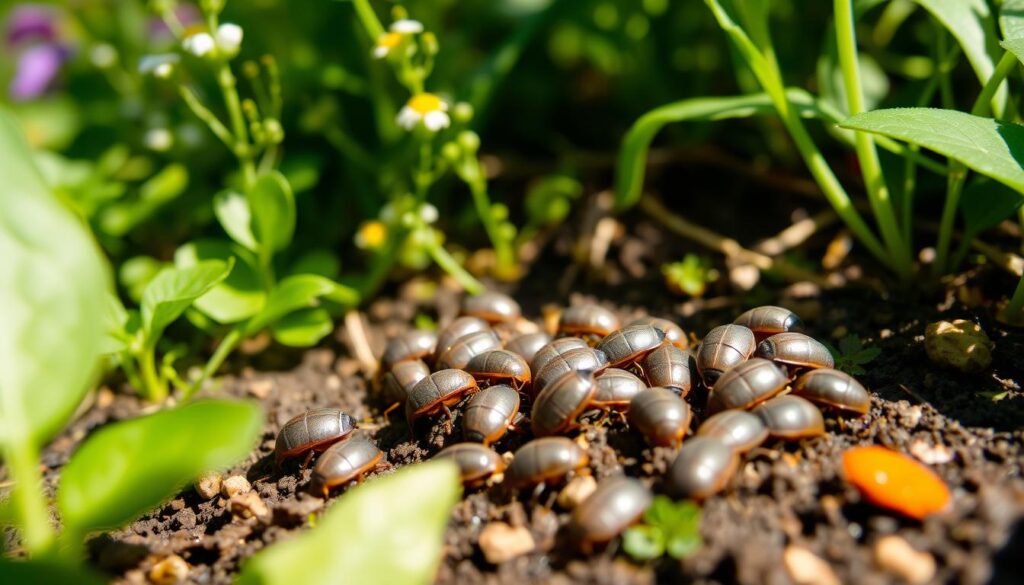
- They are not known to bite, sting, or transmit diseases, making them safe to handle.
- They shed their exoskeletons five to six times during their growth, occurring in two stages.
- It takes about one year for pill bugs to reach full adulthood.
Understanding pill bugs’ role in your garden is key. They are vital for a balanced environment. While too many can be a problem, their benefits are clear. Managing their numbers is important for a healthy garden.
Identifying Pill Bug Damage in Your Garden
To get rid of pill bugs in your garden, you need to know what they do. Pill bugs can slow down plant growth and harm crops. They eat young plants and fruits near the ground, leaving holes in leaves.
When trying to figure out how to get rid of pill bugs in my garden, look for signs. These include:
- Yellowing or wilting leaves
- Holes in leaves or roots
- Dying seedlings
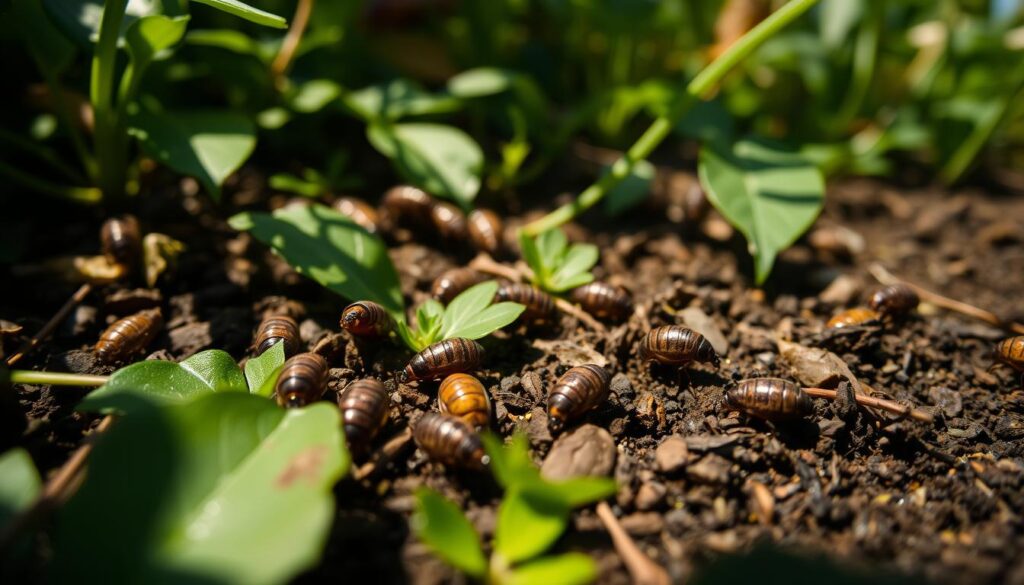
Young seedlings are often hit hard by pill bugs. They eat the roots and leaves, causing damage. Check your plants often for signs of pill bug damage. Early detection helps you take action and keep your garden safe.
Beneficial Aspects of Pill Bugs in Garden Environments
When thinking about getting rid of pill bugs in your vegetable garden, remember their good side. Pill bugs help break down organic matter and improve soil health. They are key in gardens with lots of decaying plants, turning it into nutrients for plants. This is super helpful in vegetable gardens, where good soil is key for plants to grow well.
In a healthy garden, pill bugs live alongside other good bugs. This helps the garden stay healthy. To get rid of pill bugs where they’re not wanted, knowing their role is important. Understanding how they help break down organic matter makes your garden more sustainable.
Some main benefits of pill bugs in gardens are:
- They break down decaying organic matter, cutting down waste and recycling nutrients.
- They make the soil healthier, which helps plants grow better.
- They help keep the garden balanced, living with other good bugs.
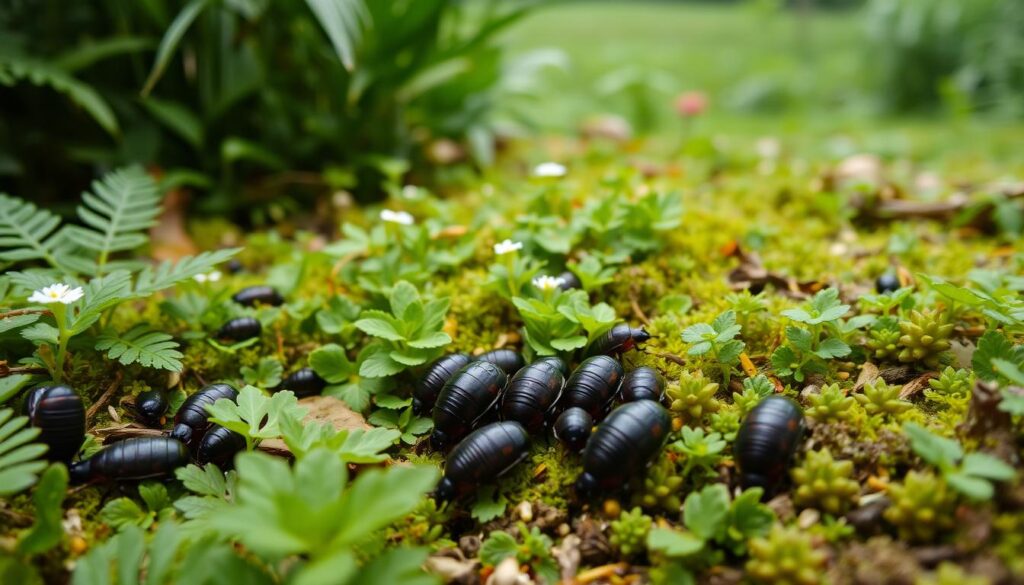
By seeing the good in pill bugs, you can make your garden more balanced and sustainable. This way, you can deal with pill bug problems in your vegetable garden while keeping your garden healthy overall.
When Do Pill Bugs Become a Garden Problem?
Pill bugs can cause big problems in your garden if their numbers get too high. They can damage plants and crops. You might see yellow or wilted leaves, holes in leaves or roots, or dying seedlings. This means pill bugs are eating your plants.
To know if pill bugs are a problem, watch their numbers and see if they’re a risk. Killing pill bugs in garden is tough, but you can control them. Knowing what kills them is key to stopping them.
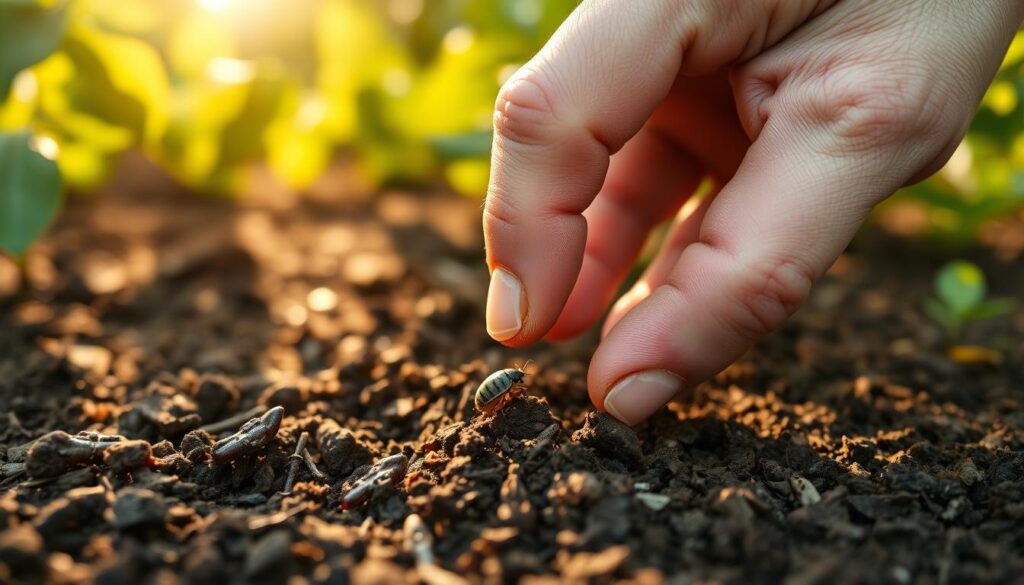
Things like too much mulch, rotting organic matter, and wet conditions help pill bugs grow. To stop them, remove extra mulch, improve drainage, and dry out the area. Natural ways to fight pill bugs include diatomaceous earth, homemade traps, and beneficial nematodes.
Population Thresholds
Pill bugs love gardens that are wet and full of food. When they have too many, they harm plants and crops. Keep an eye on their numbers and act fast if they get too many.
Risk Factors
Things like bad garden care, too much mulch, and rotting matter attract pill bugs. Knowing these risks helps you avoid them. Remove mulch and debris, improve drainage, and dry out the area to stop pill bugs. This way, you won’t need to killing pill bugs in garden as much.
Natural Methods to Control Pill Bugs
To get rid of pill bugs in your garden naturally, it’s key to know their habits. Pill bugs love moist, dark spots. So, if your garden is too wet, it might attract more of them. By cutting down on moisture, not over-mulching, and removing hiding spots, you can make your garden less welcoming to pill bugs.
Using natural methods can help control pill bugs. For example, coffee grounds can keep them away when spread around your garden. You can also make a spray with dish soap and water to kill them. Plus, planting herbs like basil, mint, and rosemary can help keep pill bugs away.
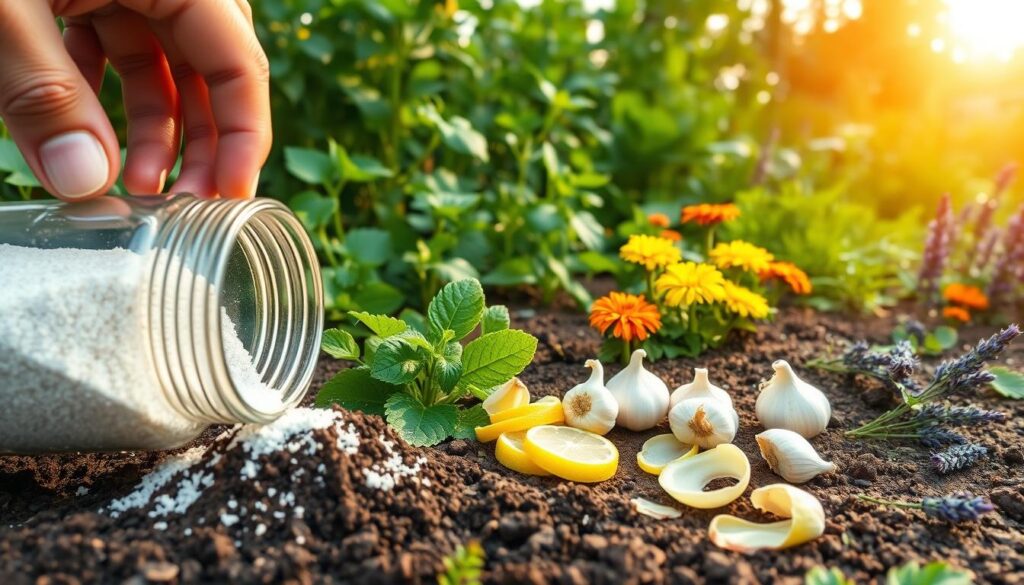
Other natural ways include using beneficial nematodes and homemade traps with beer or cornmeal. These can attract and get rid of pill bugs. Also, making sure plants have good air flow can help keep pill bugs away. By using these natural methods, you can keep your garden free from pill bugs without harming the environment.
Here are some important tips for controlling pill bugs naturally:
- Reduce moisture in your garden
- Avoid over-mulching and clean up debris
- Use organic deterrents like coffee grounds and dish soap
- Plant bug-repellent herbs like basil and mint
- Ensure good air flow around plants
Chemical Solutions for Pill Bug Control
Chemical solutions can help control pill bugs in the garden when the problem is big. But, it’s important to use them carefully and only when needed. To kill pill bugs in garden areas, you can try products like Valar Plus Bifenthrin Granules or Supreme IT.
Valar Plus Bifenthrin Granules have 0.2% bifenthrin and can protect areas for up to three months. To get rid of pillbugs, you need 4.6 lbs. of Valar Plus Bifenthrin Granules for every 1,000 sq. ft. Supreme IT can kill over 70 insects, including pillbugs, for up to 90 days. For Supreme IT, use 0.25 to 0.5 oz. per gallon of water for every 1,000 sq. ft. of lawn and plants.
Some important things to remember when using chemical solutions for pill bugs in the garden are:
- Always follow the product instructions and take necessary precautions to avoid exposure.
- Repeat treatments as recommended, usually every 90 days, to maintain control.
- Spray 3 feet up and 3 feet out from the home foundation to prevent indoor infestations.
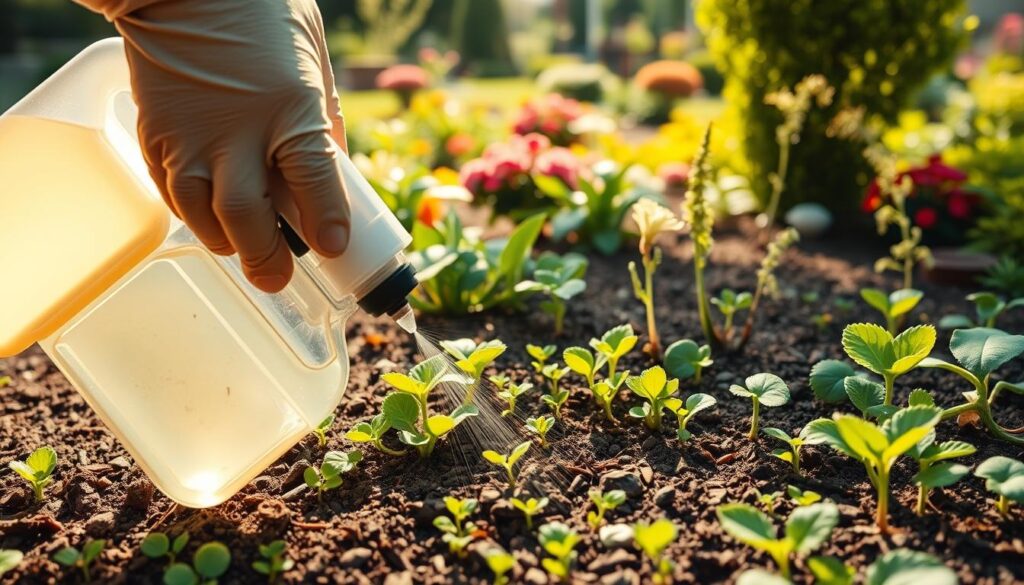
By using chemical solutions wisely and with other methods, you can manage pill bugs in the garden well. This helps prevent them from coming back.
Creating an Unfavorable Environment for Pill Bugs
To get rid of pill bugs in garden areas, you need to make their home less welcoming. Pill bugs love damp places like moist soil, under rocks, logs, or decaying plants. By cutting down on moisture and improving drainage, you can make your garden less appealing to them.
Strategies to keep pill bugs away include removing organic debris and using the right mulch. Raised garden beds help with drainage and keep pill bugs away from your plants. Sealing entry points and using dehumidifiers can also keep them out of your home.
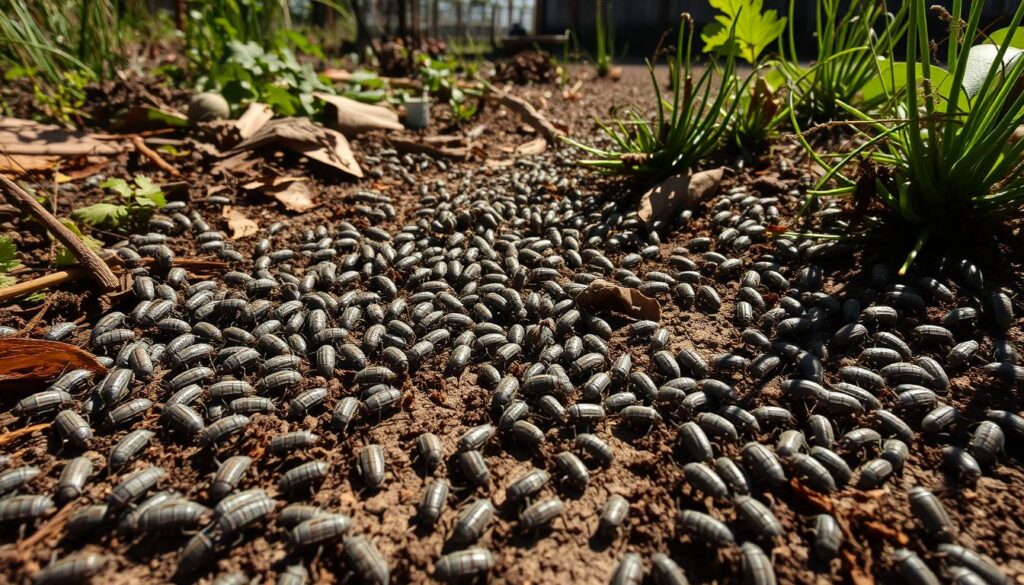
Regularly checking your garden for pill bugs can help catch infestations early. Changing what you grow in your garden can also help control pill bugs. Planting natural repellents like marigolds can keep them away. These steps can help you avoid using harsh chemicals to control pill bugs.
Here are some important tips to prevent pill bug infestations:
- Reduce moisture and improve drainage
- Remove organic debris and use proper mulch
- Use raised garden beds and seal entry points
- Try crop rotation and companion planting
Protecting Vulnerable Plants from Pill Bugs
To stop pill bug problems, it’s key to guard young plants. Use methods like wrapping seedlings in duct tape or newspaper collars. This keeps pill bugs away and saves your plants.
Physical barriers like plastic or paper cups also work well. They shield new sprouts from pill bugs. This is vital when plants are young and weak. By doing this, you lower the chance of pill bug attacks and learn how to get rid of pill bugs in garden spots.
Choosing the right plants is also important. Some, like strawberries and squash, attract pill bugs more. Pick plants that pill bugs don’t like as much. This way, you can avoid infestations and discover how to get rid of pill bugs in the garden areas.
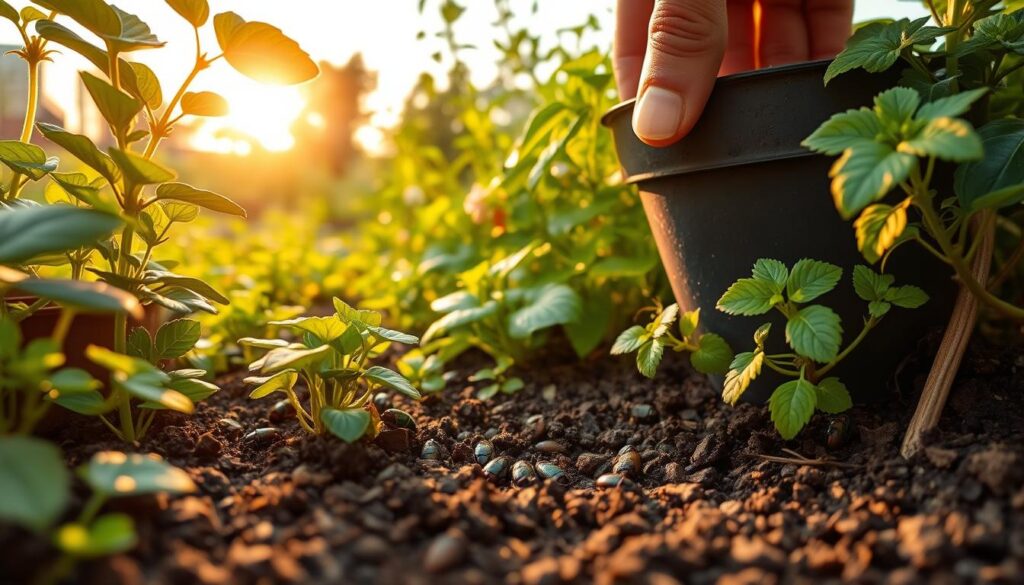
Combining defensive gardening and smart plant choices helps protect your plants. Always watch your garden for pill bugs and act fast to stop damage.
Prevention Strategies for Long-term Control
To keep your garden healthy, it’s important to prevent pill bugs from taking over. Understanding their habits helps you fight back. Pill bugs love moist places, so make sure your garden drains well and don’t overwater.
Watching your garden closely is key to catching pill bug problems early. Look for signs like damaged plants or pill bugs themselves. Encourage birds and beneficial insects to help control pill bug numbers.
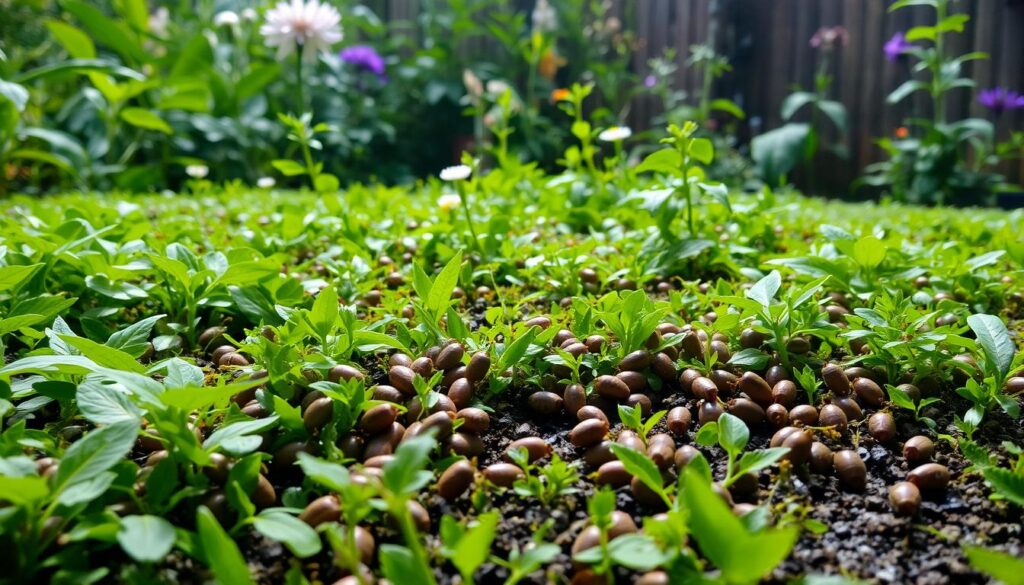
- Remove rotting plants and mulch to cut down on hiding spots and food
- Use plastic or paper cups to protect plants from pill bugs
- Boost soil health and diversity to keep your garden balanced
By using these methods, you can lower the chance of pill bug problems. Remember, stopping them before they start is the best way to keep your garden healthy.
Common Mistakes in Pill Bug Management
Trying to get rid of pill bugs in your garden can be tricky. Avoiding common mistakes is key. One big error is using methods that don’t work, like too much mulch or water. This makes your garden a perfect home for pill bugs.
To manage pill bugs well, aim for a balanced garden. This balance lets pill bugs live alongside other helpful creatures.
Ineffective Control Methods
Some people use chemicals to fight pill bugs, but it often backfires. Natural solutions like diatomaceous earth or beneficial nematodes work better. Also, keeping your plants’ roots healthy can help prevent pill bug damage.
Stay away from practices that attract pill bugs, like too much mulch or water. Knowing what pill bugs like can help you make your garden less appealing to them. This makes it easier to control their numbers.
Seasonal Considerations for Pill Bug Control
To kill pill bugs in your garden, knowing their life cycle is key. Pill bugs can have babies without a male, with females laying eggs that hatch in 3 to 9 weeks. This can lead to a big increase in their numbers during certain times of the year. So, it’s important to watch their activity and change your control plans as needed.
Understanding the seasons when pill bugs are most active is vital. In these times, you might need to check and control them more often. Effective ways to get rid of them include using pesticides, traps, and changing the garden environment. For example, using coarse mulch helps water drain fast, making it harder for pill bugs to thrive.
Here are some tips for controlling pill bugs throughout the year:
- Water your plants early to keep the soil dry at night, which helps reduce pill bug activity.
- Remove moist, dark spots and clean up organic debris to make your garden less appealing to pill bugs.
- Try using diatomaceous earth to dry the soil, but remember its success depends on how thick you apply it.

By keeping these seasonal tips in mind, you can create a better plan to kill pill bugs in your garden. This will help keep your garden healthy and balanced.
Integrating Pill Bug Control with Overall Garden Health
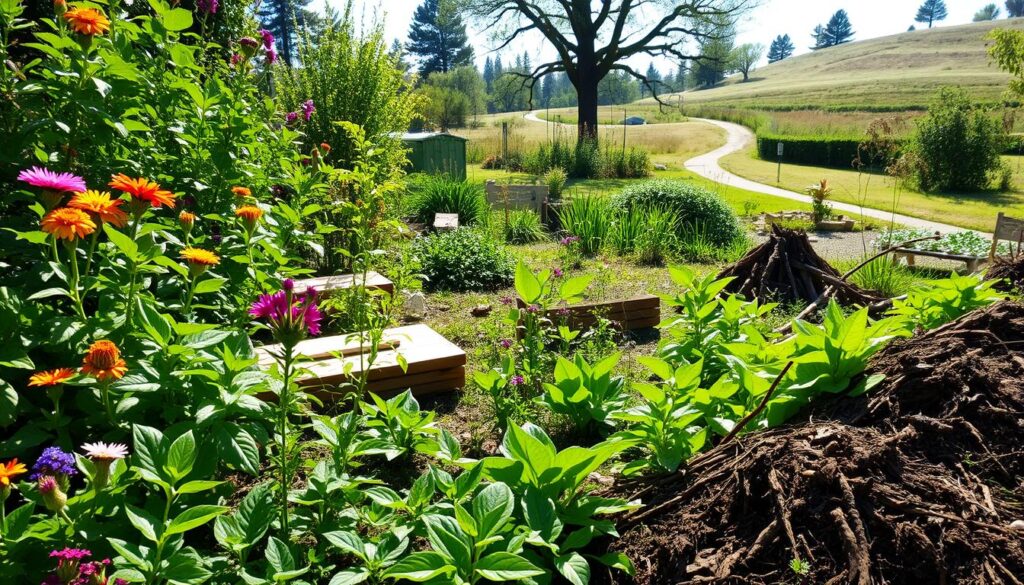
Keeping your garden balanced is key. It’s important to think about how controlling pill bugs affects your garden’s health. A holistic approach helps prevent infestations and keeps your garden thriving. Knowing what kills pill bugs and how to get rid of them naturally is essential.
Effective ways to control pill bugs include reducing soil moisture and using physical barriers. For example, changing how you water can cut down infestations by 40%, mainly in spring. Also, choosing crops with thicker skins or stems can lower damage by about 25%.
Balanced Approach Methods
A balanced approach to controlling pill bugs means using different methods together. This can include:
- Monitoring for signs of infestation to enable early detection and prompt action
- Implementing physical barriers, such as diatomaceous earth, to reduce pillbug activity
- Using organic deterrents, like natural pest control sprays, to control pillbug populations
Sustainable Garden Practices
Sustainable garden practices are important for a healthy ecosystem. They help reduce the need for chemicals. By using integrated pest management (IPM) and reducing organic matter, you can make your garden less welcoming to pill bugs. This way, you can naturally get rid of pill bugs without chemicals.
Conclusion: Managing Pill Bugs While Maintaining Garden Balance
Pill bugs are important in your garden’s ecosystem. But, they can become a problem if there are too many. To manage pill bugs in your garden, you need to find a balance.
Use natural and physical methods to control pill bugs. This includes controlling moisture, changing their habitat, and using organic deterrents. These steps help reduce pill bug numbers without harming your garden.
Practicing sustainable gardening also helps. It promotes biodiversity and soil quality. This keeps pill bug populations in check.
Keep an eye on your garden and act fast if you see pill bug problems. With a balanced approach, you can manage pill bugs and keep your garden healthy.
For broader garden pest identification, compare pill bugs with our common garden pests guide. For additional control methods, visit the Pest Control hub.
Source: For evidence-based guidance, see University of Minnesota Extension’s sowbug and pill bug guidance.
FAQ
What are pill bugs?
Pill bugs, also known as roly-polies or woodlice, are small crustaceans. They live in damp, dark places. You can find them in gardens, compost piles, and under rocks or logs.
What are the physical characteristics of pill bugs?
Pill bugs have oval-shaped, segmented bodies. They can roll up into a ball when disturbed. They are usually 1/4 to 3/4 of an inch long and have seven pairs of legs.
How do pill bugs reproduce and what is their life cycle?
Pill bugs reproduce through internal fertilization. Females carry their eggs until they hatch. The young, called “larvae,” shed their exoskeletons as they grow. They eventually reach adulthood.
How do pill bugs contribute to the garden ecosystem?
Pill bugs are detritivores. They feed on decaying organic matter. This helps break down and recycle nutrients in the soil, benefiting plant growth.
What are the common signs of a pill bug infestation in the garden?
Signs include seeing the insects themselves. You might find small, rounded holes or damage on plant leaves or stems. Also, seedlings or young plants may wilt or appear stunted.
When do pill bugs become a problem in the garden?
Pill bugs become a problem when their numbers grow too large. This can cause extensive damage to plants, mainly seedlings and young plants. Moisture, organic matter, and lack of natural predators can lead to an explosion in their population.
What are some natural methods for controlling pill bugs in the garden?
Natural methods include maintaining proper moisture levels. Use organic deterrents like diatomaceous earth or coffee grounds. Also, create physical barriers like copper barriers or cardboard collars around vulnerable plants.
When should chemical solutions be used for pill bug control?
Chemical solutions should be a last resort. Try natural methods first. If the infestation is severe and causing significant damage, targeted and responsible use of insecticides may be necessary. But, consider the impact on the garden ecosystem.
How can gardeners create an unfavorable environment for pill bugs?
Gardeners can make their gardens less appealing to pill bugs. Control moisture levels, remove decaying organic matter, and use physical barriers to prevent access to vulnerable plants.
What are some strategies for protecting vulnerable plants from pill bug damage?
To protect vulnerable plants, choose resistant varieties. Use physical barriers like cardboard collars or copper barriers. Also, apply organic deterrents around the base of plants.