
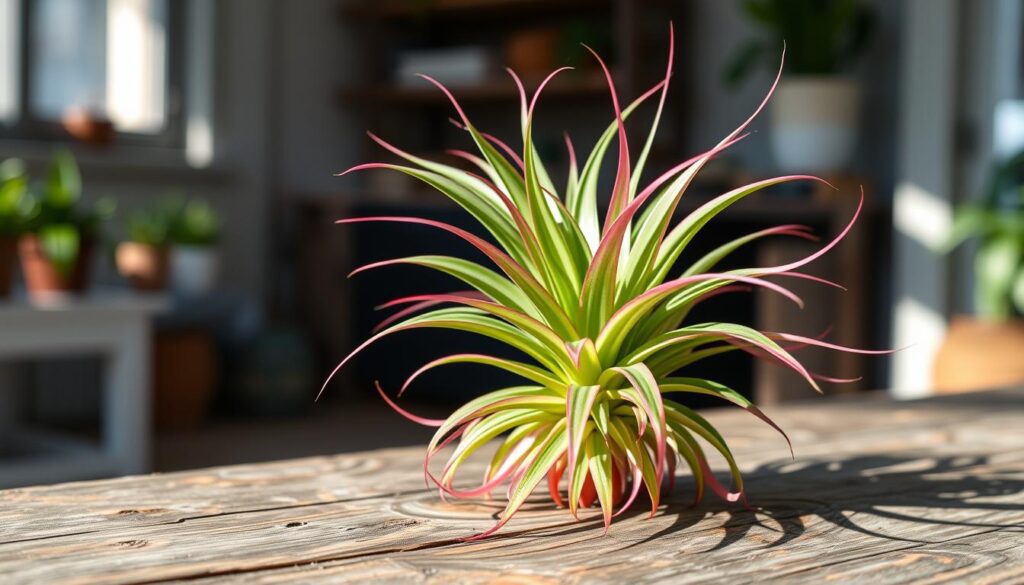
Caring for the Ionantha Air Plant: A Quick Start
Want to bring nature indoors? The ionantha air plant, or Tillandsia ionantha, is a great choice. It grows without soil and loves light, air, and the right water.
With the proper care, your plant will change colors and even bloom. This guide is for both new and experienced plant lovers. We’ll share tips for keeping your ionantha guatemala tillandsia air plant, ionantha rubra air plant, or others happy and healthy.
Key Takeaways
- Ionantha air plants are low-maintenance but have specific care requirements
- Understanding the Ionantha species and its growth patterns is key to providing optimal conditions
- Proper light, water, temperature, and humidity management are crucial for healthy Ionantha plants
- Careful mounting and display techniques can enhance the natural beauty of Ionantha air plants
- Propagation methods allow you to expand your Ionantha collection with ease
Understanding the Ionantha Air Plant Species
The ionantha air plant is a beautiful, easy-to-care-for plant from the Bromeliad family. Known as Tillandsia ionantha, it grows on trees in its home in Central America.
Native Habitat and Natural Growth Patterns
Tillandsia ionantha air plant grows in the humid, tropical areas of Central America, like Guatemala. It likes moist air and grows on tree bark in cloud forests or near the coast.
Different Varieties and Their Characteristics
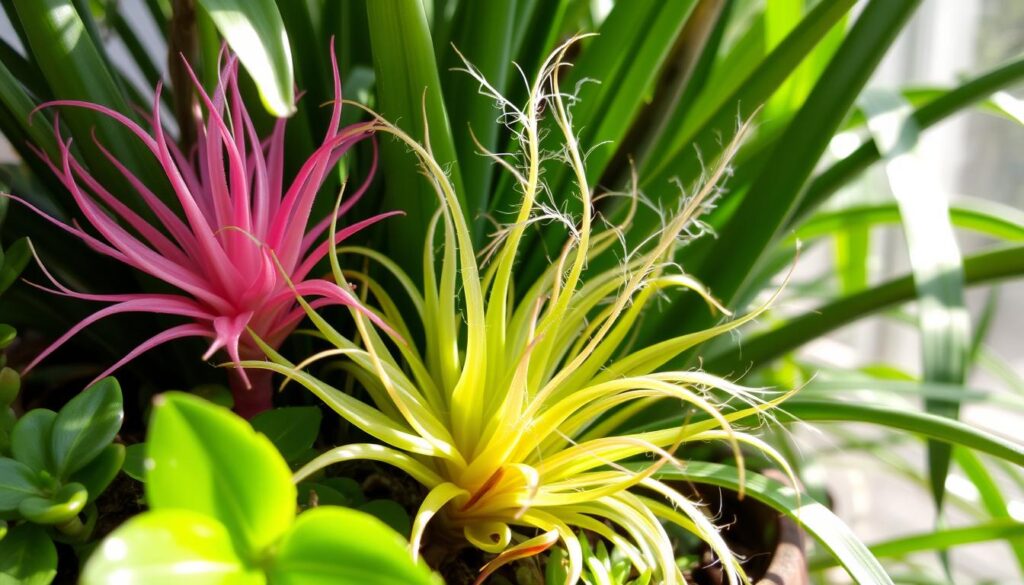
There are many types of Tillandsia ionantha. For example, the Ionantha guatemala tillandsia air plant has green leaves that turn red when it blooms. The Ionantha rubra air plant has deep red leaves and is smaller. Each type is unique and beautiful.
Growth Cycle and Maturity Stages
The life of a Tillandsia ionantha starts with a small leaf rosette. As it grows, it blooms with a red or purple flower. Then, new plants grow from the old ones, starting the cycle again.
Essential Growing Requirements for Ionantha Air Plant
To keep your ionantha air plant healthy, it needs the right light, water, and air. This plant may be small, but it requires specific conditions to thrive.
Bright, Filtered Light
Like most Tillandsia ionantha plants, this one likes bright but indirect sunlight. Direct sun can burn its leaves. A spot with filtered light or a soft grow light is best.
Proper Moisture Routine
Watering is key for ionantha air plant care. These plants absorb moisture through their leaves. Mist them 2–3 times a week or give them a short soak. Always let them dry for 4 hours to avoid rot.
Good Air Circulation
Good airflow is essential for your Tillandsia ionantha guatemala air plant. Avoid closed spaces or stagnant air. Open shelves, hanging displays, or a small fan can help keep the air moving and prevent fungal problems.
Meeting these basic needs will help your plant thrive and add a natural touch to your space.
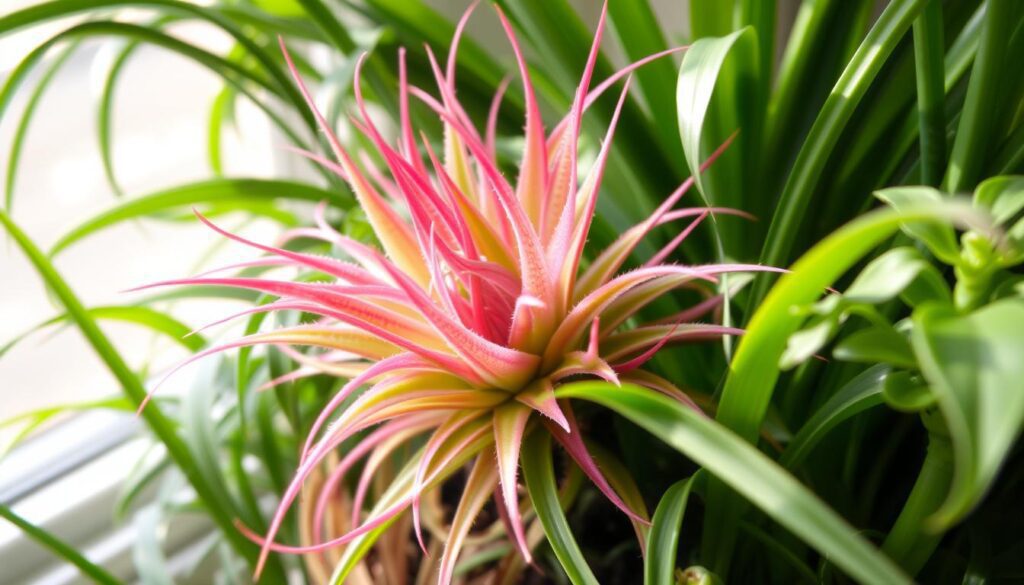
Optimal Light Conditions for Healthy Growth
Getting the right light is key for your ionantha air plant to stay healthy and colorful. This plant, from Central America, does best with the right light balance indoors.
Direct vs. Indirect Sunlight Requirements
The Tillandsia ionantha guatemala air plant loves bright but filtered sunlight. Direct sun for too long can damage its leaves. A spot near an east-facing window with sheer curtains is ideal. If using artificial light, place fluorescent or LED grow lights 6–12 inches away.
Seasonal Light Adjustments
Your plant’s lighting needs change with the seasons:
- In spring and summer, increase light exposure to match longer daylight hours.
- In autumn and winter, reduce exposure slightly to mimic its natural rest cycle.
Signs of Light-Related Stress
Watch your plant closely for early warning signs:
- Pale or washed-out colors may mean it needs more light.
- Browning or curled leaf tips can indicate sunburn from too much direct light.
- Slow or halted growth could point to a poor lighting setup.
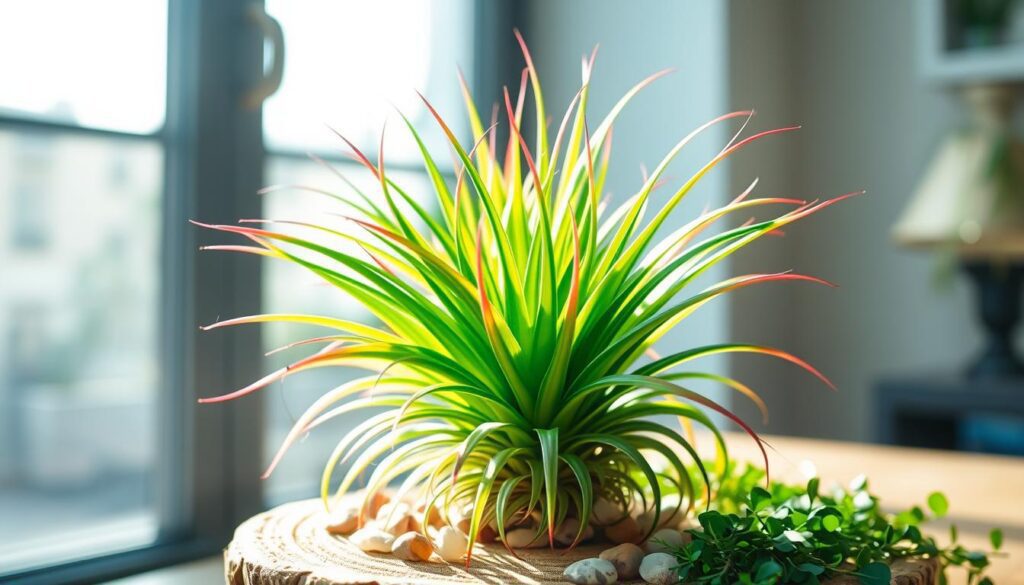
By giving your Tillandsia ionantha air plant the proper light, you’ll keep it looking vibrant and full of life all year long.
Watering Techniques for Ionantha Guatemala Tillandsia
Proper watering is key to keeping your Ionantha guatemala tillandsia air plant healthy. These tropical epiphytes absorb moisture through their leaves, not roots. So, they need just the right amount of water to stay vibrant.
Misting: Light & Frequent Hydration
Misting is a gentle way to give moisture. Use a fine spray bottle to mist the entire plant, focusing on the leaf base. Mist two to three times a week if your indoor space has low to moderate humidity. During dry months or in heated homes, more misting may be needed.
Soaking: Deep Weekly Refresh
Soaking provides thorough hydration. Submerge your Ionantha rubra air plant in room-temperature water for about 20 to 30 minutes. Afterward, shake off excess water and allow the plant to dry upside down or on a towel. Repeat this once a week or every 10 days, adjusting for temperature and humidity.
Adjusting to Seasonal Conditions
Water needs shift with the weather:
- In summer or dry conditions, increase misting or add an extra soak.
- In winter or humid climates, scale back to avoid excess moisture.
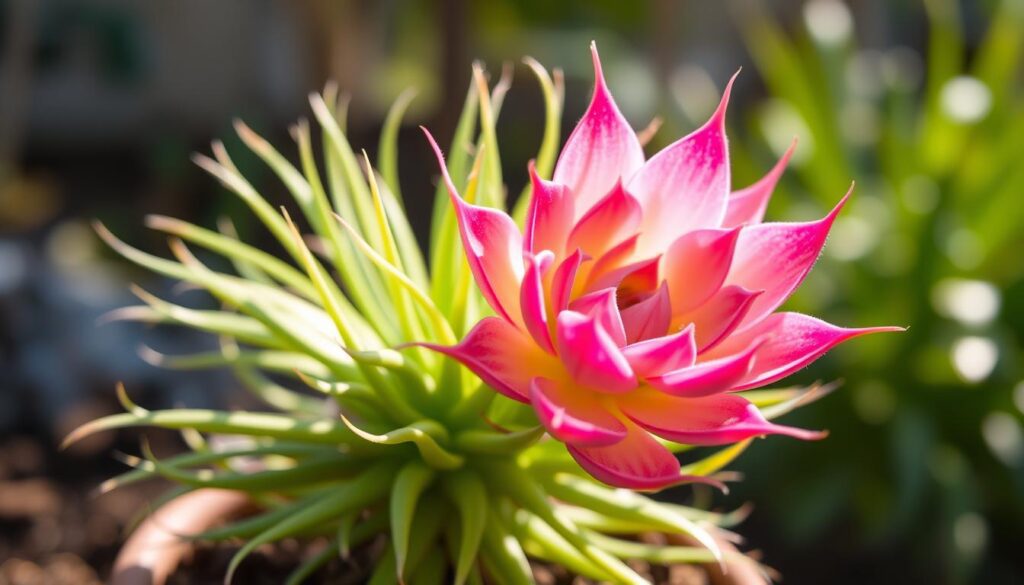
Too much water can cause rot, while too little leads to dehydration. By observing your plant and adjusting as needed, you’ll maintain a healthy balance for your Ionantha guatemala tillandsia.
Temperature and Humidity Management for Ionantha Air Plant
For your ionantha air plant to flourish indoors, maintaining the right temperature and humidity is key. These tropical plants are adapted to warm, moist climates. So, mimicking those conditions helps them stay vibrant and strong.
Ideal Temperature Range
The Tillandsia ionantha air plant prefers a temperature range between 60°F and 85°F (15°C to 29°C). These conditions are similar to their native habitat in Central America. Avoid exposing them to temperatures below 50°F (10°C) or near heat vents, as both extremes can damage their growth and leaf color.
Easy Ways to Maintain Humidity
To support healthy growth, aim for indoor humidity levels between 40% and 60%. If your home is dry, consider the following:
- Mist your plant lightly a few times a week.
- Use a pebble tray filled with water beneath the plant.
- Place a small humidifier nearby for a consistent environment.
These methods help your Tillandsia ionantha absorb the moisture it needs without overwatering.
Seasonal Adjustments for Indoor Health
During summer, monitor for excess dryness caused by air conditioning or sunlight. Increase misting or soaking if needed. In cooler months, reduce watering and avoid drafts or cold windowsills. Make gradual changes so your plant stays balanced and stress-free.
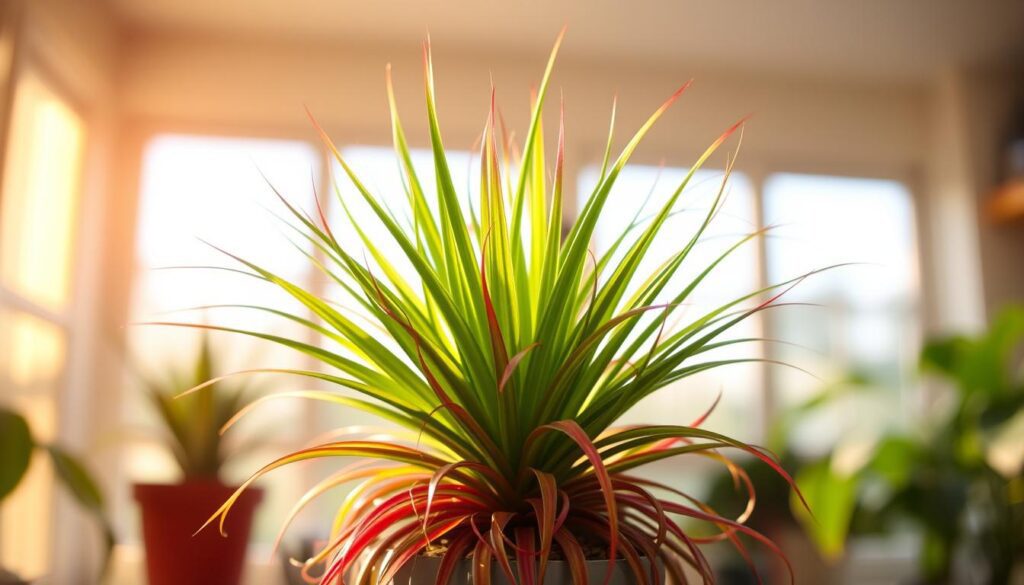
By keeping temperature and humidity in the ideal range, your ionantha air plant will reward you with vibrant leaves and steady growth throughout the year.
Air Circulation and Ventilation Needs for Ionantha Air Plant
Fresh air is key for a healthy ionantha air plant. These plants grow high in trees, where air flows constantly. To mimic this indoors, you can help your plant stay healthy and rot-free.
Why Airflow Matters
Poor air can trap moisture, leading to mold or rot. This is common after misting or soaking. Good airflow keeps your Tillandsia ionantha guatemala air plant dry and healthy.
Best Practices for Indoor Air Movement
- Place your plant near a bright window with a breeze.
- Use fans to move air in the room.
- Avoid spots with no air, like closed jars.
If your Tillandsia ionantha is in a terrarium, open it daily. Use mesh tops for air exchange. For glass globes, rotate the plant to ensure air flow.
Daily Ventilation Tips
Check if your air plant dries in 4 hours after watering. If not, increase airflow. This helps prevent risks and keeps your plant looking great.
| Air Circulation Requirements | Recommended Methods |
|---|---|
| Gentle, consistent air movement |
|
| Avoiding stagnant air |
|
| Preventing moisture buildup |
|
Good air circulation keeps your ionantha air plant vibrant and pest-free.

Fertilization Schedule and Requirements for Ionantha Air Plant
Feeding your ionantha air plant right keeps it colorful and healthy. These plants don’t need much fertilizer. But a little boost at the right time can make a big difference, like for the ionantha rubra air plant.
Choosing the Right Fertilizer
Use a fertilizer made for bromeliads or air plants. It has the right mix of nutrients for color, strength, and blooms. Avoid general-purpose fertilizers, as they can harm Tillandsia ionantha plants.
How to Apply Fertilizer
There are three ways to feed your air plant:
- Misting: Mix fertilizer to ¼ strength and mist once a month.
- Soaking: Soak in a mild solution for 20–30 minutes every 6–8 weeks.
- Slow-Release Pellets: Apply a small amount around the plant for long-term care.
Avoid Overfeeding
Feed less than more. Too much can harm your plant. If your Ionantha rubra air plant has brown tips or yellow leaves, reduce feeding.
With the proper feeding, your ionantha air plant will grow well and show off its colors and blooms.
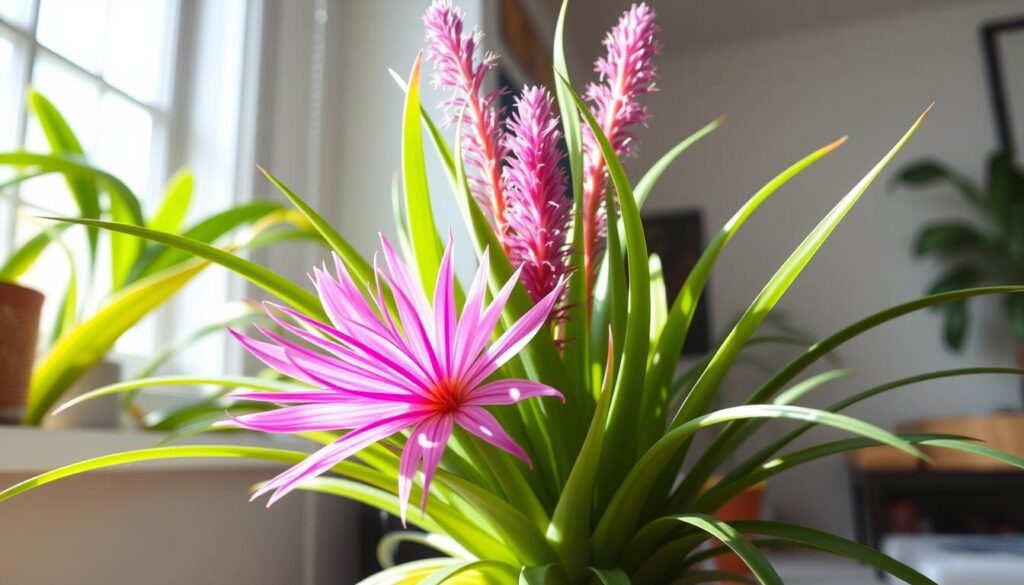
Mounting and Display Options for Ionantha Air Plants
Displaying your ionantha air plant creatively can enhance your home and the plant’s health. Whether it’s a Tillandsia ionantha air plant or a stunning Tillandsia ionantha guatemala air plant, there are many ways to showcase its beauty.
Terrarium Displays
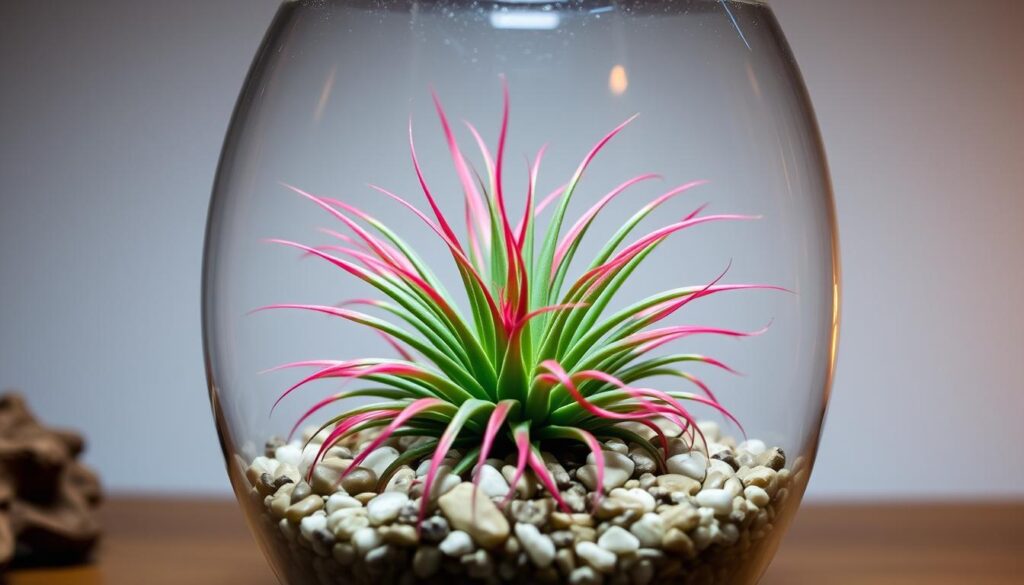
A glass terrarium is a clean, elegant way to display your plant. Use pebbles, moss, or driftwood as a base. This setup allows air flow while framing the plant in a beautiful scene. Just ensure your terrarium is well-ventilated for your Tillandsia ionantha to thrive.
Hanging Setups
Using wire, jute string, or clear fishing line to hang your air plant adds a cool vibe. Hang several plants at different heights near a window. This makes your Ionantha Guatemala tillandsia air plant look great and get the light it needs.
Mounted on Natural Materials
Mounting your plant on driftwood or untreated bark feels like it’s in its natural home. Use safe glue or wire to attach it — no soil needed. Over time, the plant will stick to the surface. This is perfect for showing off the Tillandsia ionantha air plant‘s shape and colors.
| Display Option | Benefits | Considerations |
|---|---|---|
| Terrarium | Enclosed environment, visual interest | Requires regular misting, potential for humidity issues |
| Hanging | Airy, space-saving, eye-catching | Requires secure mounting, potential for drying out |
| Wood Mount | Natural, organic look, easy attachment | Potential for moisture retention, requires proper placement |
Choose a display method that works for you. Make sure your plant gets enough light, air, and misting. A well-cared-for ionantha air plant can be a stunning centerpiece.
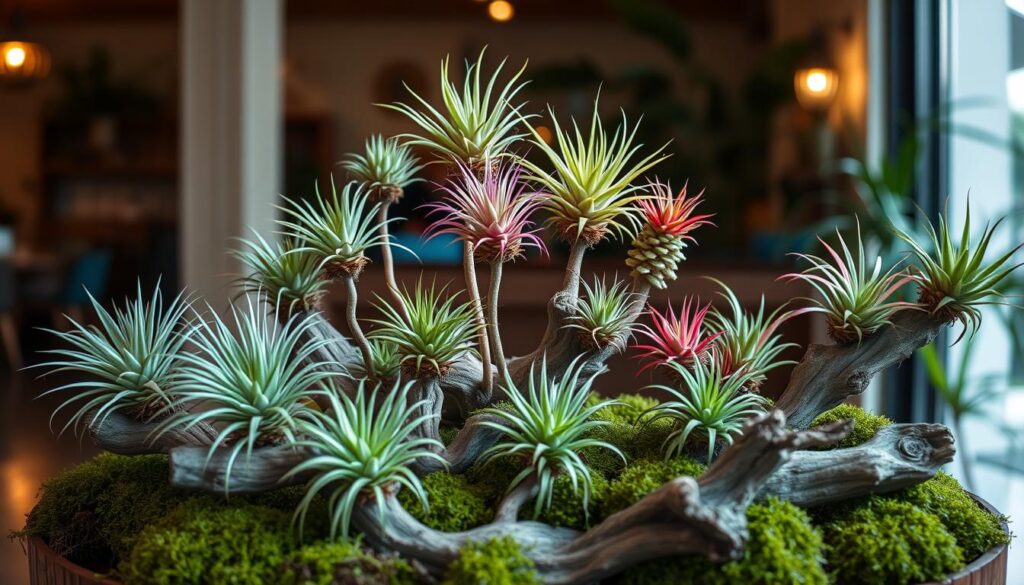
Propagation Methods and Techniques for Ionantha Air Plants
Propagating your ionantha air plant is fun. It lets you grow more plants or share them with friends. The best way is the pup division, which works well for Ionantha rubra air plants.
Pup Division Process
The journey to propagate starts when your plant grows pups. Here’s how to split them:
- First, carefully remove the mature plant from its mount or container without harming the base.
- Look for the pups at the base; they look like mini versions of the parent.
- Use a clean, sharp tool to cut the pup from the parent, leaving a bit of parent tissue attached.
- Let the cut pup dry for a few hours before mounting to prevent rot.
Post-Division Care for Healthy Growth
After separating, the new Ionantha rubra air plant pups need some care:
- Mount them on wire frames, driftwood, or porous holders to help with airflow.
- Mist them lightly every few days, avoiding the central rosette to prevent moisture buildup.
- Start with soft, indirect light and gradually move to brighter spots as they grow.
With care and patience, your pups will grow into vigorous plants. Propagation not only brings life to your space but also lets you enjoy your ionantha air plant‘s full life cycle.
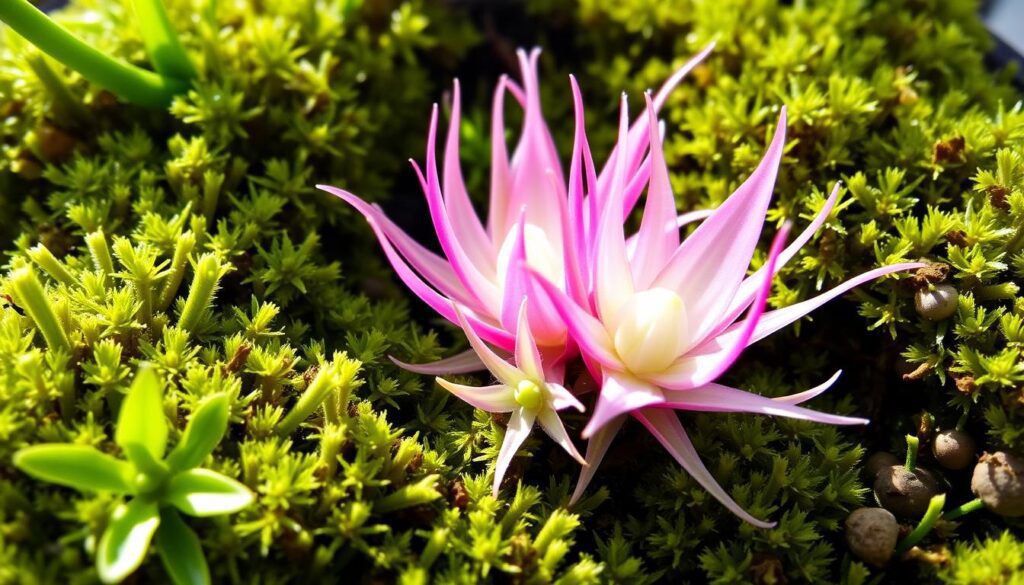
Common Problems and Solutions for Tillandsia Ionantha Guatemala Air Plants
Caring for Tillandsia ionantha guatemala air plants is usually easy, but some issues can pop up. Knowing how to spot and fix these problems can help your plants thrive.
Pest Infestations
Spider mites and scale insects might infest your plants, causing spots and weakening them. These pests thrive in low-air areas.
- Wipe the leaves with a damp cloth to remove pests.
- Apply a light mist of insecticidal soap, focusing on the leaf bases.
- Boost air circulation to prevent pests from coming back.
Rotting from Overwatering
Too much moisture is a considerable risk for Tillandsia ionantha Guatemala air plants. Water trapped in the base can cause rot.
- Always let the plant dry completely after misting or soaking.
- Keep water away from the central rosette.
- If rot happens, cut off the damaged parts and adjust your watering.
Browning and Dehydration
If your leaf tips turn brown or curl inward, it’s a sign of dehydration.
- Increase misting in dry or hot weather.
- Soak your air plant for 20–30 minutes weekly, then let it dry thoroughly.
- Avoid placing the plant near heat sources or intense sunlight.
| Problem | Symptoms | Solution |
|---|---|---|
| Pest Infestations | Discoloration, weakening, and death of the plant | Wipe down plants with a damp cloth or use a mild insecticidal soap |
| Rotting and Overwatering | Excess moisture leading to rot | Follow proper watering techniques, allow plants to fully dry out between waterings, and remove affected areas |
| Browning and Dehydration | Leaves turning brown or appearing shriveled | Increase watering frequency and mist the plants regularly |
By spotting these issues early and adjusting care, your Tillandsia ionantha guatemala air plants will stay vibrant and healthy.
Seasonal Care Guidelines for Ionantha Air Plant
To keep your ionantha air plant healthy all year, adjust your care with the seasons. Each season changes how your plant grows and responds.
Spring and Summer Care
In spring and summer, your Tillandsia ionantha needs more light and moisture. This is because of the warmer weather and longer days.
- Mist the plant 2–3 times a week, and soak it in water for 20–30 minutes once weekly.
- Give it 6–8 hours of bright, indirect sunlight daily. A filtered window or skylight works well.
- If leaves curl or fade, reduce sunlight slightly to avoid stress.
Fall and Winter Adjustments
Cooler temperatures and shorter days mean less water and light.
- Water 1–2 times weekly. Soak for 10–15 minutes and let it dry thoroughly afterward.
- Place the plant in 4–6 hours of gentle, indirect light daily.
- Watch for signs of dehydration like wrinkled or brittle leaves. Increase misting if needed.
Adjusting your care to match the seasons will keep your ionantha air plant strong, hydrated, and beautiful all year.

Decorative Uses and Creative Displays for Ionantha Air Plants
Adding the Ionantha Guatemala tillandsia air plant or Ionantha rubra air plant to your home is more than gardening. It’s about creating living art. These plants offer endless design possibilities for both minimalist and natural décor.
Unique Wall and Frame Installations
Mount your air plants on driftwood, cork bark, or metal grids for artistic wall features. Arrange them in geometric or cascading patterns for movement and texture. Use a shadow box or open frame for a gallery-style display.
Tabletop and Centerpiece Styling
Create organic centerpieces with your air plants and seashells, river stones, or reclaimed wood. Display them in open glass terrariums to highlight their colors and shapes. These are great for coffee tables, entryways, or office desks.
DIY Decor Projects
Get creative with DIY displays. You can make a hanging mobile, a macramé holder, or a seasonal living wreath. Their light weight and no-soil nature make them perfect for flexible, imaginative designs.
Whether you opt for a simple setup or a lush indoor scene, your Ionantha guatemala tillandsia air plant and Ionantha rubra air plant will transform ordinary corners into vibrant, living décor.
Conclusion: Caring for the Ionantha Air Plant with Confidence
The ionantha air plant is loved for its beauty, toughness, and easy care. It needs the right light, water, and air to live long and make spaces brighter.
For it to flourish, please put it in bright, indirect sunlight. Keep the air humid and mist or soak it regularly. Feed it now and then and adjust its care with the seasons to keep it vibrant.
There are many Ionantha air plants to choose from, like the Fuego and Rubra. If you’re interested in more about air plants, check out the American Orchid Society’s guide on air plants. It’s full of research and tips.
With a bit of care and imagination, your ionantha air plant can be more than a plant. It can be a piece of art that brings peace, connection, and happiness to your home.
For more compact indoor-plant ideas, compare air plants with our Moon Cactus guide. For broader indoor-plant care and selection, visit the houseplants hub.
FAQ
What is an Ionantha Air Plant?
The ionantha air plant is a type of Tillandsia known for its compact size, vivid colors, and soil-free growth. It naturally clings to surfaces like trees or rocks and adds a striking touch to any space.
How do I take care of it?
These tropical epiphytes enjoy bright, filtered sunlight and regular misting or occasional soaking. Ensure good air flow and keep the environment moderately humid for best results.
Which varieties are available?
You’ll find eye-catching types like Guatemala, with its fiery red tips, and Rubra, known for deep pink hues. Each one offers a slightly different look, perfect for creative indoor displays.
What are the best ways to display it?
They look great mounted on driftwood, tucked into glass terrariums, or hanging from minimalist holders. Just make sure they have space for air circulation and access to light.
Can it be propagated at home?
Yes! Once mature, it will produce small offsets called pups. When large enough, these can be gently removed and grown on their own.
What issues should I watch for?
Too much moisture can cause rot, while too little leads to browning or curled leaves. Pests like scale or mites can appear in closed spaces. Regular care and a balanced environment keep most problems away.