
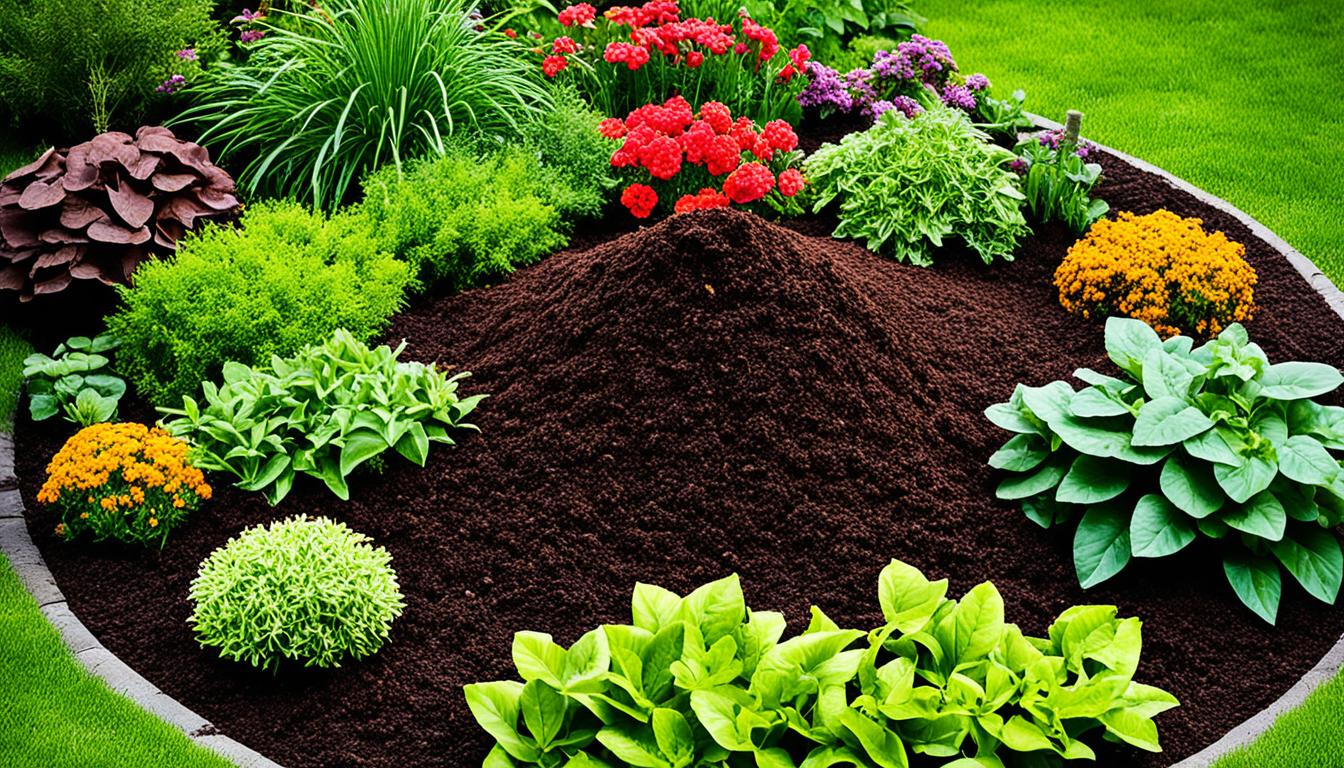
Compost Greens and Browns: Are you ready to turn your kitchen and garden waste into rich soil? The secret to great composting is balancing carbon-rich “browns” with nitrogen-rich “greens.” This balance is crucial for a compost pile that feeds your plants and helps the planet. Learn the top tips to make your compost pile work wonders and your garden flourish.
Key Takeaways
- Maintain the ideal 2:1 ratio of carbon-rich “browns” to nitrogen-rich “greens” in your compost pile.
- Ensure your compost pile is at least 3′ in diameter and 3′ tall for optimal heat and activity.
- Monitor the moisture level, aiming for a fistful of compost that yields just one drop of water.
- Turn the compost pile regularly to introduce oxygen and speed up the decomposition process.
- Avoid common composting mistakes like adding too much coffee grounds or failing to manage odors and pests.
What is Composting?
Composting turns organic waste like food scraps and yard trimmings into nutrient-rich soil. It’s a green way to reduce waste and boost soil health for gardening.
The Importance of Composting
Composting helps the environment and your garden in many ways. It keeps organic waste out of landfills, reducing methane emissions and saving space. It also makes soil rich in nutrients, helping plants grow better and keeping your garden healthy.
The Decomposition Process
The composting process breaks down organic matter with the help of microorganisms like bacteria and fungi. These tiny helpers work best in a compost pile, turning “browns” and “greens” into carbon dioxide, heat, and nutrient-rich compost.
This process is key to composting. It turns waste into a soil amendment that feeds your garden and helps plants grow.
Setting up Your Compost Bin
To start your home composting journey, you’ll need a good compost bin or container. There are many options for compost bins, each with its own benefits for home composting, small space composting, urban composting, and backyard composting.
Choosing the Right Bin
The traditional compost bin is a popular choice. It can be made of plastic, wood, or recycled materials. These bins are great for backyard composting and can hold a lot of organic matter. Another great option is the tumbler compost bin, a rotating drum that makes composting easier. It’s perfect for small space composting or urban composting. Vermicomposting, or using worms to compost, is also great for those with little space.
Location and Placement
Think carefully about where to put your compost bin. Pick a spot that’s easy to get to, drains well, and gets some shade. This keeps the compost at the right moisture and temperature. Don’t put the bin in direct sunlight, as it can dry out the compost too fast. Also, keep it away from your home’s foundation to avoid moisture problems.
| Compost Bin Type | Advantages | Suitable for |
|---|---|---|
| Traditional Compost Bin | Large volume capacity, durable | Backyard composting |
| Tumbler Compost Bin | Easier aeration, critter and smell-free | Small space composting, urban composting |
| Vermicomposting | Produces nutrient-rich worm castings | Small space composting |

Choosing the right compost bin and placing it well will help you succeed in home composting. You’ll make nutrient-rich soil for your garden.
Compost Greens and Browns
Composting needs the right mix of “greens” and “browns” in your pile. Greens are wet, high in nitrogen, and include things like fruit peels, grass clippings, and coffee grounds. Browns are dry, high in carbon, and are made of leaves, newspaper, and sawdust.
For fast decomposition, mix about two parts browns with one part greens. This mix keeps the carbon-to-nitrogen (C:N) ratio at 25:1. This ratio is perfect for the tiny organisms that break down the compost.
- Examples of green materials include: fruit and vegetable peels, coffee grounds, fresh grass clippings, manure, and nitrogen-rich fertilizers.
- Examples of brown materials include: fallen leaves, shredded newspaper, sawdust, pine needles, and straw.
Don’t add things like meats, fish, dairy, pet waste, or sick plants to your compost. Instead, mix different greens and browns to make a compost that’s good for your soil.

| Greens (Nitrogen-Rich) | Browns (Carbon-Rich) |
|---|---|
| Fruit and vegetable scraps, grass clippings, coffee grounds, manure | Fallen leaves, shredded newspaper, sawdust, pine needles, straw |
For good composting, keep the right mix of greens and browns. Layer these materials and watch them break down. This way, you’ll get a compost that’s full of nutrients for your garden.
Composting is not only good for the environment, but it’s also a great way to turn your kitchen and yard waste into a valuable soil amendment for your garden.”
For the best results, add cellulose-based sponges like Composty’s to your compost bin. These natural fibers help with aeration and give microbes a place to live.
Balancing Greens and Browns
Getting the right mix of “greens” and “browns” in your compost pile is key. Greens are high in nitrogen, while browns are high in carbon. This balance is crucial for making nutrient-rich compost that improves your soil.
Greens: Nitrogen-Rich Materials
Greens are the wet, nitrogen-rich parts that add moisture and help break down quickly. They include things like fruit and vegetable scraps, fresh grass clippings, and plant trimmings. Aim for a mix of 1 part greens to 2 parts browns for the best breakdown.
Browns: Carbon-Rich Materials
Browns are the dry, carbon-rich parts that form the base of your compost pile. Examples are dried leaves, straw, shredded paper, and wood chips. Aim for a mix of thirty parts carbon to one part nitrogen (30:1) for composting.
It’s important to balance greens and browns in your compost pile for a nutrient-rich final product. Mix high-nitrogen greens with carbon-rich browns in a 1:2 ratio for successful composting. This balance boosts microbial activity, prevents a smelly pile, and makes quality compost.

For easy layering, start with 6 inches of browns, add 2-4 inches of greens, and finish with more browns. This method ensures you get nutrient-rich compost quickly.
Remember, the secret to great composting is balancing greens and browns. With the right mix, your compost pile will do well, giving you rich soil for your garden.
Composting Basics
Composting is all about keeping the right balance of moisture and air in your pile. These factors are key for breaking down materials and making nutrient-rich compost for your garden.
Moisture and Aeration
For your compost pile, aim for moisture levels between 40-60%. Keep the materials damp, like a wrung-out sponge. Too dry slows down the process, while too wet can cause bad smells. It’s important to check and adjust the moisture often.
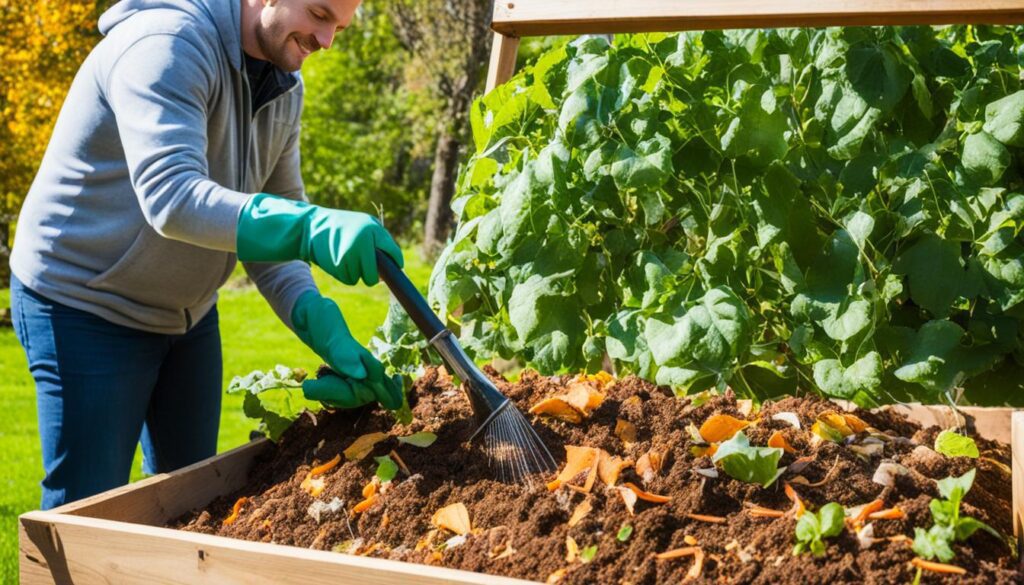
Also, make sure your compost pile gets enough air. The microbes that break down the materials need oxygen. Use a pitchfork or aerator tool to turn the pile and add air. This stops the pile from getting too dense, which slows down the process.

By managing the moisture and air in your compost pile well, you’ll help the decomposition process. This makes nutrient-rich compost that feeds your plants and boosts soil health.
Turning and Maintaining Your Compost Pile
Keeping your compost pile active and healthy means turning it regularly. Turning the pile adds air, spreads moisture, and makes sure everything gets the right conditions for decomposition. It’s best to turn the compost pile at least once every two weeks to speed up the process.
Try to keep the compost pile as damp as a wrung-out sponge. Using a tarp or old carpet on top helps keep heat and moisture in, which helps with decomposition. If you’re worried about rodents or animals, think about using a compost bin or tumbler.
To make compost break down faster, you can add a mix of sugar water, ammonia, and beer. But remember, don’t put meat, grease, dairy, or food scraps in the compost pile. They can attract pests and smell bad.
Turning and looking after your compost pile often means you’ll have lots of nutrient-rich soil for your garden. The right mix of brown (carbon) and green (nitrogen) materials is 4:1.
Managing your compost pile right is key to successful composting. By following these tips, you can make a compost pile that turns your organic waste into great soil for your garden.
Troubleshooting Compost Issues
While composting is usually easy, you might face some problems. Let’s look at common compost troubleshooting issues and how to solve them.
Bad Odors and Pests
If your compost smells bad, like rotten eggs or vinegar, it might lack oxygen. To fix this, add more compost browns, like dry leaves or straw, to help it breathe.
Fruit flies can come to your compost if food scraps are not covered. Try freezing food scraps first or use traps for them. Also, if your compost has meats, fats, or bones, rodents might be attracted. Leaving out these items can keep them away.
Breaking food scraps into smaller bits helps them decompose faster. This gives bacteria more surface area to work on. Items like corncobs and eggshells take longer to break down. Make sure to chop them up before adding them.

A good compost pile gets hot because of bacteria working hard. This means it has the right mix of nutrients, oxygen, and water.
| Compost Issue | Suggested Solution |
|---|---|
| Bad Odors (rotten egg, rancid butter, vinegar) | Fluff the pile and add more “browns” (dry leaves, straw) to improve aeration |
| Fruit Flies | Freeze food scraps before adding, use fruit fly traps |
| Rodents | Exclude meats, fats, and bones from the compost |
| Slow Decomposition | Chop up food scraps into smaller pieces (1-2 inches) |
By fixing these common compost issues, your compost pile management will work better. Make sure to keep the right balance of compost moisture, compost aeration, and turn it regularly for successful composting.
Compost Ratio Guidelines
Getting the right mix of “greens” (nitrogen-rich) and “browns” (carbon-rich) in your compost pile is key. Aim for 2 parts browns to 1 part greens by volume.
The microbes in compost love a carbon to nitrogen (C:N) ratio of 25:1. Start with a pile that’s 30:1 C:N, as carbon levels drop during composting. Leaves and grass clippings have different C:N ratios, like 30 to 80 and 15 to 25, respectively.
For a simpler approach, try a brown to green ratio of 1:2. This mix works well with a mix of yard waste and kitchen scraps. Gardeners use various ratios, from 1:1 to 3:1, depending on what they have.
| Material | C:N Ratio |
|---|---|
| Corn Stalks | 60:1 |
| Chicken Manure | 10:1 |
If your pile smells like ammonia, add more brown material. If it’s not heating up, add more green material. A balanced pile won’t have strong smells if you keep it right.
When it’s done, compost should look black and cool, with just a few bits like nut shells left. Making compost at home is better for the planet than other waste management options.

By knowing the best compost ratio and balancing your materials, you can make a compost pile that works well. It breaks down organic waste and makes nutrient-rich soil for your garden.
Materials to Avoid in Composting
Composting is a great way to handle organic waste and make soil rich in nutrients for your garden. But, not everything can go into your compost pile. To make composting work well and safely, it’s important to know what not to add. Let’s look at what you should skip when composting.
- Meat, fish, and dairy products: These can draw pests and pets, and smell bad as they break down.
- Cooked foods and oils: Like meat and dairy, these can also attract pests and smell bad.
- Diseased plants: Adding sick plants to your compost can spread disease to your garden, so avoid them.
- Pet waste: Dog and cat waste has harmful bacteria and parasites that shouldn’t be in your compost.
- Treated wood and sawdust: These might have chemicals bad for your garden when you use the compost.
- Glossy papers and magazines: Their inks and coatings can be toxic and mess up the composting.
Being careful about what you add to your compost helps make a soil amendment that’s good for your garden. It also helps avoid problems like pests, bad smells, and contamination.
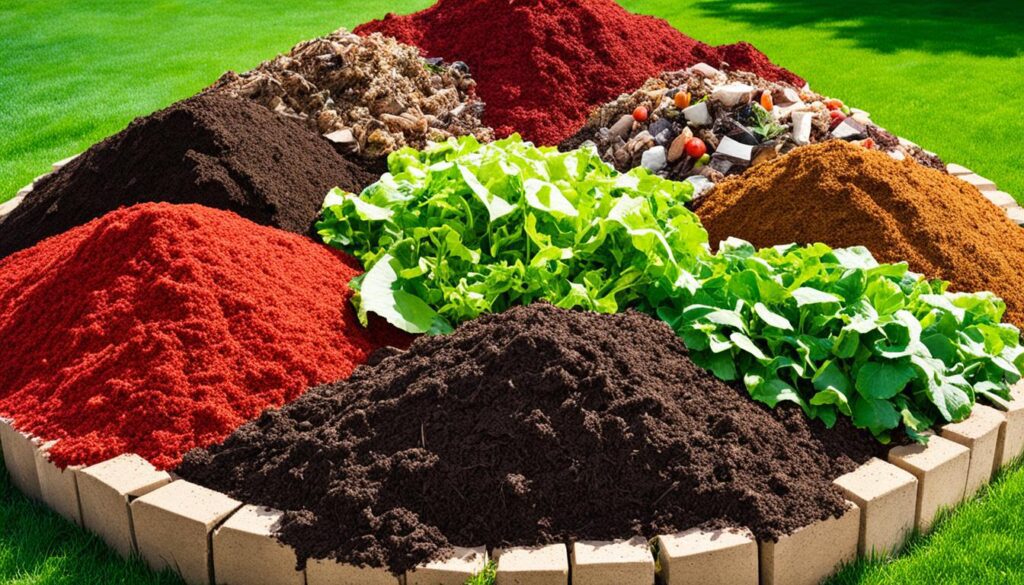
Successful composting means focusing on “green” (nitrogen-rich) and “brown” (carbon-rich) stuff that breaks down well. Avoid things that can mess up the process or bring in bad stuff to your compost.
| Material | Green (Nitrogen) to Brown (Carbon) Ratio |
|---|---|
| Coffee Grounds | 20:1 |
| Poultry Manure | 7:1 |
| Horse Manure | 22:1 |
| Cow Manure | 18:1 |
| Grass Clippings | 20:1 |
| Lake Weed | 19:1 |
| Plant Cuttings | 20 to 40:1 |
| Vegetables and Fruit Scraps | 25:1 |
| Hay | 15 to 30:1 |
| Leaves | 50 to 80:1 |
| Paper and Cardboard | 150 to 200:1 |
| Sawdust | 400:1 |
| Straw | 80:1 |
| Wood Ash | 25:1 |
Knowing what to avoid and the right mix of carbon and nitrogen makes composting work well. This helps with managing organic waste in a green way.
“Composting is not just about what you put in, but also about what you leave out. By being mindful of the materials that can disrupt the process, you can ensure a healthy, productive compost pile.”
Composting Year-Round
Composting is fun and can be done all year, even in cold or hot weather. The process slows down in extreme temperatures, but you can still add organic stuff to your compost pile.
Autumn is a great time to start composting with the weather just right. Aim for a 6 to 8 inch brown layer to soak up moisture and breathe well. Composting might pause in the winter if it gets too cold, but you can start again in spring when it gets warmer.
It’s important to keep the right balance of carbon (brown) to nitrogen (green) ratio for composting all year. Aim for a 30:1 ratio, not just mixing browns and greens. Some things like horse manure or fall leaves have different ratios, so mix it up. Adding things high in nitrogen, like fresh chicken manure, can balance out too many browns.
Check the temperature of your compost pile often. High heat means you need more green stuff, and bad smells mean add more brown stuff. Turning it every 3-7 days helps the microbes work faster. Keeping it just right with moisture is also key to good composting.
Don’t worry if you’re not a pro at composting. Just mix different organic stuff together and take basic care, and you’ll get great compost.

“Composting is a year-round activity that can be enjoyed regardless of the season. With the right techniques and a little bit of maintenance, you can turn your kitchen and yard waste into valuable compost all year long.”
Benefits of Finished Compost
Your hard work in composting ends with a nutrient-rich material called finished compost. This stuff is great for your garden and plants. Compost is a natural soil amendment and a nutrient-rich fertilizer that can transform your soil and promote robust plant growth.
Soil Amendment
Adding finished compost to your soil makes it better in many ways. Compost helps to aerate the soil, improve water retention, and increase the presence of beneficial microorganisms. This means your garden beds get a nutrient-rich environment that helps your plants stay healthy and strong.
Nutrient-Rich Fertilizer
Finished compost is a top-notch, all-natural fertilizer for your plants. Compost is full of important nutrients like nitrogen, phosphorus, and potassium, as well as many micronutrients. Using compost in your soil gives your plants a steady supply of nutrients for healthy growth and development.
Compost does more than just feed your plants. It also helps control weeds, hold water better, and makes your plants more resilient. Incorporating compost into your gardening is a key part of sustainable, organic, and eco-friendly gardening.

Composting Methods and Techniques
There are many ways to compost, depending on what you need and like. Passive composting is a simple way that just piles up organic waste and lets nature work its magic. It’s easy to do but might take a bit longer to get compost ready.
Hot composting is another way that’s a bit more hands-on. It mixes carbon-rich browns with nitrogen-rich greens in a 25-30:1 ratio. You also need to keep an eye on the pile’s temperature, aiming for 131-149°F (55-65°C). A compost thermometer can help you check and adjust the temperature.
Vermicomposting, or worm composting, uses worms to break down organic matter. It needs the right conditions for the worms but can produce rich compost and compost tea. If you’re short on space, indoor composting methods like EMO composting are great. They let you compost at home.
For more composting methods, continue with our compost sterilization guide and mushroom compost guide. For the broader topic, visit the Composting Techniques hub.
Source: For evidence-based guidance, see University of Maryland Extension’s home composting guide.
FAQ
What is composting and why is it important?
Composting breaks down organic stuff like food scraps and yard waste. It’s key because it cuts down on landfill waste and makes a soil booster for gardens.
What are the essential components for successful composting?
For good composting, mix “greens” (high in nitrogen) with “browns” (high in carbon). Keep it moist and well-aired.
How do I choose the right compost bin for my needs?
Pick a compost bin based on your yard size, waste amount, and how you like to compost. Options include tumblers, bins, and open piles, each with pros.
What are the ideal ratios for “greens” and “browns” in a compost pile?
Aim for 2 parts “browns” to 1 part “greens” in your pile. This mix is best for microorganisms to break down the materials.
How do I maintain and turn my compost pile?
Keep your compost pile healthy by turning it often. This mixes air in, spreads moisture, and helps everything decompose well.
What are some common composting issues and how can I address them?
Issues like bad smells, pests, and slow breakdown can happen. Fix them by checking moisture, adding air, and balancing “greens” and “browns”.
Are there any materials that should be avoided in my compost pile?
Avoid adding meat, dairy, and oils to your compost as they draw pests and smell bad. Use only plant-based stuff.
Can I compost year-round, even in cold or hot climates?
Yes, compost all year, even in extreme weather. It may slow down, but keep adding materials to your pile.
What are the benefits of finished compost?
Finished compost helps your garden by improving soil, fighting plant diseases, and giving plants the nutrients they need to grow strong.
What are some common composting methods and techniques?
You can compost using passive, active, vermicomposting, or thermal methods. Each has its benefits and suits different needs and likes.