
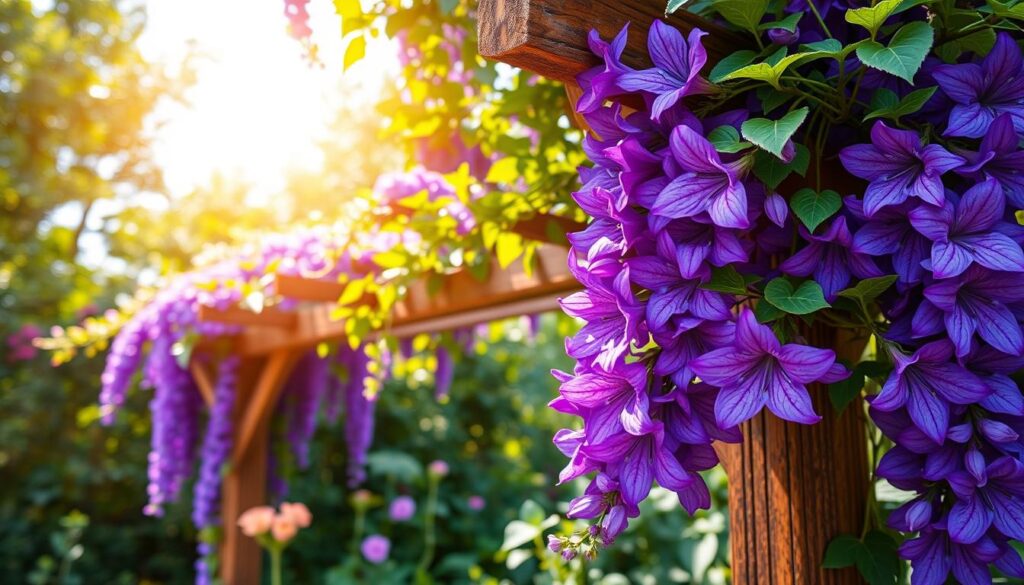
Want to make your garden pop with colorful vines? Planting vines with purple flowers can add a splash of color. These plants are low-maintenance and grow on their own. They come in many varieties, from bright purple colors to intricate purple flowers.
Discover 8 beautiful purple flower vines to brighten your garden. This article will guide you through them.
Which Purple Flower Vine Do You Have? Quick ID Guide
- Large, intricate purple-and-white flower: likely a passionflower or maypop.
- Long hanging clusters of lavender-purple flowers: often wisteria; in the U.S., prefer American wisteria over invasive Chinese or Japanese species.
- Large star-like or open purple blooms on a climbing vine: often clematis.
- Small trumpet-shaped purple flowers that open in the morning: often a morning glory.
- Purple flowers plus showy purple pods: likely hyacinth bean vine.
- Hanging dark purple tubular flowers with pink-purple calyces: purple bell vine (Rhodochiton atrosanguineus).
If the vine is growing wild or spreading aggressively, identify the species before planting or propagating it; some purple-flowering vines are invasive in parts of the United States.
Key Takeaways
- Purple flower vines add vibrant color to any garden and are easy to grow.
- These vines thrive in a variety of climates and can reach impressive heights.
- From the captivating Passion Flower to the elegant Wisteria, there are many stunning purple vine options.
- Proper care and placement are important for these flowering vines to reach their full potential.
- Incorporating purple flower vines into your landscape design can create a dramatic, eye-catching display.
Introduction to Purple Flower Vines
Flowering vines bring vertical interest, vibrant color, and eye-catching appeal to gardens. They come in many species, each with unique blooms in shades of purple. From the delicate purple passion flower to the bold purple trumpet vine, these vines can turn a simple space into a lush oasis.
By adding different purple flower vines, gardeners can enjoy a variety of blooms and textures all season. These vines with purple flowers show off a range of hues, from light lavender to deep plum. They can cascade over trellises, climb fences, or drape from pergolas, adding magic to any landscape.
Using various purple flowering vines lets gardeners create stunning combinations. They can mix different bloom sizes, shapes, and times for a breathtaking display. From fragrant wisteria to vibrant trumpet vine, these flowering vines can make any space a garden paradise.
The beauty of purple flowering vines lies in their ability to add depth, texture, and a touch of enchantment to any garden setting.
Purple Passion Flower Vine
The purple passion flower vine, also known as the maypop, is a stunning vine. It has intricate, layered purple blooms that look like a crown or starburst. These flowers add elegance to any garden.
Description of the Purple Passion Flower Vine
This vine grows rapidly and can spread or climb roughly 12-24 feet with support. Its distinctive white-and-purple flowers are typically about 1-3 inches across and bloom mainly from late spring through summer, depending on climate.
Growing Conditions for the Purple Passion Flower Vine
- Thrives in full sun to partial shade
- Prefers well-drained, moist soil
- Maypop (Passiflora incarnata) is hardy across roughly USDA Zones 5-9 and may die back to the ground in colder parts of its range
- Propagates easily from seed or cuttings, although stored seeds can have low germination rates
- Deer-resistant and attracts butterflies, serving as a larval host for several butterfly species
The purple passion flower vine is a captivating addition to any garden. It creates a vibrant and tropical atmosphere. Whether grown as a perennial or an annual, it transforms your outdoor space into a true oasis.

Wisteria Vine
Wisteria is a stunning flowering vine known for its cascading, purple wisteria flower clusters. These hardy, vigorous vines can grow up to 30 feet long. They make an impressive focal point in any garden. Wisteria produces an abundance of fragrant, lilac-colored blooms that hang in long, pendulous racemes.
The wisteria vine purple flower typically appear in mid-to-late spring. They add a touch of elegance and romance to the landscape.
While the Asian species of wisteria, such as Chinese wisteria (Wisteria sinensis) and Japanese wisteria (Wisteria floribunda), are considered invasive in parts of North America. There are native alternatives that are just as stunning. American wisteria (Wisteria frutescens) and Kentucky wisteria (Wisteria macrostachya) are native to the United States. They serve as excellent choices for purple wisteria vine enthusiasts.
| Wisteria Species | Native to | Hardiness Zones | Flowering Characteristics |
|---|---|---|---|
| Chinese Wisteria (Wisteria sinensis) | China | 5-9 | Blooms before foliage appears |
| Japanese Wisteria (Wisteria floribunda) | Japan | 5-9 | Blooms before foliage appears |
| American Wisteria (Wisteria frutescens) | United States | 5-9 | Blooms after foliage appears |
| Kentucky Wisteria (Wisteria macrostachya) | United States | 4-9 | Blooms after foliage appears |
Wisteria vines require full sun and well-drained soil to thrive. Regular pruning is needed to maintain their shape and encourage more wisteria vine purple flower blooms. With their beautiful purple hues and enchanting floral display, wisteria vines are a must-have for any purple-themed garden.
“Wisteria is a long-lived plant that can provide many years of beauty with proper care.”
Clematis Vine
Clematis vines are a favorite among gardeners for their beautiful purple flowers. These climbing plants have a wide range of purple colors. They can be deep wine-red or soft lavender.
Varieties of Clematis Vines
Some popular purple clematis vines include ‘Jackmanii’ and ‘Etoile Violette’. These vines love full sun and well-drained soil. The soil should be slightly acidic, with a pH of 6.5-7.0.
Care and Maintenance of Clematis Vines
To keep your purple clematis vine healthy, deadhead and prune regularly. Pruning depends on the clematis type. It helps them grow well. With the right care, these vines will bloom from spring to fall.
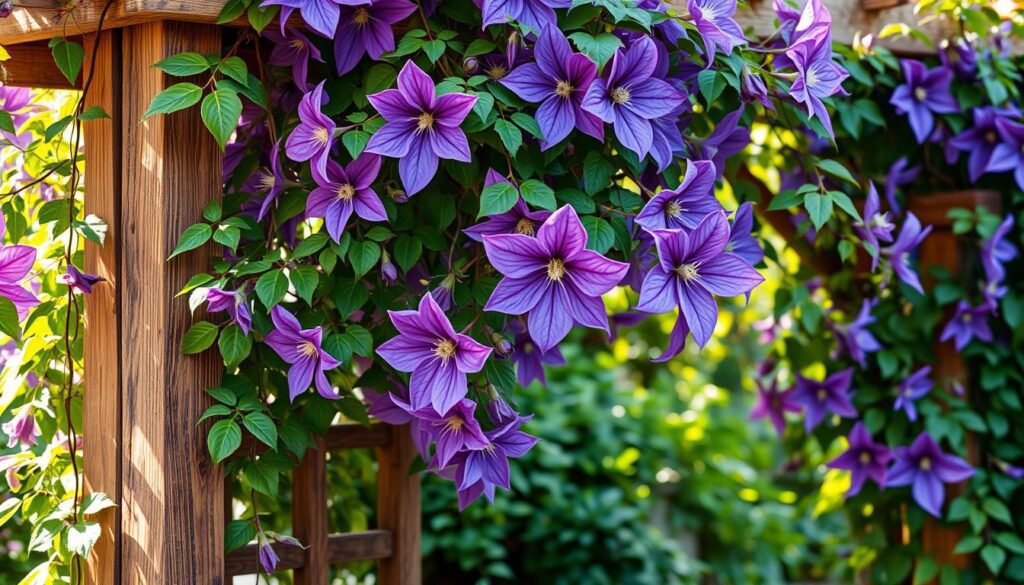
“Clematis vines are the queens of the climbing plant world, with their vigorous growth and stunning purple blooms.”
Most purple flower clematis vine types grow well in USDA Hardiness Zones 4-9. Some can handle zone 3, while others can handle zone 10. They need 5-6 hours of sunlight a day, but some shade in hot climates is okay.
Clematis vines have different flower shapes and sizes. Flowers can be as small as 3 inches or as big as 8 inches. They bloom at different times, adding color to your garden all season.
Purple Bell Vine
Purple bell vine (Rhodochiton atrosanguineus) is a slender twining climber with heart-shaped leaves and distinctive hanging flowers. The blooms combine dark maroon to reddish-purple tubes with larger rose-purple calyces, giving the plant a dramatic two-layered look.
In warm, frost-free conditions it can behave as a tender perennial, while gardeners in colder climates commonly grow it as an annual. It performs best in a sheltered position with full sun and fertile, moist but well-drained soil.
Purple bell vine can reach roughly 8-10 feet in a season with support, making it useful for trellises, obelisks, containers, and small vertical spaces. Its hanging flowers are especially useful for gardeners searching for a vine with unusual dark purple blooms.
Sweet Potato Vine
Ornamental Qualities of Sweet Potato Vines
Sweet potato vines are known for their tasty tubers. But they also have beautiful purple leaves and small, purple flowers. The ‘Blackie’ variety has deep purple, heart-shaped leaves that look great in containers or on the ground.
These vines grow fast and add color and texture to gardens. They’re perfect for hanging baskets and mixed containers. Their long stems spill over raised beds or down trellises.
Sweet potato vines come in many colors like chartreuse, purple, and black. This makes for stunning garden displays. Some varieties spread a lot, while others stay more compact.
These vines are great for adding a colorful touch to your garden. They’re easy to care for and deer-resistant. They turn any outdoor space into a vibrant purple purple sweet potato vine flower paradise.
Purple Hyacinth Bean Vine
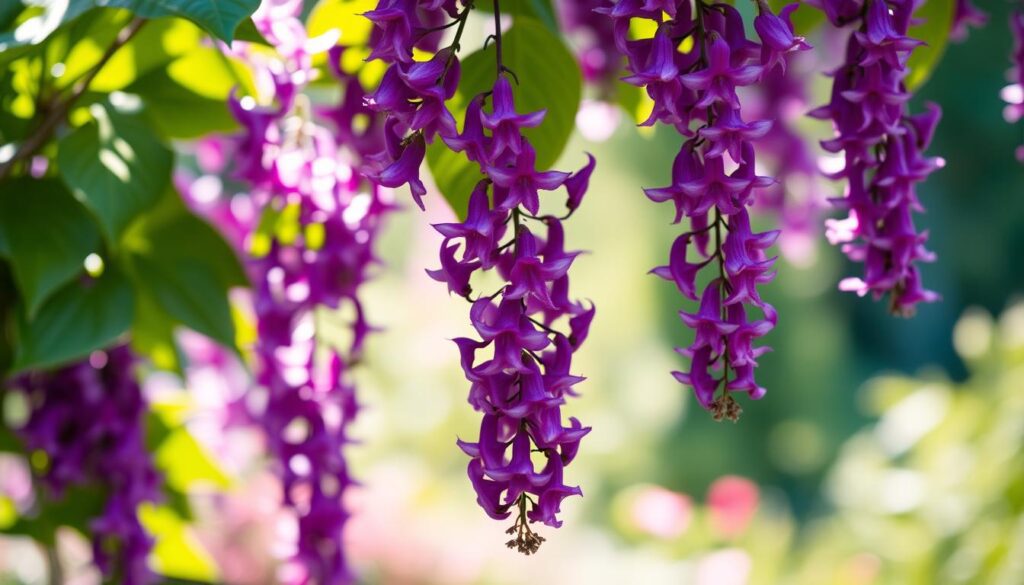
The purple hyacinth bean vine is a stunning, fast-growing annual. It captivates with its deep purple, bean-like pods and vibrant purple flowers. As the pods mature, they turn from green to a rich, purple-red hue, creating a mesmerizing display.
The fragrant, pea-like blooms of the purple hyacinth bean vine emerge in clusters. They attract pollinators like butterflies and hummingbirds.
This vigorous vine can climb up to 15 feet. It’s an excellent choice for covering trellises, arbors, or fences. The purple hyacinth bean vine thrives in full sun and well-drained soil. It self-sows readily, allowing it to return year after year in many climates.
“The purple hyacinth bean vine is a stunning addition to any garden, transforming vertical spaces into a vibrant, purple-hued oasis.”
Originating from Africa, the purple hyacinth bean vine is known for its versatility and easy care. It can be hardy in USDA zones 10 and 11. Its mature size can range from 10 to 20 feet, depending on the variety.
The plant’s nitrogen-fixing capabilities also make it a valuable cover crop. It improves soil structure and fertility.
Whether you’re looking to add a touch of purple to your garden or create a stunning vertical display, the purple hyacinth bean vine is a must-have. With its striking appearance and low-maintenance requirements, this vine is sure to transform your outdoor space into a vibrant, eye-catching oasis.

Morning Glory Vine
Morning glory vines are loved for their bright, trumpet-shaped flowers. They bloom in many colors, including rich violet-purple. Varieties like ‘Grandpa Ott’s’ and ‘Heavenly Blue’ show off their beauty in the morning, then close by afternoon.
These vines grow fast and climb up trellises or fences. They create a stunning display of purple morning glory vine beauty.
Varieties of Morning Glory Vines
Morning glory vines have many varieties, each with its own look and growth. The morning glory vine purple ‘Heavenly Blue’ can grow up to 12 feet tall. It spreads 3 to 6 feet wide.
The Moonflower, or Ipomoea alba, can reach 15 feet tall. It spreads the same amount. For a smaller vine with a purple flower, ‘Flying Saucers’ grows 12 feet tall and spreads 3 to 6 feet wide.
These vines love full sun and well-drained soil. They’re perfect for adding vertical interest and charm to gardens. With their purple blooms, they turn outdoor spaces into vibrant oases.
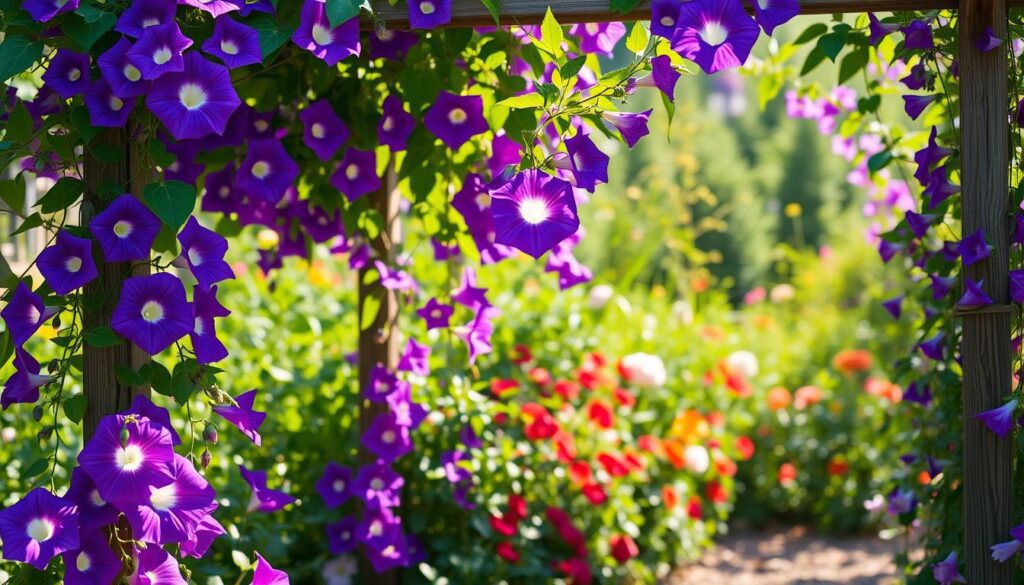
“Morning glories are a true delight, with their whimsical flowers that open to greet the day. These vines add such a beautiful, eye-catching element to any garden.”
The Purple Flower Vine
The purple flower vines are a mix of many species. They show off vibrant colors and unique ways of growing. From the passion flower with its tropical look to the trumpet vine with its bold blooms, they can make any garden beautiful.
Looking to add color or attract pollinators? There’s a purple flowering vine for you. Adding different vines to your garden creates a changing display of purple all season.
| Purple Flowering Vine | Native Origin | Height | Sunlight Preference | USDA Hardiness Zones |
|---|---|---|---|---|
| Blue Sky Vine | India, South Asia | 15-30 ft | Full sun to partial shade | 8-11 |
| Bougainvillea | Brazil | 15-40 ft | Full sun | 9-11 |
| Clematis | China, Japan, Europe | 10-15 ft | Full sun to partial shade | 4-9 |
| Dutchman’s Pipe | North America | 15-30 ft | Full sun to partial shade | 10-12 |
| Hyacinth Bean Vine | Africa, Asia | up to 15 ft | Full sun | 10-11 |
| Lavender Trumpet Vine | Brazil | 15-20 ft | Full sun to partial shade | 4-10 |
| Morning Glory | Mexico, Central America | 6-10 ft | Full sun | 7-10 |
| Passion Vine | Americas | 6-30 ft | Full sun to partial shade | 6-10 |
| Twining Snapdragon | North America | 1-3 ft | Full sun to partial shade | 9-10 |
| Wisteria | Asia, North America, Iran | 30-60 ft | Full sun to partial shade | 5-9 |
Choosing the right purple flower vines can make your garden a colorful, changing display. It will delight your senses and attract pollinators all season.
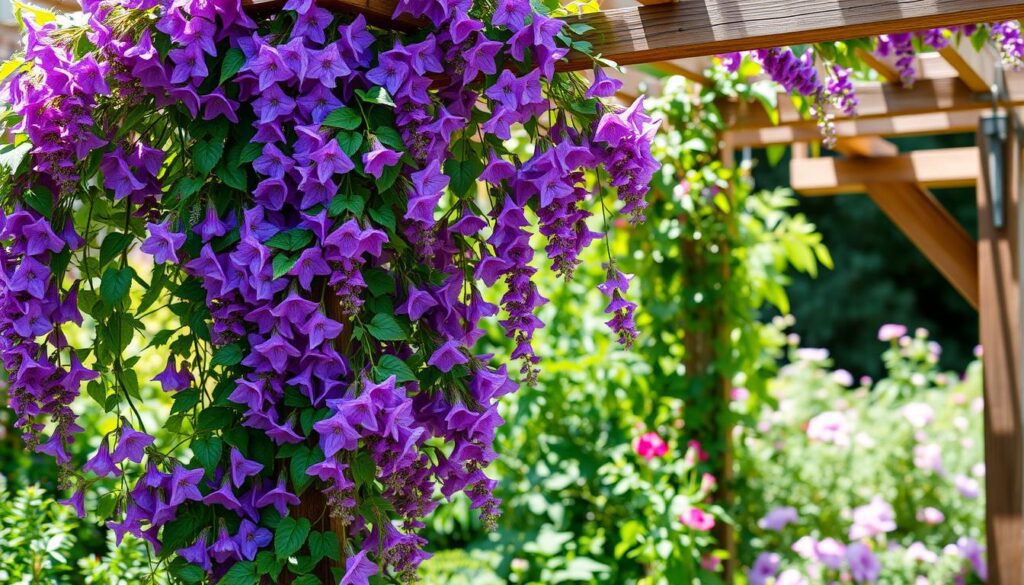
Planting and Growing Purple Flower Vines
To grow purple flower vines in your garden, you need to think about their soil and sunlight needs. Most vines do well in soil that drains well and is rich in nutrients. The soil should have a slightly acidic to neutral pH. Also, they need plenty of sunlight, from full sun to partial shade, to grow well and bloom a lot.
Soil and Sunlight Requirements
When planting purple flower vines, make sure the soil drains well and has organic matter. These vines like a pH of 6.0 to 7.0. You can adjust the soil to meet this range. Most purple flower vines need at least 6 hours of direct sunlight a day. Some can handle partial shade too.
Pruning and Maintenance
Pruning and caring for purple flower vines is key to their health and blooms. Remove dead flowers, control growth, and support the vines. Prune in late winter or early spring to shape the vine and encourage bushy growth.
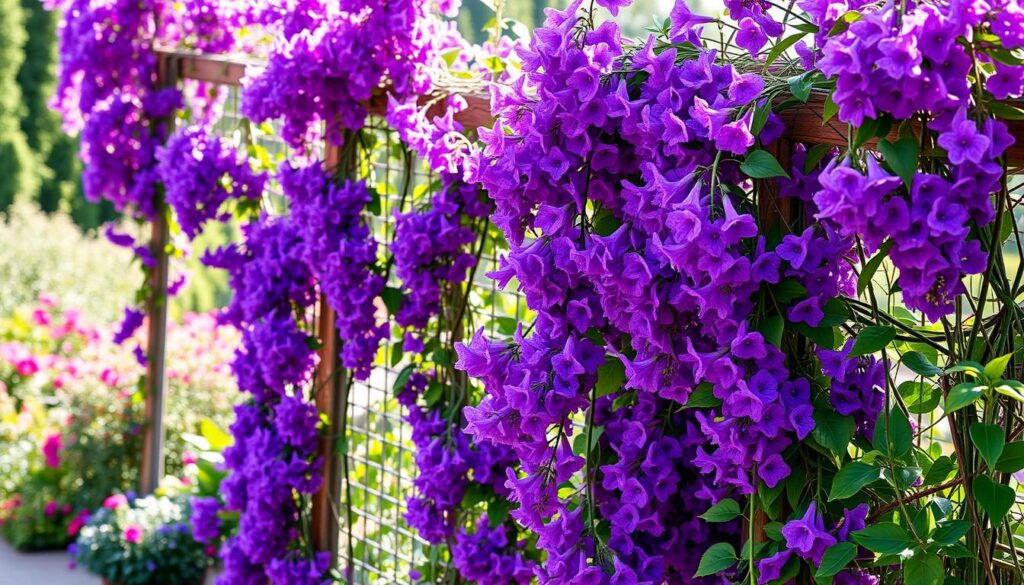
“Proper soil preparation and a sunny location are the keys to successfully growing vibrant purple flower vines in your garden.”
| Vine Type | Mature Size | Sun Exposure | USDA Hardiness Zones |
|---|---|---|---|
| Blue Sky Vine | 15-30 feet | Full Sun to Partial Shade | 8-11 |
| Clematis | 10-15 feet | Full Sun to Partial Shade | 4-9 |
| Hyacinth Bean Vine | 10-15 feet | Full Sun | 10-11 |
| Lavender Trumpet Vine | 15-20 feet | Full Sun to Partial Shade | 4-10 |
| Morning Glory Vine | 6-10 feet | Full Sun | 2-11 |
| Wisteria | 30-60 feet | Full Sun to Partial Shade | 5-9 |
Knowing the soil and sunlight needs of purple flower vines is important. Also, proper pruning and care are essential. This way, you can keep these vines healthy and blooming beautifully for a long time.
Designing with Purple Flower Vines
Purple flower vines are great for making your garden look amazing. They can grow up trellises, arbors, or fences, adding height and elegance. Pair them with other plants to make their colors pop.
Vertical Gardening with Vines
Vines are perfect for vertical gardens. They turn blank walls or fences into beautiful features. Plants like Jackman Clematis and Bougainvillea are great for this, growing up to 30 feet tall.
Train these vines on trellises or arbors. This makes your garden look even more stunning.
Combining Purple Flower Vines with Other Plants
Pairing purple vines with other plants makes your garden look even better. Try them with silver-leaved plants like Lavender or Nepeta x faassenii ‘Walker’s Low’. White-flowering annuals like Pansies and Violets also work well.
Adding plants with bold leaves, like False Indigo or Spike Speedwell Veronica, adds depth. Purple vines also look great in containers, spilling over the edges.
Purple flower vines are essential for any gardener wanting a beautiful garden. They add color and interest to your space. Use them in vertical gardens and with other plants to create a stunning oasis.
Pests and Diseases Affecting Purple Flower Vines
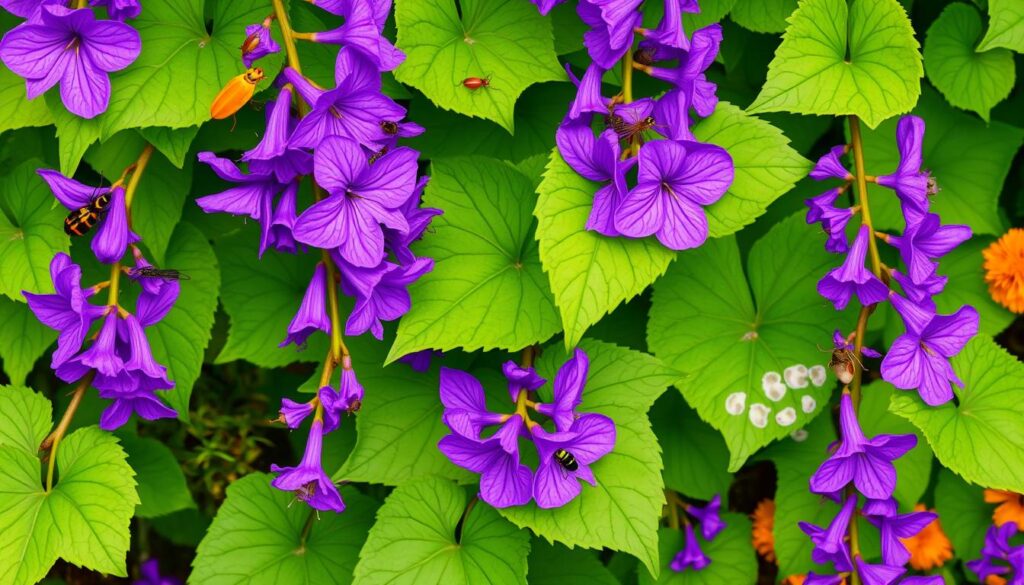
Purple flower vines are usually easy to care for but can face pests and diseases. Issues like aphids, spider mites, and fungal diseases like powdery mildew or root rot can occur. It’s crucial to watch your vines, ensure they have the right growing conditions, and tackle problems quickly.
Aphids are a common pest. These tiny insects suck the sap from leaves and stems, weakening the plant. They can also spread viral diseases. To fight aphids, check your vines often and use insecticidal soap or neem oil.
Spider mites are another problem. They love hot, dry weather and can turn leaves yellow and stippled. Keeping the vines moist and misting them regularly can help keep spider mites away.
- Powdery mildew is a fungal disease that can cause a white, powdery growth on leaves and stems.
- Root rot, caused by fungi, can lead to wilting, discoloration, and even death. Good drainage and not overwatering can prevent root rot.
To keep your purple flower vines healthy, watch for pests or diseases, keep things clean, and act fast when problems arise. With some care and attention, you can enjoy their beautiful blooms for many seasons.
For a contrasting foliage-focused climber, compare these flowering vines with our sweet potato vine guide. For the broader topic, visit the vines and climbers hub.
Conclusion
Purple flower vines bring color, texture, and vertical interest to any garden. They range from delicate passion flowers to bold trumpet vines. These plants can turn a simple garden into a lush oasis.
By choosing different purple flowering vines, you can have blooms all season. This creates a beautiful, cohesive design in your garden.
With the right care, these vines will bloom with purple hues season after season. They’re perfect for attracting pollinators, adding romance, or enhancing your garden’s elegance. Purple flower vines are a must-have for garden lovers.
These vines can make your garden a vibrant, captivating space. They delight the senses and impress your guests. Let your garden flourish with the splendor of a purple flower vine oasis.
Source: For evidence-based guidance on perennial and climbing vines, see Penn State Extension’s perennial vines guide.
FAQ
What are the different types of purple flower vines?
This article talks about 8 beautiful purple flower vines. These include the purple passion flower vine, wisteria, clematis, trumpet vine, sweet potato vine, purple hyacinth bean vine, and morning glory vine.
What are the key features of the purple passion flower vine?
The purple passion flower vine is a fast-growing, tropical vine. It has intricate, layered purple blooms. It can grow up to 30 feet tall with support.
How do wisteria vines differ from other purple flowering vines?
Wisteria vines have cascading, fragrant lilac-colored flowers. These vines can grow up to 30 feet long.
What are the characteristics of purple clematis vines?
Clematis vines have a wide range of purple shades. They produce large, 5-6 inch flowers all season. Varieties like ‘Jackmanii’ and ‘Etoile Violette’ have vibrant purple petals.
How do trumpet vines and their purple flowers differ from other vines?
Trumpet vines have showy, trumpet-shaped purple flowers. They bloom in late spring and summer. These vines can climb up structures.
What makes sweet potato vines a unique option for purple flowers?
Sweet potato vines have striking purple foliage and small, trumpet-shaped purple flowers. They bloom all growing season.
What are the key features of the purple hyacinth bean vine?
The purple hyacinth bean vine is a fast-growing annual. It produces deep purple pods and flowers that attract pollinators.
What are some popular varieties of purple morning glory vines?
‘Grandpa Ott’s’ and ‘Heavenly Blue’ are popular purple morning glory varieties. They have rich, violet-purple blooms.
What are the soil and sunlight requirements for growing purple flower vines?
Purple flowering vines like well-drained, nutrient-rich soil. They prefer a slightly acidic to neutral pH. They thrive in full sun.
How can purple flower vines be used in garden design?
Purple flower vines can be trained on trellises, arbors, or fences. They add height, texture, and elegance to outdoor spaces. They can also be paired with other plants for striking compositions.