

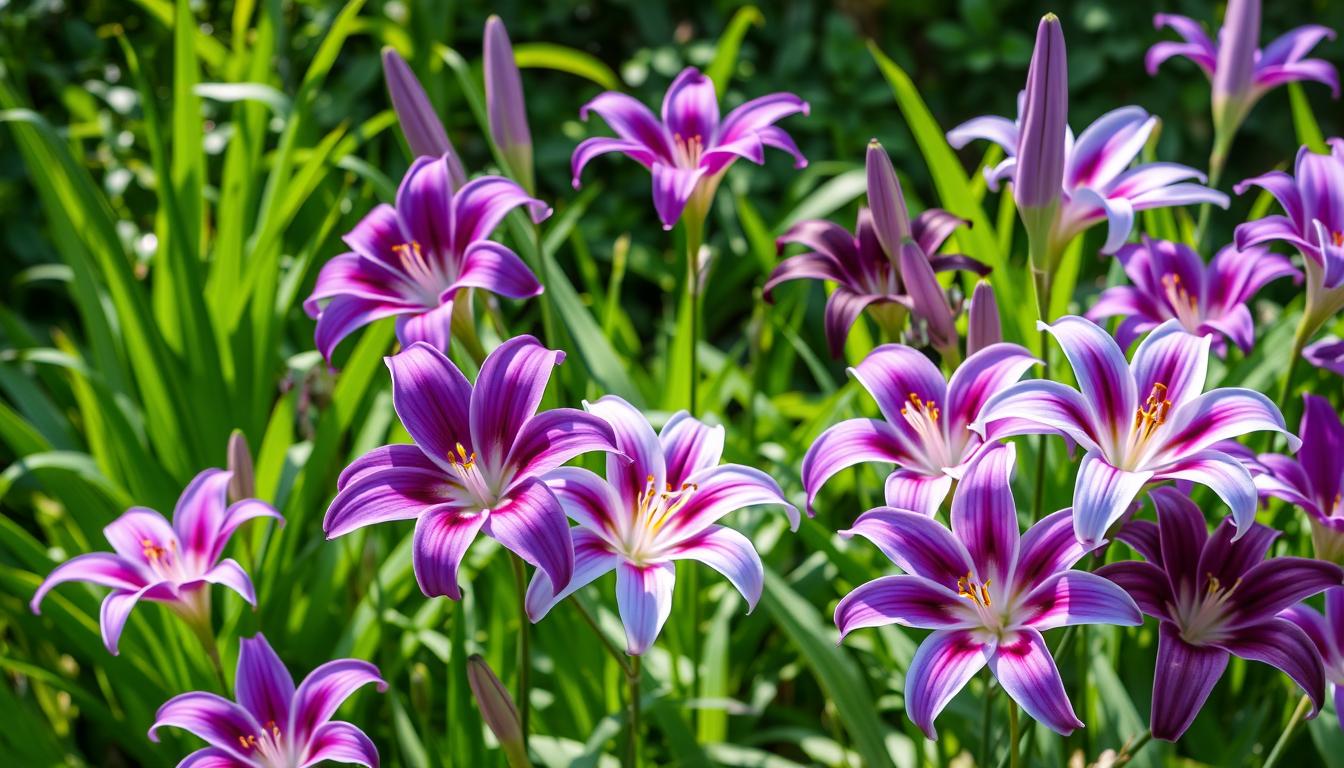
Purple Lily: Do you dream of a garden that’s as captivating as a royal court? Purple lilies can make your outdoor space feel like a magical kingdom. These flowers symbolize nobility, wealth, and pride. They add a touch of elegance to any garden.
There’s a wide variety of purple lilies to choose from. You can find soft lavender Asiatic lilies or deep violet Oriental hybrids. Each one brings its own charm to your garden, turning it into a peaceful sanctuary.
Key Takeaways
- Purple lilies come in a wide range of shades, from light lavender to deep eggplant.
- Most purple lilies are members of the Asiatic or Oriental lily groups, or hybrids of the two.
- Lily cultivars can vary significantly in height, bloom size, and fragrance.
- Purple lilies require 6-8 hours of direct sunlight daily for optimal blooming.
- Proper care and understanding of growing requirements are essential for the long-term success of purple lilies.
Understanding the Allure of Purple Lilies
In the world of garden flowers, the purple calla lily and purple calla lily plant stand out. Their bold colors and deep meaning draw people in. They symbolize royalty and elegance, making them a standout in any garden.
The Symbolism of Purple in Gardens
Purple is a mix of blue and red, known for luxury and spirituality. In gardens, purple lilies show success, admiration, and pride. According to colors.dopely.top, purple lilies are often referred to as the “royal color” and symbolize admiration, success, pride, and dignity.
Why Purple Lilies Stand Out
Purple lilies catch your eye with their bold colors. They contrast sharply with softer flowers, making them eye-catching. Their rich, velvety petals add beauty to any garden.
The mix of blue and red in purple makes lilies unique. This sets them apart from common yellow, white, and pink lilies. Their elegance makes them a favorite in sophisticated gardens.
Essential Growing Requirements for Purple Lilies
Growing purple lilies, like purple asiatic lilies and purple calla lilies, needs careful attention. They do best in well-drained, slightly acidic to neutral soil. They also love full sun to part shade.
Most purple lilies grow well in USDA zones 3-8, with some going up to zone 10. For them to grow healthy and bloom well, they need regular water and food during the growing season. Make sure they get at least 6-8 hours of direct sunlight every day.
- Soil pH: Aim for a range between 6.0 and 7.0 for the best growth conditions.
- Planting Depth: Plant lily bulbs three times as deep as they are tall to encourage stable growth and root development.
- Watering: Water purple lilies weekly during the growing season to maintain consistent moisture levels.
- Fertilization: Apply a balanced NPK fertilizer or organic options like bone meal every 4-6 weeks during the growing season.
With the right growing conditions, purple lilies can add a stunning and regal touch to any garden. By meeting their essential requirements, gardeners can enjoy the captivating beauty of these vibrant blooms season after season.

Purple Lily Varieties and Their Characteristics
The world of purple lilies is full of stunning varieties. Each one has its own special traits and beauty. From early-blooming Asiatic lilies to fragrant Oriental lilies and captivating hybrids, these flowers are a joy for gardeners.
Asiatic Purple Lilies
Asiatic lilies have vibrant, upward-facing blooms that open in June. They come in various purple shades, from deep violet to soft lavender. You can also find bi-color options like ‘Purple Heart’ and ‘Royal Sunset’. These lilies grow 3 to 4 feet tall, making them great for borders, beds, and containers.
Oriental Purple Lilies
Oriental lilies are known for their large, fragrant flowers that bloom in mid-summer. These plants can grow 4 to 6 feet tall, showing off blooms up to 10 inches wide. Popular varieties include ‘Stargazer’ and ‘Muscadet’, both in beautiful purple.
Hybrid Purple Varieties
Hybrid purple lilies offer the best of both worlds. They combine traits from different lily groups. This results in enhanced disease resistance, larger flowers, and more vibrant colors. Hybrid purple lilies bloom in mid-to-late summer, adding elegance to any garden.

Whether you love the early charm of Asiatic lilies, the fragrance of Oriental lilies, or the hybrids, purple lilies have something for everyone. With their diverse bloom times and colors, these flowers showcase the beauty and versatility of the lily family.
‘Purple Prince’: The Majestic Oriental-Trumpet Hybrid
Get ready to be amazed by Purple Prince, a stunning Oriental-Trumpet hybrid lily. It shows off huge, 8-inch wide flowers in a deep, grape-like color. The bright yellow anthers add a beautiful contrast.
This lily grows 4-6 feet tall and blooms with 20-30 flowers per plant. It’s hardy in USDA Zones 3-9, making it great for many climates.
In windy areas, Purple Prince might need staking to stay upright. This purple lily is easy to grow and fills the air with a sweet scent.

“The Purple Prince lily is a true showstopper, with its majestic size and rich, royal hues that command attention in any garden setting.”
The Purple Prince purple lily flower is perfect for bold borders or container plants. It makes a lasting impression with its beauty.
Captivating ‘Cappuccino Lily’: A Burgundy Beauty
Looking for a garden showstopper? The ‘Cappuccino Lily’ is your answer. This Asiatic lily variety has large, bicolor flowers that grab your attention. Its dark maroon petals with creamy white tips and burgundy speckling are a feast for the eyes.
Distinctive Features
The ‘Cappuccino Lily’ grows 2-3 feet tall, standing out in any garden. Its strong stems hold up the large, fragrant blooms well. This makes it great for cutting and arranging. The dark burgundy petals against the creamy white tips are truly unique and eye-catching.
Growing Tips
For the ‘Cappuccino Lily’ to thrive, plant it in full sun to part shade. Make sure the soil drains well. It’s hardy in USDA Hardiness Zones 3-8, fitting many climates. Its strong fragrance and striking look make it a standout in any purple lily display.

The ‘Cappuccino Lily’ shines among purple lilies, offering a unique garden presence. Its standout features and easy growth make it a top pick for lily lovers and gardeners. It adds elegance and drama to any outdoor space.
‘Night Rider’: Dark and Dramatic Appeal
Get ready to be amazed by ‘Night Rider’, a lily that’s both mysterious and elegant. Its deep, burgundy flowers seem almost black at night. This makes it a standout in any garden.
‘Night Rider’ blooms at 6 inches, with a shiny satin look and a trumpet shape. It grows 2-3 feet tall, fitting well in many garden spots. It thrives in zones 3-8, and looks great with other purple lilies or colors like orange and pink.

‘Night Rider’ is special because of its dramatic, almost black look, especially at night. This unique color adds a moody, sophisticated feel. It’s perfect for those who want to add mystery and elegance to their garden.
This lily is great for borders, as a focal point, or in containers. Its unique color and trumpet blooms make it a must-have. It adds a surprising touch to any garden.
The Elegant ‘Purple Dream’ Asiatic Lily
Get ready to be amazed by the ‘Purple Dream’ Asiatic lily. Its burgundy petals turn to fuchsia at the center, making it a standout. Each plant can have 5-9 star-shaped flowers, reaching 32-40 inches tall.
Color Characteristics
The ‘Purple Dream’ Asiatic lily is a real showstopper. Its rich burgundy petals change to vibrant fuchsia towards the center. This mix of colors adds elegance and sophistication to any garden or arrangement.
Cultivation Requirements
- Growing Zones: 4-9
- Mature Height: 32-40 inches
- Spacing: 8 inches
- Sun Exposure: Full Sun
- Pollinator Friendly: Yes
- Fragrant: No
- Bloom Period: Summer
The ‘Purple Dream’ Asiatic lily loves well-drained soil and full sun. It’s a hardy perennial that blooms profusely in summer. It’s perfect for containers, mass plantings, borders, or cutting gardens.

“The ‘Purple Dream’ Asiatic lily is a must-have for any garden that craves a touch of elegance and drama.”
The ‘Purple Dream’ Asiatic lily is a garden treasure. Its captivating color and reliable blooms make it a standout. Discover the beauty of purple lilies in your own garden.
‘Purple Lady’: Towering Garden Presence
Meet the ‘Purple Lady’, a stunning Oriental-Trumpet hybrid lily that grows up to 6-8 feet tall. This purple lily is a real showstopper, with 8-inch violet flowers that have fuschia highlights and delicate freckling. The white and chartreuse centers of the blooms add depth and interest to this beautiful garden plant.
The ‘Purple Lady’ stands out with its robust, shrub-like profile and strong, sweet fragrance. It thrives in USDA Hardiness Zones 3-9, making it a great choice for many climates. Its impressive height and vibrant colors make it a must-have for any purple lily or mixed flower border.

“The ‘Purple Lady’ lily is a true garden diva, commanding attention with its majestic presence and captivating blooms.”
If you’re looking for a statement piece or a fragrant focal point, the ‘Purple Lady’ is perfect. Its tall stature and lush flowers will take your garden to new heights.
Compact ‘Tiny Poems’: Perfect for Containers
If you’re looking for a vibrant purple lily for containers, ‘Tiny Poem’ Asiatic lily is great. It grows only 12-14 inches tall, perfect for small gardens and patio pots. Its large, deep eggplant-colored flowers with delicate pink tips are about 4 inches wide.
Space-Saving Solutions
The ‘Tiny Poem’ lily is small, making it great for tight spaces. These lilies do well in containers and add elegance to balconies and small yards. They’re also good for the front of borders, where their bright blooms can be seen well.
Care Instructions
- Hardy in USDA Zones 3-8, the ‘Tiny Poem’ lily is adaptable to a range of climates.
- They prefer well-drained, nutrient-rich soil and full sun to partial shade.
- Water the plants regularly, ensuring the soil remains moist but not waterlogged.
- Deadhead spent blooms to encourage the plant to produce more flowers.
- Apply a balanced, slow-release fertilizer in the spring to support healthy growth.
Tiny Poem’ lilies are perfect for adding purple lily flower beauty to your garden. They’re small, have stunning purple calla lily plant colors, and are easy to care for.

Best Companion Plants for Purple Lilies
Designing a garden with purple lilies is exciting. Choosing the right plants to go with them is key. These flowers look great with the right friends. The right mix of colors and textures can make your garden pop.
Try pairing purple lilies with yellow marigolds or zinnias for a bold contrast. Pink or white lilies can add a soft touch. Ornamental grasses add a nice texture contrast.
Think about the height and when your plants bloom. Short plants like Alyssum or Lobelia are great for the ground. Taller plants like Cosmos or Snapdragons can create a beautiful backdrop.
| Companion Plant | Characteristics | Suitability |
|---|---|---|
| Lady’s Mantle (Alchemilla erythoropoda) | Perennial with delicate, scalloped leaves | Excellent ground cover, doesn’t form solid mats |
| Culinary Herbs | Aromatic, edible plants like Thyme, Rosemary, Oregano | Add visual interest and fragrance, 80% are edible |
| Blueberries and Dwarf Apple Trees | Fruiting plants with ornamental value | Position at least 24″ away from lily bulbs |
Choosing the right plants for your purple lilies can make your garden amazing. It will be a place that delights the senses and leaves a lasting memory.

Seasonal Care and Maintenance
Caring for your purple calla lily and purple asiatic lily needs some seasonal attention. This ensures they do well all year. Let’s look at what they need in spring, summer, fall, and winter.
Spring and Summer Care
When it gets warmer, your purple lilies will start to grow. Start by loosening the soil around them. This helps the soil breathe and adds nutrients.
Water them about 1 inch a week to keep the soil moist. But don’t overdo it. Fertilize every two weeks with a special fertilizer. This helps them grow strong and bloom brightly.
Removing old flowers encourages new ones to grow. Make sure they get 6-8 hours of sunlight a day for the best blooms.
Fall and Winter Protection
When it gets cooler, get your lilies ready for winter. Cut back the yellow leaves to the ground. Then, add a 2-inch layer of mulch to keep the roots warm and moist.
If you live in a cold area, you might need to dig up the bulbs. Store them in a cool, dry place like a garage or shed. This keeps them safe during winter. When spring comes, replant them and enjoy their beauty again.
| Lily Variety | Ideal Light | Watering Needs | Typical Height |
|---|---|---|---|
| Asiatic Lilies | 6-8 hours of full sun | 1 inch of water per week | 3-5 feet |
| Oriental Lilies | 6-8 hours of full sun | 1 inch of water per week | Up to 4 feet |
| Trumpet Lilies | 6-8 hours of full sun | 1 inch of water per week | 3-6 feet |
| Turk’s Cap Lilies | 6-8 hours of full sun | 1 inch of water per week | Up to 8 feet |

By following these care tips, your purple calla lily and purple asiatic lily will thrive. They’ll add beauty to your garden every year.
Common Problems and Solutions
Purple lilies flowers are beautiful but can face common problems. Issues like bulb rot from poor drainage and fungal diseases like botrytis blight can happen. Pests like aphids and lily beetles also pose a threat.
But, many problems can be solved with the right steps. Improving drainage, ensuring air flow, and using the right treatments can help. Regular checks and quick action can keep your garden looking great.
Addressing Bulb Rot and Fungal Diseases
Bulb rot is a big problem for purple lilies, often due to bad drainage. To fix this, make sure your soil drains well and add organic matter. Also, avoid watering from above to prevent fungal diseases like botrytis blight.
Controlling Pests
Aphids and lily beetles can harm purple lilies. Hand-picking and using sprays can control them. Regular checks and quick action can stop damage.
| Common Problems | Solutions |
|---|---|
| Bulb Rot | Improve soil drainage, avoid overhead watering |
| Botrytis Blight | Use appropriate fungicides, ensure proper air circulation |
| Aphids | Hand-pick insects, use insecticidal sprays |
| Lily Beetles | Hand-pick insects, use insecticidal sprays |
By being proactive and quick to act, your purple lilies flowers will stay healthy and beautiful.

“Proactive care is the key to maintaining the health and beauty of your purple lilies. Regular inspections and prompt treatments can make all the difference.”
Design Ideas Using Purple Lilies
Bring the beauty of purple lilies into your garden. These flowers add elegance and sophistication. They fit well in cottage gardens or formal borders, offering endless design options.
Use tall purple lily varieties as focal points. They create a dramatic backdrop or statement piece. Shorter varieties are great for containers or as front-of-border accents, adding depth.
Group different shades of purple lilies for a monochromatic look. This creates a serene and sophisticated display. For contrast, pair them with colors like yellow, orange, or white.
Place fragrant purple lily varieties near seating or walkways. Their scent enhances the garden experience, making it a sensory delight.

Purple lilies are essential for garden lovers. They add beauty and versatility. Use them to create a stunning outdoor space that inspires and captivates.
For other lily colors and forms, compare our pink lily varieties, Stargazer lily guide, and Asiatic lily care guide. For broader flower discovery, use our flower types and names guide.
Are Purple Lilies Real?
Yes, true lilies in the genus Lilium can show purple, burgundy, plum, or lavender tones depending on the species or cultivar. However, purple calla lilies are not true lilies: calla lilies belong to the genus Zantedeschia in the Araceae family. When shopping for a “purple lily,” check the botanical name so you know whether you are buying a true Lilium bulb or a calla lily with a similar common name. See the NC State calla lily profile and the NC State Lilium guide.
Conclusion
Purple lilies add beauty to gardens, from small pots to large landscapes. They come in many colors, sizes, and bloom times. These flowers can make any garden look stunning.
Looking for something regal or dramatic? Purple lilies have it all. They let you create the garden of your dreams.
Knowing how to grow and care for purple lilies is key. They can honor memories or bring good vibes to your space. They turn gardens into peaceful places.
Start your purple lily garden with excitement. They are easy to care for and full of meaning. With the right spot and friends, your garden will amaze everyone.
Let purple lilies make your garden special. They will add elegance and beauty for years to come.
FAQ
What is the symbolism and significance of purple lilies?
Purple lilies symbolize nobility, wealth, magic, and pride. Their bold color, a mix of blue and red, shows royalty, elegance, and richness in gardens.
What are the different types of purple lilies?
Purple lilies range from lilac to eggplant. They belong to Asiatic, Oriental, and hybrid groups. Each type has its own look and growing needs.
What are the essential growing requirements for purple lilies?
Purple lilies need full sun to part shade and well-drained soil. They prefer slightly acidic to neutral pH. Regular watering and fertilizing in the growing season help them thrive.
What are some popular purple lily varieties?
Popular varieties include ‘Cappuccino’, ‘Purple Dream’, ‘Night Rider’, ‘Purple Prince’, and ‘Purple Lady’. They come in unique colors and patterns for various garden settings.
How can I incorporate purple lilies in my garden design?
Use purple lilies as focal points or in mixed borders. Mix different shades or contrast them for a striking look. Think about fragrance enjoyment when placing them.
What kind of seasonal care do purple lilies require?
In spring and summer, water, fertilize, and deadhead purple lilies for continuous blooms. In fall, cut back stems and mulch for winter protection in cold areas.
What common issues may affect purple lilies, and how can I address them?
Issues like bulb rot, botrytis blight, and pests can occur. Improve soil drainage, ensure air circulation, and use fungicides or insecticides as needed.


